
Samsung Patents a Method to Shrink AI Models While Keeping Them Accurate
Running a large AI model on a phone or a smartwatch is expensive in battery and memory. Samsung has filed a patent describing a way to automatically trim those models down while using a smarter, intact version of the model to coach the trimmed one back into shape.
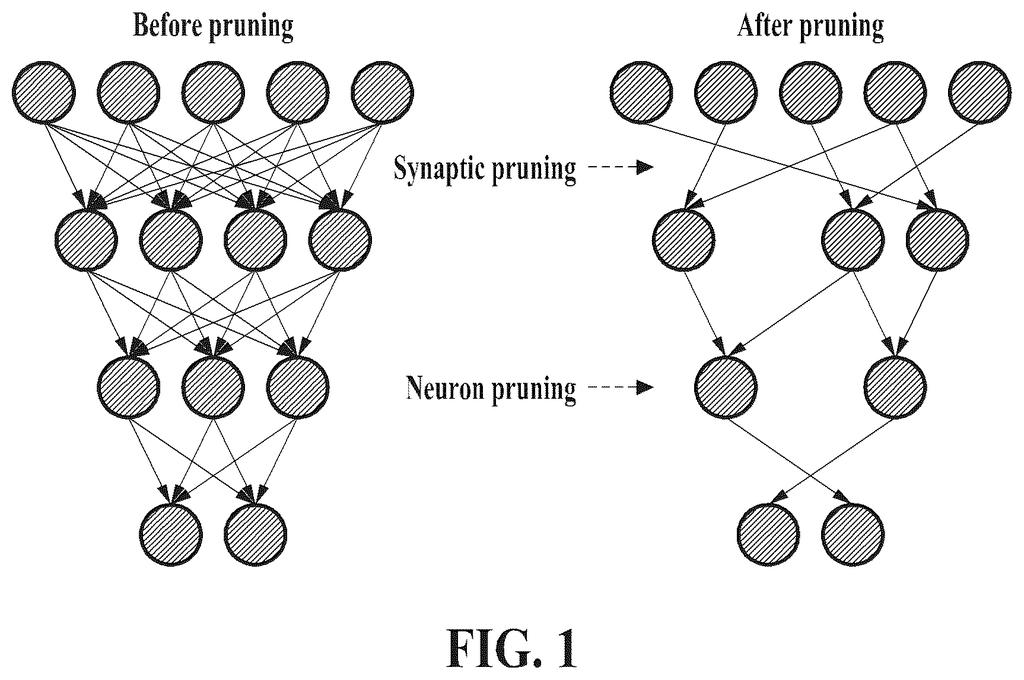
How Samsung's AI compression teacher-student trick works
Every time your phone uses an AI feature, like recognizing your face or predicting your next word, a neural network runs in the background. Those networks can be enormous, and squeezing them onto a phone chip without losing too much accuracy is one of the harder problems in device AI.
Samsung's approach borrows a teaching metaphor. A large, full-quality AI model (the "teacher") watches a smaller, trimmed version (the "student") make decisions, and the gap between their answers is used to retrain the student until it performs nearly as well. A separate piece of software decides which parts of the AI to cut, and that decision is refined at the same time as the model itself.
The result is a compressed model that fits on lower-powered hardware but learned from a much bigger brain. You probably wouldn't notice the difference in your daily use, and that's exactly the point.
… obtaining a student model by pruning the to-be-compressed model using a gating network pruning network based on the first output of the to-be-compressed model …
Translation: It creates a smaller version by cutting away unnecessary parts using a specialized filtering system.
Inside Samsung's gating network and distillation loop
The patent describes a compression pipeline with three main players running in a loop:
- The to-be-compressed model: the original AI you want to shrink, which runs alongside training the whole time.
- The gating network pruning network: a learned filter that decides which neurons or connections are worth keeping and which can be removed ("pruned").
- The teacher model: a larger, fully capable AI whose outputs serve as the quality benchmark.
The process works in rounds. First, the gating network decides which parts of the original model to cut, creating a lighter "student" model. That student then processes training data, and its answers are compared to the teacher's answers. The difference, called distillation loss (a number measuring how far apart the two models' outputs are), is fed back to retrain both the original model and the gating network simultaneously.
This joint training is the key idea: most compression methods train the pruning decision separately from the model itself. Here, the decision about what to cut is optimized at the same time as how well the cut model performs, which avoids locking in bad pruning choices early.
Once training converges, the final compressed model is produced by applying the now-trained gating network's pruning decisions to the now-trained base model.
… calculating a distillation loss based on the output of the student model and the second output of the teacher model …
Translation: It measures the performance gap between the compact model and the original full size model.
What this means for AI running on phones and devices
For on-device AI, the size of a model directly affects battery life, memory use, and how fast responses appear. A compressed model that still performs close to the original is essentially free speed and efficiency, which matters for phones, earbuds, and wearables where chips are small and batteries are small.
Samsung's steady investment in on-device AI compression makes sense given how aggressively the company ships AI features across its Galaxy line. A reliable, automated compression method could mean faster internal development cycles, where a single large research model gets trimmed into multiple device-specific variants without hand-tuning each one.
That makes this Samsung's 21st filing we've tracked since June in the on-device AI privacy space, alongside earlier applications on learning objects without forgetting and correcting voice input on device.
No new chip is required, just a change to how the training software runs, which means any team already building AI models could adopt this without buying new equipment.
The method does assume a few things are already in place: a well-trained reference model, good labeled data, and enough computing power to run a more complex training process before the savings kick in. That puts this squarely in the category of internal engineering tooling, not something a phone owner would ever see or feel.
The practical payoff is that deciding which parts of a model to cut and checking whether it still works well happen together rather than in separate stages, which produces a leaner model faster. Better internal tools at that level tend to shape what becomes possible in products a few years down the road.
There are more where this came from
We read every patent application Big Tech publishes and send you the ones worth knowing. Plain English, free, every week.
The drawings
7 drawing sheets from US 2026/0268159 A1 · click any drawing to enlarge


Want this weekly breakdown for a company we don't cover? Patentlyze Pro →
Be the first to weigh in