
Microsoft Patents an AI That Rewrites Your Prompts When the Chatbot Fails You
You typed your question, the AI gave you a useless answer, and you have no idea how to ask it differently. Microsoft's new patent describes a system that handles that rewrite for you, automatically.
What Microsoft's prompt-rewriting AI actually does for you
Ever asked an AI chatbot something and gotten back a response that completely missed the point? You rephrase it. You try again. You get something slightly less wrong. It's frustrating, and most people don't know enough about how these systems think to fix the problem themselves.
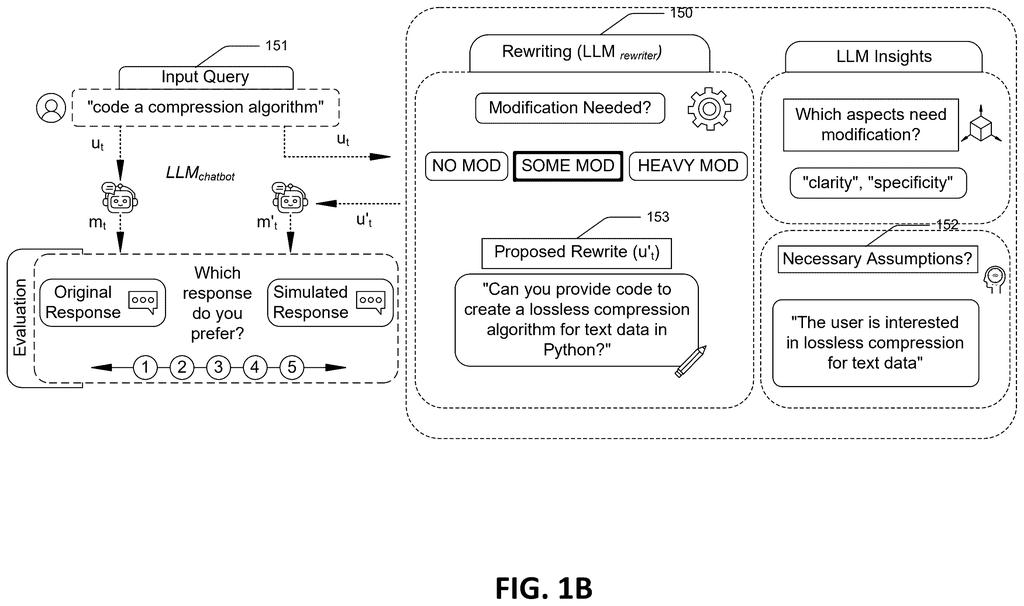
Microsoft's patent describes a second AI that sits in the background, watching your conversation with the main chatbot. When it detects that you're unhappy with an answer (based on signals like follow-up questions, corrections, or explicit complaints), it rewrites your original question using everything it knows about your conversation so far. Then it sends the improved version to the chatbot and shows you both the rewritten prompt and the new answer.
The rewrite isn't generic. The system is trained on past conversations where prompts were fixed, so it learns what kinds of rewrites actually help. It also tailors the new question to your specific situation, not just a one-size-fits-all cleanup.
… monitoring, by a second AI model, the user's interaction with the first AI model, the interaction including a prompt for input to the first AI model, wherein the second AI model is trained to evaluate and rewrite input prompts using past user conversational histories with the first AI model and past rewritten prompts; …
Translation: A background AI watches your chat and learns from old mistakes to fix your questions.
How the second AI detects frustration and fixes your question
The system runs two AI models in parallel. The first AI model is the main chatbot the user is actually talking to. The second AI model is a supervisor of sorts: it monitors the entire conversation, including every prompt and response.
When the second model detects user dissatisfaction (a signal that something went wrong with a response), it kicks in. The patent doesn't lock down exactly what counts as dissatisfaction, leaving room for signals like follow-up corrections, repeated questions, or explicit negative feedback.
At that point, the second AI uses the full conversational context (everything said so far, not just the last message) to rewrite the original prompt. Critically, the rewrite is personalized: the system makes assumptions specific to that user based on what the conversation reveals about what they actually want.
The rewritten prompt is then fed back into the first AI model, and the UI shows the user:
- The rewritten version of their question
- The new response from the main chatbot
The second AI is trained on historical conversation data, specifically on pairs of original prompts and the corrected prompts that led to better outcomes. That training data is what gives it the judgment to know which rewrites are likely to help.
A second AI model is caused to rewrite the prompt based on a conversational history of the user's interaction with the first AI model.
Translation: A helper AI rewrites your failed prompt using the context of what you were talking about.
What this means for people who struggle with AI chatbots
For most people, getting useful answers from an AI chatbot is a skill that takes practice. You have to learn how to phrase things, how much context to give, and how to avoid vague language. That creates a gap between people who know how to prompt well and everyone else. A system that detects failure and automatically repairs the question could meaningfully close that gap.
For Microsoft, this is clearly aimed at products like Copilot, where the quality of the AI's answer depends heavily on how the user asks. If the system can reduce the number of frustrated dead ends, it makes the product feel more reliable to the average user, not just to people who already know how to talk to AI.
Microsoft filed its 27th application we've tracked since May in our AI teams working together watchlist, building on work like catching AI errors early and picking the right AI model.
The core trade this design makes is transparency for smoothness. By showing the user the rewritten prompt alongside the new answer, the system avoids the trap of silently changing what you asked, which would feel manipulative. That's a real and considered design choice.
But the cost is friction in the opposite direction: seeing your question get corrected by a machine might feel condescending, especially if the rewrite misses your intent in a different way than the original did. The system is only as good as its training data, and if past "successful" rewrites encoded certain assumptions about what users want, those biases get baked into every future correction.
The deeper question is whether detecting dissatisfaction reliably is even solvable. Frustration signals are noisy. A follow-up question might mean the answer was bad, or it might mean the user just wants more detail. If the system intervenes when it shouldn't, it could disrupt a conversation that was actually going fine.
There are more where this came from
We read every patent application Big Tech publishes and send you the ones worth knowing. Plain English, free, every week.
The drawings
17 drawing sheets from US 2026/0278349 A1 · click any drawing to enlarge


Want this weekly breakdown for a company we don't cover? Patentlyze Pro →