
Microsoft Patent Reveals AI Agent Teams That Automatically Build Missing Members On Demand
Most AI assistants give up or give a bad answer when a task falls outside what they know. Microsoft's new patent describes a system that notices the gap, builds a new specialist AI on the spot, and keeps working.
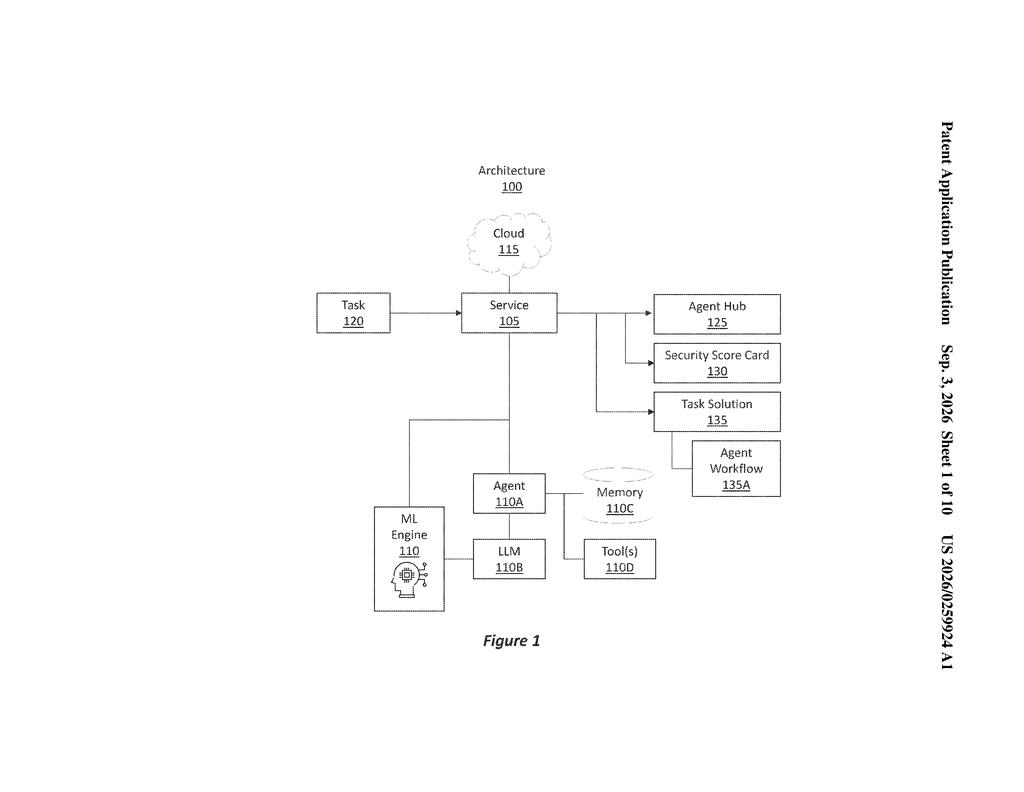
What Microsoft's self-expanding AI agent hub actually does
Imagine you hire a small team of contractors to renovate your house, and halfway through they discover the job needs an electrician nobody hired. Instead of stopping, a manager automatically recruits and certifies a new electrician, adds them to the team, and the work continues. That is essentially what this patent describes, but for AI.
Microsoft is patenting a cloud service that manages a pool, or "hub," of AI agents, where each agent is a small AI program built to handle a specific kind of task. When you send a job to the hub, the system scans the available agents to find the right mix of skills. If it discovers a required skill is missing or the available agents score too poorly to do it well, the system creates a new agent from scratch, tests it, and adds it permanently to the hub.
The practical payoff for you is that the system learns from every job it cannot fully handle, filling its own blind spots over time without anyone writing new code by hand.
… determining that the set of LLM agents is deficient with respect to a particular functionality that is determined to be necessary to assist in generating the solution, wherein the set of LLM agents are determined to be deficient when the set of LLM agents are unable to achieve a threshold performance level with respect to the particular functionality …
Translation: The system realizes the current team lacks a skill needed to solve the problem.
How the system spots a gap and authors a brand-new agent
The patent describes a cloud-based orchestration service that works in five main steps:
- Task intake: A computer-based task arrives with a defined set of parameters and requirements, for example, "summarize this legal document and flag compliance risks."
- Hub query: The service searches a registry of existing LLM agents (large language model agents, meaning AI programs powered by models like GPT). Each agent entry carries metadata: which underlying model it uses, a score card rating past performance, and a list of functions it can perform.
- Gap detection: If the assembled team of agents cannot hit a performance threshold for a required function, the system formally declares the set "deficient" for that function.
- Agent authoring: In response, the cloud service automatically writes a new LLM agent, assigns it the missing function, runs it through evaluation to produce a score card, and registers it in the hub with full metadata.
- Task execution: The now-complete team, including the newly created agent, attempts to generate a solution.
The key technical claim is that gap-filling is automatic and persistent. The new agent is not a one-time patch; it stays in the hub so future tasks can use it too. The system is effectively self-improving: every task that exposes a coverage hole causes the hub to grow.
Techniques for automatically enhancing a hub of LLM agents are disclosed. A service accesses a computer-based task that includes a set of parameters and requirements.
Translation: Methods are shown for updating a pool of artificial intelligence agents based on incoming tasks.
What this means for people who use AI to automate work
For anyone using an AI platform to automate business workflows, the current frustration is that AI tools break silently: they either refuse a task, return a low-quality answer, or require a human to notice the failure and fix the setup manually. This patent describes a system where the platform diagnoses its own shortcomings and corrects them without human intervention, which means fewer dropped tasks and less babysitting.
Microsoft's push to build self-managing AI infrastructure shows up across several recent filings. In practical terms, an enterprise customer running Microsoft's AI tools could theoretically see their automation coverage expand over time just by using the product, since each novel task trains the hub to handle that kind of work going forward.
Microsoft's 21st filing we've tracked since May in our AI models working in teams builds on fixing AI via mistakes and one reusing predictions for speed.
Six months into using a system like this, you would notice something quiet: tasks that used to stall or come back unsolved start finishing. The system builds new helpers for itself when it hits a problem it cannot handle, so it gets more capable the longer it runs.
The catch is invisible. The system grades its own new helpers before trusting them with real work, and if that grading is sloppy, low-quality helpers get added to the roster and future results get worse. You would not see the mechanism fail; you would just see the work go wrong.
For most people, the honest value here is failure prevention. Requests that would previously bounce back unresolved get another attempt from a purpose-built resource. That is a real improvement, and one you tend to appreciate most when it stops happening.
Get our take in your Top Stories
Liked this breakdown? Add Patentlyze as a preferred source on Google, and our plain-English take shows up more often in your Top Stories the next time Microsoft patent news breaks.
There are more where this came from
We read every patent application Big Tech publishes and send you the ones worth knowing. Plain English, free, every week.
The drawings
10 drawing sheets from US 2026/0259924 A1 · click any drawing to enlarge


Show the other 2 sheets


Want this weekly breakdown for a company we don't cover? Patentlyze Pro →
Be the first to weigh in