
Apple Patents a Way for Siri to Prioritize Your Timers Over Everyone Else's
When multiple people in a household each set a timer, whose gets announced first? Apple is patenting a way for its digital assistant to figure out which timers belong to the person asking and lead with those.
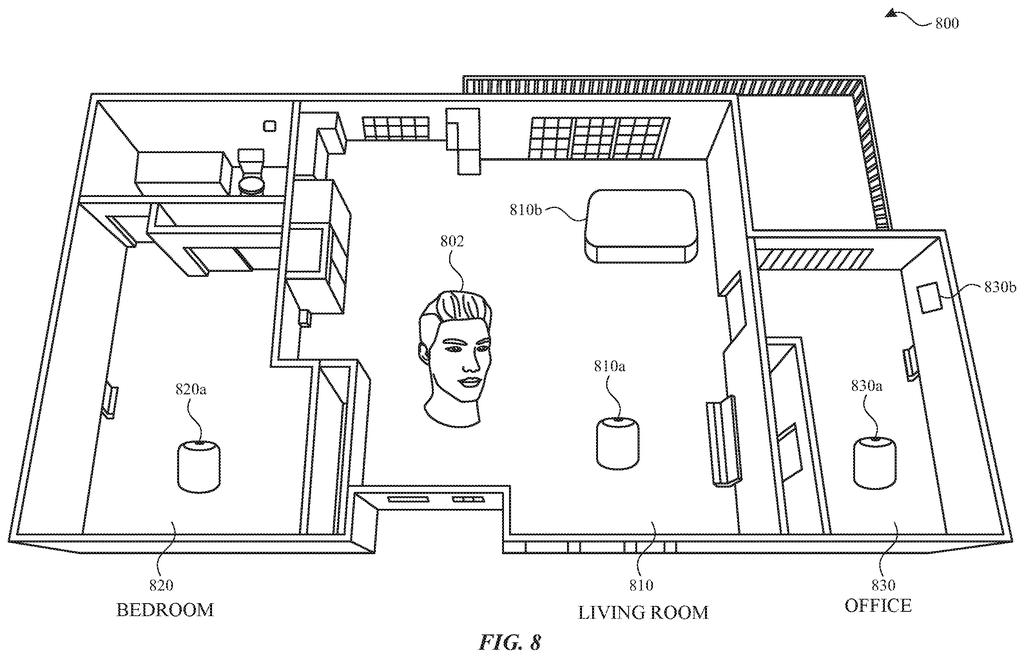
How Siri decides whose timer to announce first
Every time you call out to Siri asking about your timers, there might be five others running in the kitchen, set by your partner, your kid, or a recipe app. Right now, the assistant may just rattle them off in whatever order they happen to exist. Apple wants to change that.
This patent describes a system where Siri identifies who is making the request and checks which timers belong to that person. If your roast-chicken timer is in the list, it gets read out first. If none of your timers are active, the assistant switches to a different ordering, one that still makes sense for a shared household.
The practical target is clearly a shared speaker like HomePod, where several people might each have timers going at once. The goal is that your timers feel like yours, not a communal pile you have to sort through.
How the system links timers to users and reorders results
The patent describes a computer system (most likely a voice-assistant device) that receives a request for the status of multiple running timers at once. The system does four things in sequence:
- Identifies the requesting user by analyzing the incoming request, presumably using voice recognition or an account association.
- Fetches the full set of timer statuses from whatever store is tracking them.
- Checks whether the requesting user owns any of those timers, specifically looking at the first (most prominent) timer in the set.
- Picks an ordering based on that check: if the user has a timer running, their timer gets prioritized ("first order"); if they don't, the assistant uses a different ordering ("second order") instead.
The claim is intentionally broad about what "first order" and "second order" actually mean, leaving room for multiple ranking strategies. The key principle is that the output adapts depending on who asked, not just what timers exist.
This is a form of personalized context-switching: the assistant adjusts its response structure based on user identity rather than delivering a one-size-fits-all list. The same technology could extend to reminders, alarms, or any other time-bound task a system tracks for multiple users simultaneously.
What this means for shared HomePod households
For single-user iPhones, this is a minor quality-of-life fix. But for shared devices like HomePod, it addresses a genuinely annoying everyday friction: asking "Hey Siri, how are my timers?" and getting a list that leads with your roommate's pasta water, not your bread in the oven.
The deeper strategic angle is about making Siri feel more personal on shared hardware. Apple has been filing around multi-user assistant interactions since at least 2022, and multi-user HomePod support only arrived in recent years. A system that sorts information by speaker identity is a building block for a shared device that still feels individually tailored, which matters as Apple continues to push HomePod as a household hub.
Apple's eighth filing we've tracked since June in the assistants that learn from you watchlist connects to one suggesting next steps from saves and one pairing photos with texts.
In a household where multiple people use the same voice assistant, shared timers are a quiet daily frustration. The wrong person's timer gets read out first, nobody is sure whose pasta is almost done, and the feature slowly loses people's trust.
The fix here is appropriately modest: when you ask about timers, the assistant checks who is speaking and puts your timers at the top of the list. That match between problem size and solution size is a good sign for something that will actually ship and get used.
The deeper value is what this enables beyond timers. A system that reliably connects a voice to a specific person in a shared home can apply that same logic to reminders, grocery lists, and calendar updates, making a shared device feel personal without requiring anyone to log in or switch accounts.
There are more where this came from
We read every patent application Big Tech publishes and send you the ones worth knowing. Plain English, free, every week.
The drawings
21 drawing sheets from US 2026/0279355 A1 · click any drawing to enlarge


Want this weekly breakdown for a company we don't cover? Patentlyze Pro →