
Samsung Patents a Voice Assistant That Gives Remote Event Guests Limited Smart-Home Access
When you host a virtual event, your smart home is an uninvited third guest. Samsung is patenting a way to let your voice assistant answer questions from remote attendees, but only up to a limit you control.
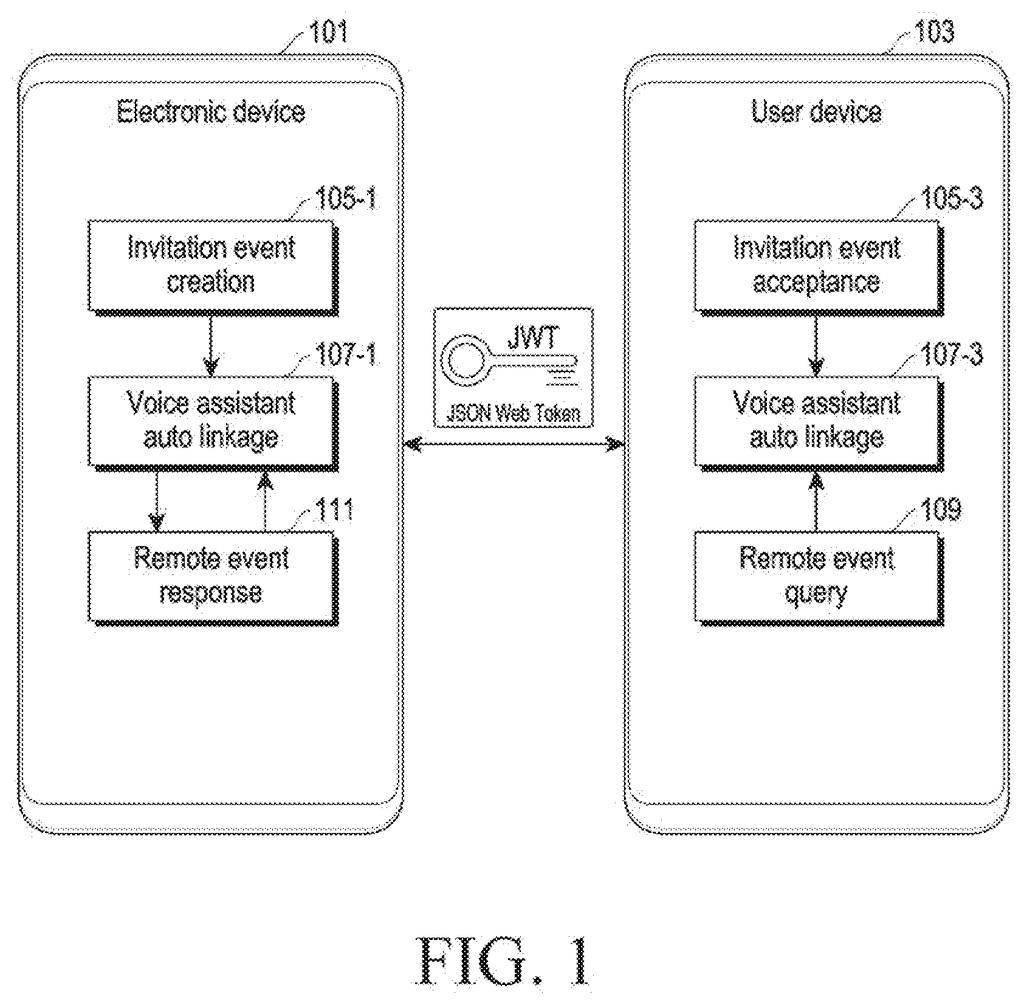
What Samsung's guest-access voice assistant actually does
Every time a friend joins one of your virtual hangouts or remote work calls, they can see your face but know nothing about your house. Samsung's new patent flips part of that around: it describes a voice assistant that lets remote guests ask questions about the smart environment tied to your event, while you stay in control of how much they can actually find out.
Say you're hosting a virtual dinner party and a guest asks, 'Hey, what's the temperature set to?' Whether they get a real answer depends on a permission level the system assigns them based on who they are and who you are. A close contact might get the full answer. A stranger joining a work call might get a polite brush-off.
The system handles all of this automatically, using a natural-language database to phrase the response in plain speech rather than a robotic error message. You set the rules; the assistant enforces them.
receiving, from a second electronic device associated with an invitee user, a query related to a remote event associated with a smart environment; determining, based on information on the invitee user and the host user hosting the remote event, an access level of the invitee user to access the smart environment; …
Translation: The system checks who is asking and sets temporary permissions for them.
How the system decides what a remote guest can ask
The patent describes a system where a host's device (say, a Samsung phone or smart speaker) acts as a gatekeeper during a remote event, like a video call tied to a smart-home environment.
When a remote participant's device sends a voice query, the host device does three things:
- Receives the query from the guest's device over the network.
- Looks up an access level for that guest, calculated from information about both the guest and the host, such as their relationship, contact list status, or a permission tier the host configured.
- Generates and returns a response through a natural language (NL) database, meaning the reply sounds like normal speech rather than a raw data dump or an error code.
The word "temporal" in the patent title signals that these permissions are tied to the event window specifically. A guest isn't gaining permanent access to your smart home; their query rights exist only while the event is active.
The patent doesn't detail the full range of smart-home data that could be queried, but the framing covers any "smart environment" connected to the host's ecosystem, which in Samsung's world could include lights, thermostats, locks, or appliances connected through its SmartThings platform.
… transmitting, using a natural language (NL) database, a response to the received query to the second electronic device based on the determined access level of the invitee user.
Translation: It replies to the guest in plain language that respects their permission limits.
What this means for smart-home privacy at virtual gatherings
As video calls and virtual gatherings have become a normal part of work and social life, the boundary between your digital presence and your physical home has blurred. A patent like this suggests Samsung sees voice assistants as the logical interface for that gap, with permission layers doing the work of keeping things private.
Samsung has been filing around smart-home assistant integration since at least 2023, and this patent sits squarely in that space. For users with a Samsung smart-home setup, this kind of feature could mean hosting virtual events without worrying that any attendee can ask your speaker to unlock your front door or reveal your daily schedule. The real test will be how granular the permission controls actually are once something like this ships.
Samsung's 33rd filing we've tracked in voice and speech AI since May adds to a run that includes one fixing poor voice input and one locking onto specific voices.
The core tradeoff here is complexity versus trust. To make this system work well, Samsung needs accurate information about who each guest is, which means the host's device has to maintain or access a meaningful social graph, a contact hierarchy, or a manually configured permission list. That's a real ask. Most people don't have their smart-home permissions carefully tiered, and a system that defaults to 'deny everything' for unknown guests is safe but frustrating; one that defaults to 'allow most things' defeats the purpose.
The time-limited angle is the most defensible design choice. Tying guest permissions to the event window rather than granting persistent access is the right call, and it sidesteps the scarier scenario where a one-time attendee retains query rights after the call ends. That boundary is worth building in from the start.
The remaining cost is the natural-language layer. Generating a polite, contextually appropriate refusal for every denied query sounds minor, but getting that tone right across different cultures, languages, and relationship types is genuinely hard. A badly worded 'you don't have permission to know that' could embarrass a host in front of colleagues. Samsung's NL database will carry a lot of weight that the patent doesn't fully account for.
There are more where this came from
We read every patent application Big Tech publishes and send you the ones worth knowing. Plain English, free, every week.
The drawings
8 drawing sheets from US 2026/0279359 A1 · click any drawing to enlarge


Want this weekly breakdown for a company we don't cover? Patentlyze Pro →
Be the first to weigh in