Samsung
Samsung · AI / ML · Filed Apr 6, 2026 · USPTO published Aug 20, 2026 · Aug 20 release
Samsung Patent Covers AI Call Summarizer That Weighs Words by Speaker Relationship
Not every voice on a call deserves equal weight in a summary, and Samsung is filing patents to make sure AI knows the difference.
- Publication number
- US 2026/0246751 A1(US20260246751A1)
- Applicant
- Samsung Electronics Co., Ltd.
- Filed · Published
- Apr 6, 2026 · Aug 20, 2026
- Inventors
- Sanghyun LEE, Kyungtae KIM, Hoseon SHIN, Jaeyeun YOON, Hyeoncheon JO, Dongchoon HWANG
- Status when we published
- Waiting for an examiner
- Document
- 20 claims
- US classification
- 709/206
- Parent application
- Continuation of PCT/KR2024/015258 (filed Oct 8, 2024)(PCTKR2024015258)
What Samsung's relationship-aware call summary actually does
You're on a work call with your manager and two teammates, and afterward your phone offers to summarize what was discussed. But here's the thing: should your boss's action items get the same amount of space as a quick side comment from a colleague? Samsung's answer is no.
This patent describes an AI that listens to a conversation (or reads a chat thread), figures out the relationship between the people involved, and then gives more summarization weight to certain speakers based on that relationship. Think of it like a meeting assistant that knows the difference between a decision-maker and a bystander.
The AI first converts spoken words into text using automatic speech recognition, then feeds everything into a learning model that produces a summary with different compression ratios per person. Someone important to the conversation gets more of their words preserved; someone who chimed in briefly gets trimmed down further.
… apply a different summarization ratio to each speaker, based on a relationship between the user terminals, in a process of summarizing the input text by the artificial intelligence learning model …
Translation: The AI will decide how much detail to keep from each person based on how they are connected to the other caller.
How the AI weighs each speaker differently in the summary
The system has two main inputs: audio from a live conversation (converted to text via automatic speech recognition, the same technology your phone already uses for voice-to-text) and written messages exchanged between the same users. Both get fed into an AI language model as raw input text.
The key step is what happens next. Instead of summarizing everyone equally, the model applies a different summarization ratio to each speaker. A summarization ratio is basically how much of someone's words get kept versus compressed away. If your ratio is high, more of what you said survives in the summary. If it's low, only the key points make it through.
That ratio is set based on the relationship between the user terminals, meaning the devices involved in the conversation. The patent doesn't spell out exactly how relationships are determined, but the implication is that the system can tell whether two people are peers, or whether one has a higher-priority role in the context of the call.
- Speech is transcribed automatically in real time
- Transcription plus any text messages are combined as input
- Each speaker gets a personalized compression level
- The AI outputs a final, relationship-weighted summary
… perform automatic speech recognition to generate text from a content of a conversation between user terminals, provide the generated text and/or messages exchanged between the user terminals to the artificial intelligence learning model as input text …
Translation: The device listens to your call and turns the audio into text so the AI can read and process the conversation.
What this means for AI assistants in calls and meetings
For anyone who spends time in back-to-back calls or long group chats, a smarter summary could genuinely save time by surfacing what matters most rather than giving every participant equal real estate. The practical payoff is a summary that reads more like what a thoughtful human note-taker would produce, prioritizing the person who called the meeting or issued the task over whoever asked a clarifying question at the end.
The filing sits entirely in software, which means Samsung could, in theory, deploy this through an AI assistant update on existing devices without new hardware. What has to exist first is a reliable way to identify speaker relationships from device metadata or contact data, which is the part the patent leaves open. Samsung's relationship-aware summarization approach is one of the more user-focused interesting tech patents in the fast-moving space of on-device AI communication tools.
Samsung's 20th filing we've tracked since June in our assistants that remember you watchlist follows the voice shorthand patent and the screenshot habits filing, each pushing how a phone might learn who you are over time.
Source: US 2026/0246751 A1 at the USPTO (PDF). Full patent text and figures are in the official publication.
Get our take in your Top Stories
Liked this breakdown? Add Patentlyze as a preferred source on Google, and our plain-English take shows up more often in your Top Stories the next time Samsung patent news breaks.
Add Patentlyze on Google
One click.
There are more where this came from
We read the new patents from Big Tech, carmakers and more and send you the ones worth knowing. Plain English, free, every week.
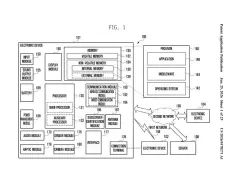
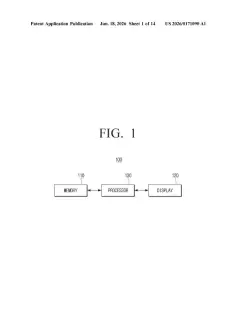
The drawings · 14 sheets
14 drawing sheets from US 2026/0246751 A1 · click any drawing to enlarge


Show the other 6 sheets


More from Samsung
All 1,662 Samsung patents →
More in AI / ML
All 2,745 AI / ML patents →
Apple
Apple Patents a Siri That Reads Your Photos and Texts Together
Apple
Apple Patents a Voice Assistant That Resumes Playback Exactly Where You Mean
Samsung
Samsung Patents a System That Routes Your Voice Commands to the Right AI Based on What's on Screen
Samsung