
Apple Patents a Photos Interface That Surfaces Albums Based on What You're Doing Right Now
Apple is patenting a smarter way for your phone to decide which photos to show you, pulling up automatically organized albums that match whatever you're currently doing or looking at, and even generating brand-new ones on the spot when you ask.
What Apple's context-aware photo browsing actually does
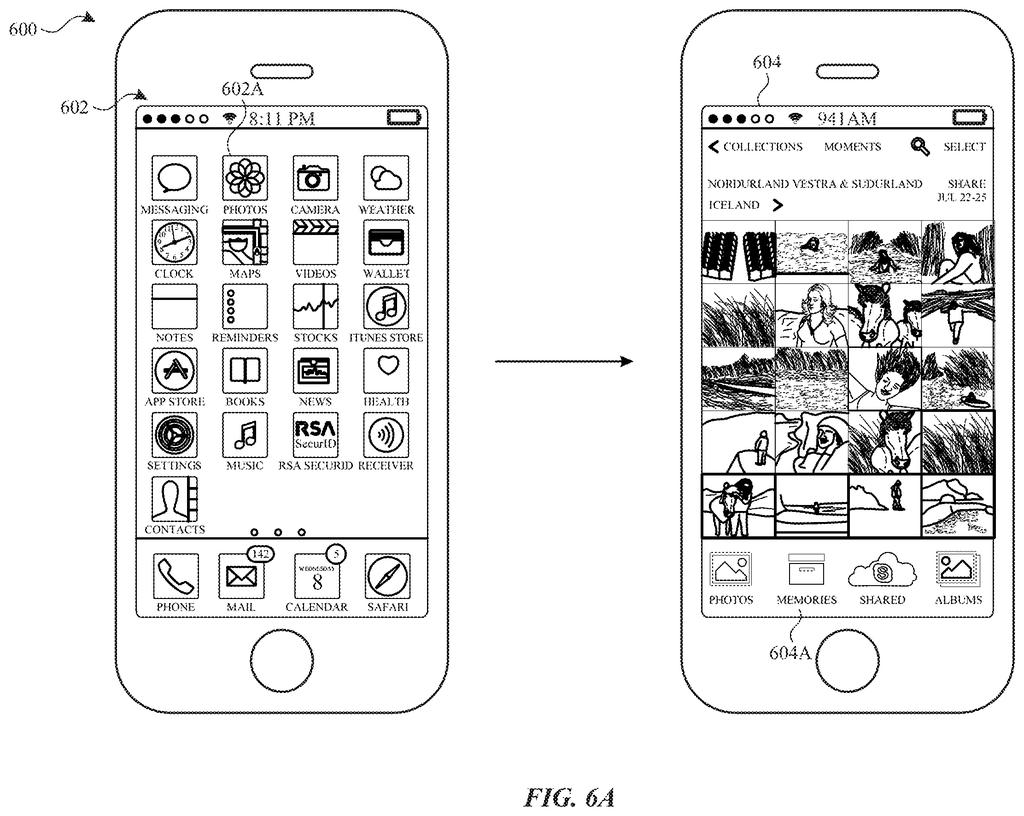
Imagine you open your Photos app right after a birthday dinner. Instead of dumping your entire camera roll on you, your phone notices the context and surfaces a neatly organized album of that event before you even go looking. That's the core idea Apple is patenting here.
The system doesn't just show you pre-existing albums. It can generate a new one on the fly when you interact with the interface, then drop it right into your grid of collections. Tap it, and you get a full detail view with related content tied to that specific album.
There's also a social layer. If you're browsing photos from a particular event, the interface can show you who else attended and, with a tap, pull up every event you and those people have shared, across your whole library. It's designed to help you find photos you didn't know you were looking for.
The present disclosure generally relates to retrieving and displaying contextually-relevant media content. In some embodiments, a device receives a request to display contextually-relevant media and, in response, displays a representation of a collection of media items relevant to a context of the device.
Translation: Apple's patent covers pulling up photos that fit whatever situation your device detects you are in.
How the system generates and adds new albums on demand
The patent describes a context-aware media retrieval interface, meaning the device monitors signals about what you're doing or viewing and uses that to decide which photo collections to surface.
Here's how the key pieces work together:
- Contextual collection display: The device shows a grid (or similar layout) of automatically-generated albums relevant to the current moment or location.
- On-demand generation: When a user interacts with that interface in a specific way (the patent calls this a "sequence of one or more inputs"), the system generates a brand-new collection that didn't exist before and inserts a tile for it right into the display.
- Detail view with swipe navigation: Swiping on an individual photo in a sequence brings up a detail screen packed with related content tied to that image.
- People-and-events graph: Inside a detail view, an affordance (a button or UI element) shows people identified as attending the same event. Selecting it pulls up a broader view of every shared event across the library, essentially letting a social graph drive photo discovery.
The underlying machinery relies on automatic organization (the device groups photos by event, people, place, or other signals without the user filing anything manually) combined with on-the-fly generation triggered by user interaction rather than running entirely in the background.
What this means for how you browse your photo library
For most people, a phone's photo library is a black hole. You know the picture exists but you can't find it. Apple's current Photos app already does some automatic organizing, but this patent describes a much more interactive version where the interface responds to what you're doing in real time and creates new collections in response to your curiosity rather than just scheduled background processing.
The social angle is the part that stands out most. Tying a person's face to every shared event in your library, and making that browsable with one tap, could turn People albums into something that actually works the way memory does, by association rather than by date.
Apple's ninth filing we've tracked since June in our assistants that remember you builds on earlier applications like the timer prioritization and save and suggest next step ones.
Almost entirely a software and interface design patent, with no new sensors or special chips required. Everything described here could run on hardware already in people's pockets, which means the gap between this filing and a real product is unusually short.
The most demanding piece is the on-demand album generation, where a single swipe would trigger the phone to instantly assemble a collection of related photos rather than doing that work in the background overnight. Whether current devices are fast enough to make that feel immediate is the one real question this document leaves open.
The people-and-events browsing feature solves a complaint anyone with years of photos on their phone will recognize: finding a picture of a specific friend from a specific trip still takes far too many taps. If this ships close to what the patent describes, it would be one of the more practical improvements to the Photos app in recent memory.
There are more where this came from
We read every patent application Big Tech publishes and send you the ones worth knowing. Plain English, free, every week.
The drawings
81 drawing sheets from US 2026/0277377 A1 · click any drawing to enlarge


Want this weekly breakdown for a company we don't cover? Patentlyze Pro →