
Google Patents an AI That Turns Your Prompts Into Step-by-Step Questions
Getting a good answer from an AI chatbot usually means knowing how to ask the right question, and most people don't. Google is filing a patent for a system that fixes that by turning your initial request into a guided, button-driven conversation.
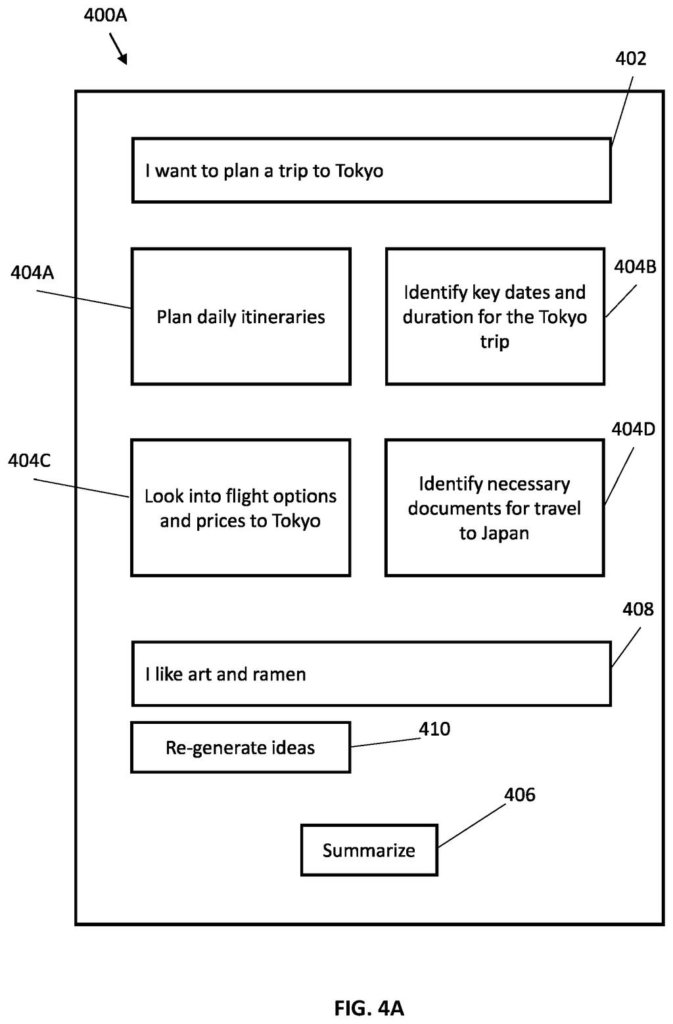
What Google's prompt-to-questions AI actually does for you
A person sits down to ask an AI for help planning a trip, writing a contract, or filing a complaint. They type a vague sentence, get a vague answer, and give up. That moment of frustration is exactly what this patent is trying to fix.
Google's system would take your opening prompt and immediately break it into smaller pieces. Instead of leaving you staring at a blank text box, the AI would show you a set of on-screen buttons or form fields, each covering one part of your request. You click, fill in, or choose your way through them at your own pace.
Once the AI decides you've covered enough ground, it drops the step-by-step interface and gives you a final answer shaped by everything you told it along the way. The goal is to replace the guessing game of prompt-writing with something closer to a guided form that anyone can complete.
… processing, using a large language model (LLM), the user input to generate a corresponding set of user interface (UI) elements, each of the UI elements corresponding to a sub-task of the task …
Translation: The AI breaks your request down into smaller chunks and builds interactive buttons or boxes for each step.
How the LLM breaks one prompt into a chain of UI steps
The system works in two passes, both powered by the same large language model (LLM) (the AI engine behind tools like Gemini or ChatGPT).
In the first pass, the LLM reads your initial prompt and generates not a text answer but a set of UI elements (buttons, dropdowns, text fields, or similar controls), each tied to a sub-task it has identified inside your request. If you asked it to help you write a job posting, it might generate fields for job title, required experience, salary range, and location.
As you interact with each element, the LLM processes your responses and can update or extend the interface. So if you fill in "remote position," it might drop the location field and add one about time-zone preferences. The claim describes this as generating a modified set of UI elements based on further input, meaning the interface adapts in real time rather than locking you into a fixed form.
Once a termination condition is met (meaning the system judges that enough information has been collected to answer the original prompt fully) the guided phase ends. The LLM then does a second pass and renders a complete final response, drawing on everything gathered during the interactive stage.
… generating first LLM output that is usable to generate a set of user interface (UI) each associated with a corresponding sub-prompt of the input prompt …
Translation: The system turns your main prompt into a series of smaller follow up prompts shown on screen.
What this means for people who struggle with AI chat tools
Right now, the quality of an AI answer depends heavily on your ability to write a detailed, well-structured prompt. That's a skill most people have never been taught and don't want to learn. A system that guides you through your own request with on-screen controls could make AI tools genuinely useful for people who currently bounce off them after one failed attempt.
You'd notice this most in high-stakes situations: drafting a legal letter, planning a medical question for a doctor's appointment, or configuring something complicated. The difference between a vague AI response and a precise, actionable one often comes down to the details the AI never thought to ask for. Google's track record in AI assistant patents suggests the company sees guided interaction as a long-term direction, not a one-off experiment.
Google files its 55th application in the AI assistant and agent space we've tracked since May, building on earlier work on running app tasks without touching and picking the right tool.
The real payoff here is that you stop having to think like an AI in order to get useful output from one. Most people who abandon AI tools don't do so because the technology failed them; they do so because the blank input box offered no guidance and the first answer was too generic to be useful.
This patent describes a feedback loop that closes that gap. The AI handles the task of figuring out what it needs to know, then surfaces that as something you can click through rather than something you have to intuit and type. That's a significant change in who can actually use these tools productively.
The tricky part is calibration. An AI that asks too many follow-up questions before giving an answer will feel slower and more annoying than just typing and hoping. If Google can tune the termination logic well, the result could feel like talking to a prepared assistant. If it misjudges, it'll feel like a bureaucratic form that never ends.
There are more where this came from
We read every patent application Big Tech publishes and send you the ones worth knowing. Plain English, free, every week.
The drawings
8 drawing sheets from US 2026/0277398 A1 · click any drawing to enlarge


Want this weekly breakdown for a company we don't cover? Patentlyze Pro →