
Salesforce Patents a Two-Graph System to Make AI Answers More Accurate
AI assistants that answer questions from company documents often get facts wrong because they read text loosely, without understanding how ideas connect. Salesforce is patenting a system that builds two separate maps of a document's knowledge and cross-checks them before giving you an answer.
How Salesforce's double knowledge graph checks its own facts
Most AI question-answering tools scan documents like a search engine, pulling out chunks of text that seem relevant. The problem is they often miss how facts relate to each other, or they mix up context and return confident-sounding answers that are actually incomplete or wrong.
Salesforce's patent describes a system that reads a document and builds two knowledge graphs at the same time. Think of a knowledge graph as a web of connected facts: nodes are things (a person, a product, a date) and lines between them show how those things relate. The first graph captures raw facts and relationships found in the document. The second graph organizes the same material into a stricter structure based on the type of document it is, so a legal contract gets mapped differently than a customer support manual.
When you ask a question, the AI searches both graphs at once and stitches together only the most relevant facts before writing your answer. The idea is that two different views of the same information are harder to fool than one.
constructing a first knowledge graph by one or more neural network based language models extracting a plurality of entities, propositions and/or relationships associated with the plurality of entities from at least one document …
Translation: AI language models read documents to pull out key facts and connections.
How the two graphs are built and queried together
The system works in two distinct construction phases before it ever answers a question.
First graph (free-form): A language model reads one or more source documents and extracts entities (named things like people, companies, dates), propositions (factual statements about those things), and relationships between them. Each entity becomes a node; each proposition also becomes a node, connected to the entity it describes. This gives the AI a flexible, document-specific map of the raw knowledge inside the text.
Second graph (structured): A second pass builds a more rigid graph using a pre-defined ontology (a schema, or agreed-upon rulebook, that says what categories of things and relationships are allowed in this type of document). The second graph is seeded with the same nodes from the first graph but reorganized to fit the ontology's shape. A financial report and a medical record, for example, would each produce a differently shaped second graph.
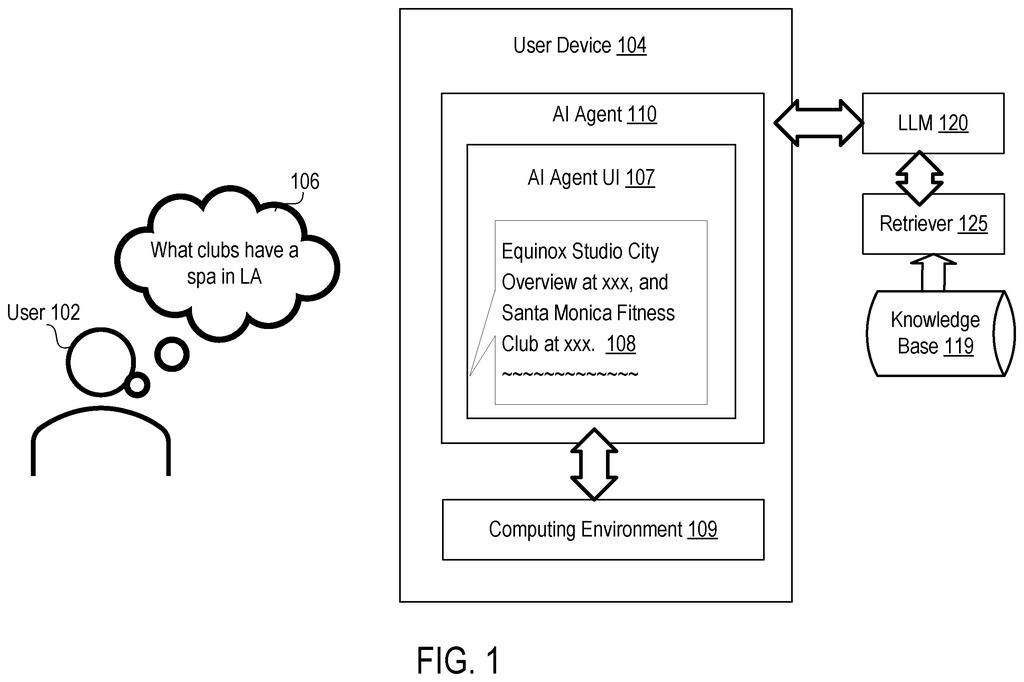
Retrieval and generation: When a natural-language question arrives, the system runs a joint retrieval across both graphs simultaneously, pulling a subset of relevant propositions from each. That combined set of facts, not raw text chunks, is handed to the language model to generate the final answer, which then appears in the AI agent's interface.
The dual-retrieval design means that if a fact is ambiguously expressed in the free-form graph, the structured graph may anchor it more precisely, and vice versa.
… constructing a second knowledge graph based on the at least one document, the first node and the second node from the first knowledge graph, and a pre-defined ontology structure …
Translation: A second structured map is built using predefined rules and the extracted data.
What this means for AI assistants you use at work
For anyone using an AI assistant at work, the most frustrating failure is a confident wrong answer pulled from a document you uploaded. This patent targets exactly that failure. By forcing the AI to consult two differently organized views of the same information, Salesforce is trying to reduce the chances that a misread sentence or a missing connection produces a bad response you then act on.
Salesforce's steady investment in enterprise AI reliability shows up here in a practical way. Agentforce and Einstein, the company's AI products aimed at sales and customer-service teams, rely on answering questions from internal company documents accurately. A two-graph retrieval layer is the kind of structural change that, if it works, you'd notice as fewer moments where the AI confidently tells you something that turns out to be wrong.
This is the 15th Salesforce filing we've tracked in our AI guardrails race watch since May, adding to earlier work like one blocking cloud server requests and one flagging harmful data requests.
The person who benefits from this is the one who sent a proposal with the wrong contract term because the AI pulled a fact out of context. Salesforce is building a system that cross-checks information two different ways before answering, so the connections between facts get tested, not just the facts themselves.
Most users will never see any of this. They will just notice that the AI stopped giving them answers that were technically accurate but practically wrong.
Where this could fall short is in companies whose documents are informal and inconsistent. The system works best when the content it reads follows predictable patterns, and a lot of real workplace writing does not.
There are more where this came from
We read every patent application Big Tech publishes and send you the ones worth knowing. Plain English, free, every week.
The drawings
24 drawing sheets from US 2026/0268180 A1 · click any drawing to enlarge


Want this weekly breakdown for a company we don't cover? Patentlyze Pro →