
Apple Patents a System That Records Your Location Before You Know You Need It
You realize you can't retrace where you parked two hours ago, but your phone never thought to remember. Apple's new patent describes a system that predicts exactly that kind of moment and starts logging your location before you ask.
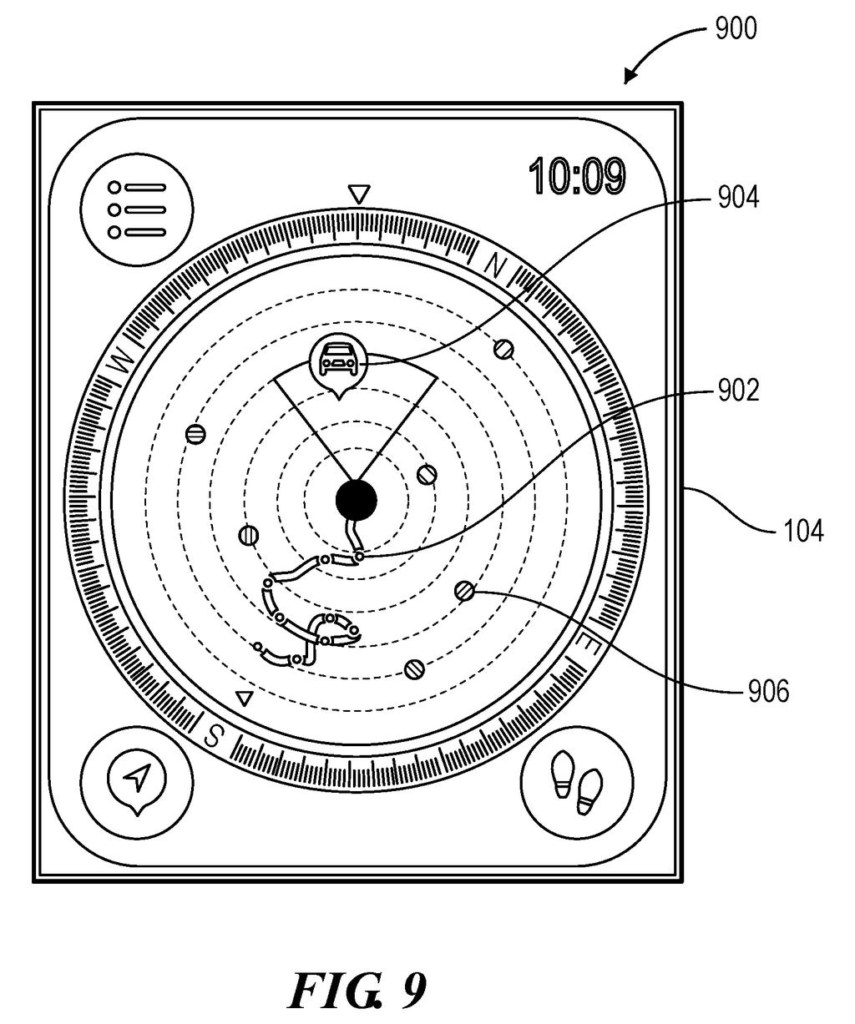
What Apple's proactive location recording actually does
You're at a big event, you've wandered through three parking structures, and now you need to find your car. You open your phone, but the map is blank because location tracking wasn't running the whole time.
Apple's patent describes a system that tries to get ahead of that problem. Instead of waiting for you to hit "record my location," your iPhone would watch for signals in your behavior, like the apps you're using, your calendar, or where you are, and make a prediction that you're probably about to want a location trail. Once it senses that, it starts logging your position periodically in the background.
The clever part is that it tries to do this without draining your battery. The system checks how much power the phone has and adjusts how often it records based on that. So if you're at 10% battery, it doesn't hammer the GPS the same way it would at 80%.
predict a user request for historical positioning information based at least in part on contextual user data; detect a user intention indicative of the user request for the historical positioning information; …
Translation: The device figures out you will want your past location data before you actually ask for it.
How the device predicts, detects, and logs your path
Proactive location recording flips the usual model: instead of the user manually triggering a breadcrumb trail, the device tries to start one automatically.
The system works in two stages. First, it runs a prediction step using contextual user data (meaning signals like your calendar entries, the apps currently open, time of day, or your movement patterns) to decide whether there's a good chance you'll want to review where you've been. Think of it as the phone asking itself, "Is this the kind of situation where someone usually wishes they had location history?"
Second, it runs a detection step that looks for a more concrete signal of user intention, something that more directly suggests you're about to need that history. Only then does it start making periodic requests for positioning data.
Critically, the frequency of those requests is tied to the device's power capabilities at that moment. A phone at low battery would log less aggressively than one on a full charge. The patent describes this as balancing the usefulness of the recorded trail against the real cost of collecting it. The final step is surfacing that location history to you when you actually ask for it.
… performing periodic requests for the historical positioning information in accordance with power capabilities of a user device and based at least in part on the user intention.
Translation: It checks your location repeatedly while managing your battery life.
What this means for iPhone navigation and privacy
For everyday users, this solves a genuinely common frustration: the moment you wish your phone had been paying attention is always the moment it wasn't. Parking lots, trail junctions, and unfamiliar city blocks are the obvious cases, but the same problem comes up any time you navigate somewhere without a formal "start navigation" prompt.
The privacy side is the harder question. Automatic, predictive location logging, even if stored only on-device, means your phone is making a judgment call about when to watch where you go. Apple has historically positioned itself as privacy-first, and Apple's interest in on-device processing suggests this would stay local rather than go to a server. But the patent doesn't make that explicit, and how the data is stored, how long it's kept, and what else can access it will matter as much as the feature itself.
Apple's tenth filing we've tracked since June on assistants that remember you adds to earlier ideas like photos tied to your activity and Siri picking your timers first.
The tradeoff at the center of this design is that your phone decides when your location matters, not you. That is a meaningful surrender of control, and whether the exchange feels fair depends entirely on how much you trust the phone's guess about your intentions.
Battery pressure is where the feature is most likely to disappoint you at the worst moment. When your phone is running low, it pulls back on checking your location, which means the trail it saves could have the biggest gaps exactly when you were most lost or most in need of retracing your steps.
The prediction problem is the one with no clean answer in this document. If the phone misreads your signals and starts recording a walk you never planned to revisit, you have a history you never asked for. If it misses the moment you actually needed it, the feature fails without telling you, and you only find out when the record you wanted is not there.
There are more where this came from
We read every patent application Big Tech publishes and send you the ones worth knowing. Plain English, free, every week.
The drawings
12 drawing sheets from US 2026/0276777 A1 · click any drawing to enlarge


Want this weekly breakdown for a company we don't cover? Patentlyze Pro →