
Google Patents an AI That Stops Thinking About Words It Already Understands
Most AI language models grind through every word in a sentence with the same effort, whether it's the word 'the' or the word 'photosynthesis.' Google is filing a patent on a system that lets the model stop working on a word the moment it has figured it out, and keep chewing on the harder ones.
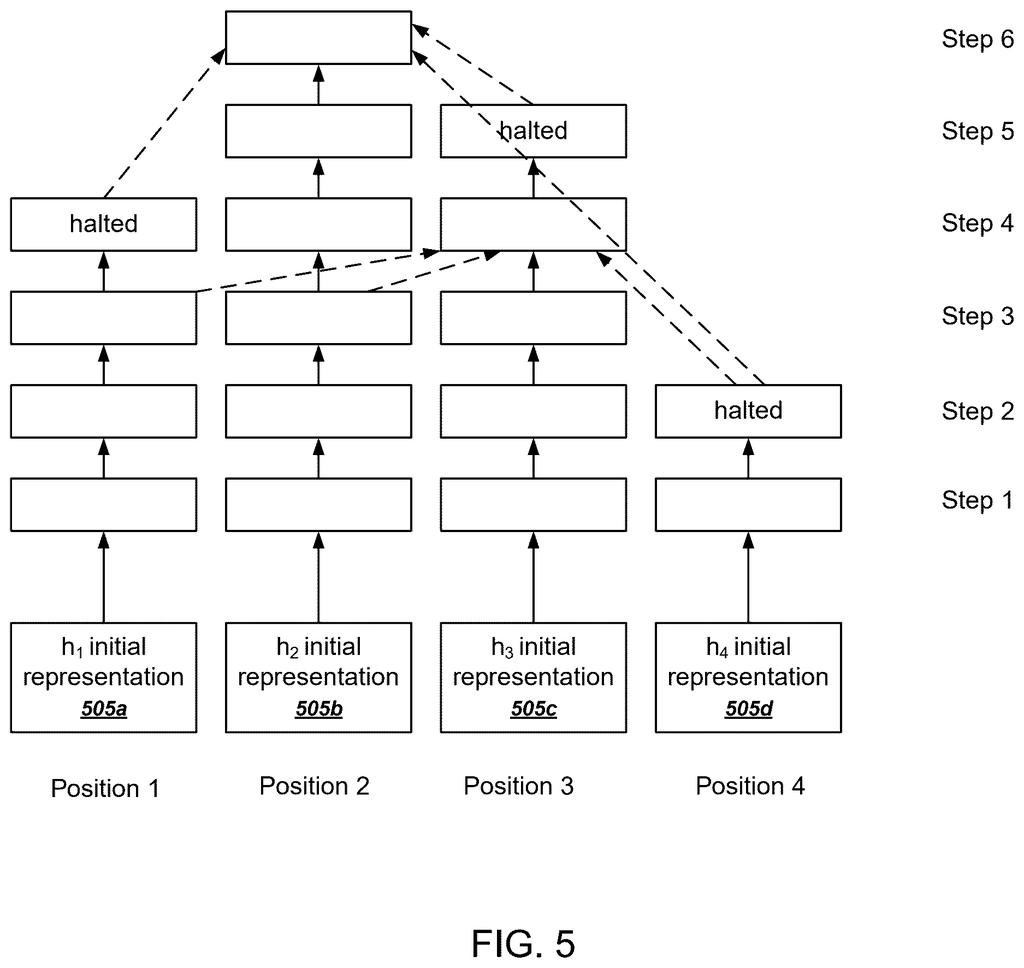
What Google's per-word processing cutoff actually does
You're typing a question into an AI assistant and you notice it takes a second to respond. Part of what's happening inside is the model re-examining every single word in your message, over and over, the same number of times, no matter how simple or complex each word is. The word 'a' gets as many passes as 'quantum entanglement.'
Google's patent describes a different approach: a model that checks, after each pass, whether it has figured out a given word well enough. If yes, it stops working on that word and moves on. Words that need more thought get more passes; simple ones get fewer. Think of it like a proofreader who doesn't re-read a sentence they already understood perfectly.
The result, in theory, is an AI that uses its computing power more selectively. You'd still get the same answer, but the system wouldn't waste processing time on easy parts of your input.
… in response to determining that the stop condition is met for a first element of the input sequence, halting revisions for the first element; and continuing to revise a representation of a second element of the input sequence at the subsequent processing step until a stop condition is met for the second element.
Translation: The AI stops processing words it already understands while keeping to work on the harder ones.
How the model decides when each word is done
The patent describes what Google calls a Universal Transformer, a sequence-to-sequence model (a system that reads a string of inputs and produces a string of outputs, like translating a sentence or answering a question) that processes tokens (the individual words or word-pieces in your text) with a variable number of computation steps.
The key mechanism is depth-recurrence with a learned halt condition. Standard transformers apply a fixed number of processing layers to every token, every time. Here, the model loops through processing steps and, at each step, evaluates a stop condition for each individual token. If a token has reached a confidence threshold, the model halts further updates to that token's internal representation and freezes it. Other tokens keep being revised until they too hit their own stop condition.
This happens in parallel across all tokens, so the model is simultaneously:
- Revising the internal representation of tokens that still need work
- Holding fixed the representations of tokens that are already settled
- Generating the next output element based on the current state of all representations
The same recurrent depth process applies both to the encoder (the part reading your input) and the decoder (the part writing the output), which lets the model dynamically allocate computation based on the actual complexity of what it's processing.
… implementing a sequence-to-sequence model that is recurrent in depth while employing self-attention to combine information from different parts of sequences.
Translation: It builds a translation model that loops through layers while looking at how different words connect.
What this means for the cost of running large AI models
For the average person, the payoff would be faster responses and lower costs from AI systems built this way. Today, running large language models is expensive partly because every token in a long prompt gets the same expensive treatment. A model that can stop early on easy tokens could, in principle, process long documents more efficiently, which would matter most when you're summarizing a book, analyzing a contract, or asking a question about a very long conversation history.
Google's run of transformer-architecture filings suggests the company sees efficiency improvements here as a genuine priority, not just a research curiosity. Whether that translates into a product difference you'd actually notice depends on how aggressively these techniques get deployed in production systems.
Google's 89th filing in the Language AI work we've tracked since May adds to earlier applications on breaking questions into sub-searches and narrowing AI search to chosen documents.
The thing to pay attention to here is what this patent is trying to fix: the blunt, equal-effort approach that current AI models take with every word. From a user's perspective, you don't notice the inefficiency directly, but you do notice the latency and the API bill if you're a developer, or the slow response on a free tier if you're not.
A model that dynamically allocates its own processing power is a meaningful architectural idea, and the inventors on this filing (Dehghani, Vinyals, Uszkoreit, and Kaiser) have serious credentials in this space. The concept has been circulating in AI research for years, which is part of why this patent's path to a broad grant is uncertain. The prior art in adaptive computation is thick.
For now, this is a patent on an idea that solves a real problem. Whether it produces a noticeable change in the AI products you use daily depends on implementation choices that happen long after the filing.
There are more where this came from
We read every patent application Big Tech publishes and send you the ones worth knowing. Plain English, free, every week.
The drawings
5 drawing sheets from US 2026/0289239 A1 · click any drawing to enlarge


Want this weekly breakdown for a company we don't cover? Patentlyze Pro →
Be the first to weigh in