
OpenAI Patents a Way for Its AI to Answer Questions Using Company Documents Securely
OpenAI has filed a patent for an AI system that can dig through a company's internal documents to answer employee questions, but only show each person the files they're actually allowed to read.
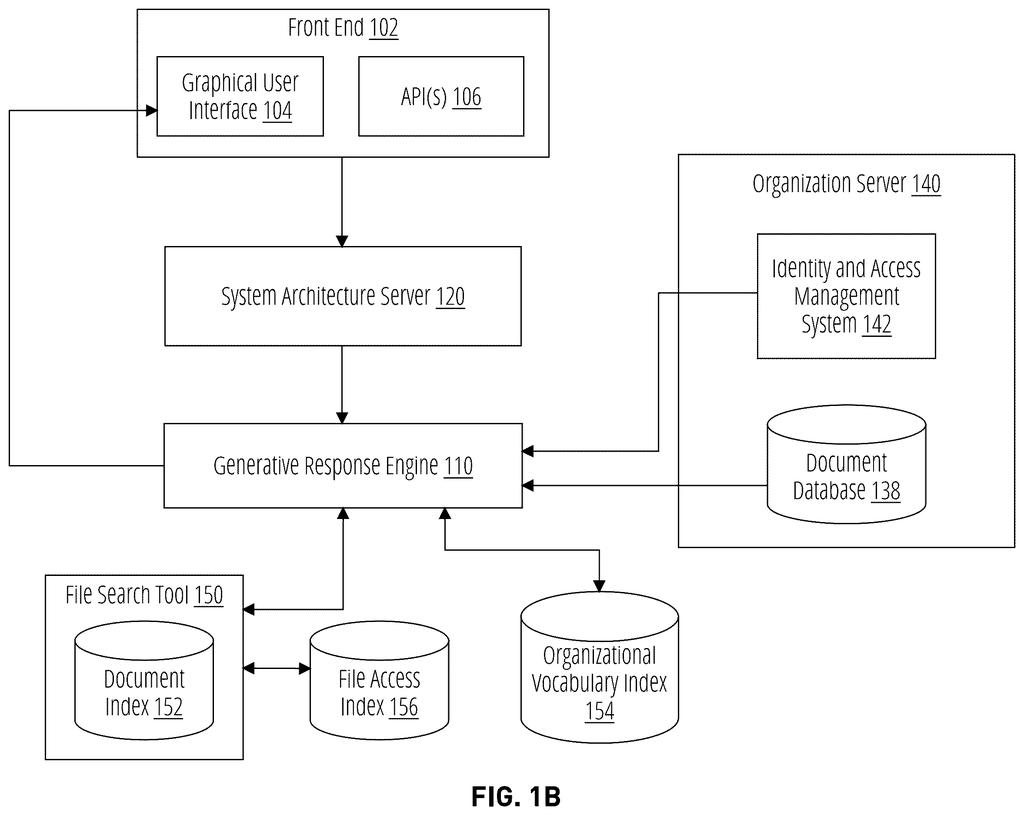
How OpenAI's AI reads your company's files safely
Every time an employee asks their company's AI assistant a question, there is a hidden problem: the AI might pull from documents the employee has no business seeing, like confidential HR files or executive strategy decks. That is the friction this patent is trying to fix.
OpenAI's proposed system works like a very careful research assistant. When you ask it something, it searches your company's internal documents for relevant passages, then checks a permission list before it hands you any of that information. If you are not cleared to read a particular file, the AI will not use it in your answer.
The result is an AI that understands your company's own language and internal knowledge, project codenames, team structures, private policies, but that cannot accidentally leak information up or down the org chart. It is a practical fix for a real headache any business faces when it tries to deploy AI internally.
… determining, by the generative response engine, that the user account is authorized to access the respective content item based on a content item access index, wherein the content item access index comprises permission information for the content items in the content management system …
Translation: The system checks permission records to ensure the user has clearance to view the retrieved company file.
How the permission check fits into the search-and-answer loop
The system described in the patent sits between a user's question and a company's file storage. It works in a few distinct steps:
- Query generation: The AI receives a plain-language question from an employee and converts it into a structured search query.
- Chunk retrieval: That query is sent to an internal search tool, which looks through an index of the company's documents. The documents have been pre-split into smaller sections (called "chunks") so the AI only needs to pull the most relevant piece, not an entire 40-page report.
- Permission check: Before the AI uses any chunk in its response, it consults a content item access index (essentially a master list of who can read what). If the user's account does not have access to the source document, that chunk is off-limits.
- Response generation: The AI writes its final answer using only the chunks it is authorized to show that particular user.
The system is also designed to understand company-specific terminology. If your organization calls its annual planning process something unusual, the AI learns that meaning from internal context, not just general internet knowledge.
The architecture leans on retrieval-augmented generation (RAG), a technique where an AI supplements its built-in knowledge by fetching relevant documents at the moment of answering, rather than having everything baked in at training time. The permission layer is the patent's main addition on top of that established approach.
… respects access privileges of the organization so that the generative response engine does not leak information within the organization to unauthorized members of the organization …
Translation: The AI protects internal company secrets by blocking employees from seeing documents they lack permission to view.
What this means for AI in corporate software
For companies already paying for tools like Microsoft 365 Copilot or Google Workspace AI, the core anxiety is data leakage: what happens when the AI knows too much? OpenAI has been filing around enterprise AI tooling since 2024, and this patent points directly at that concern. A system that enforces existing access controls means a junior employee cannot accidentally extract a salary spreadsheet just by chatting with an AI.
From a product standpoint, this is clearly aimed at enterprise customers who need to connect ChatGPT or a similar model to their internal knowledge bases. The patent describes the kind of infrastructure those deals require: not just a clever AI, but an AI that respects the organizational rules a company already has in place.
This is the third OpenAI filing we've tracked since September in our AI guardrails race watchlist, after a watchdog for model reasoning and one catching AI cheating.
The building blocks here are all things companies already have: file storage, rules about who can read what, and AI that answers questions in plain language. What the patent describes is a specific way to wire them together so the AI checks your access rights before it uses any piece of information to answer you.
The detail that makes this deployable rather than theoretical is that the permission check works at the level of individual sections, not whole documents. Sensitive salary figures buried inside a broader HR file stay hidden from employees who have no right to see them, while the rest of the document remains fair game.
No new hardware is needed, and no research breakthrough has to land first. A company could point this system at its internal files tomorrow and let employees ask plain questions instead of hunting through folders, with the system enforcing the same rules that already govern who sees what.
There are more where this came from
We read every patent application Big Tech publishes and send you the ones worth knowing. Plain English, free, every week.
The drawings
19 drawing sheets from US 2026/0277966 A1 · click any drawing to enlarge


Want this weekly breakdown for a company we don't cover? Patentlyze Pro →
Be the first to weigh in