
Apple Patents a Way to Show What Your Wearable Device Is Covering Up
When you strap a device to your wrist or hand, it hides the very thing it might need to show you. Apple's new patent describes a system that uses a built-in camera to find your hidden body part and line the on-screen image up with it precisely.
What Apple's body-alignment display actually does
A smartwatch sits on your wrist, covering the skin underneath. If you want to see what's beneath it, or if an app needs to display something that lines up with your wrist, the device is working blind.
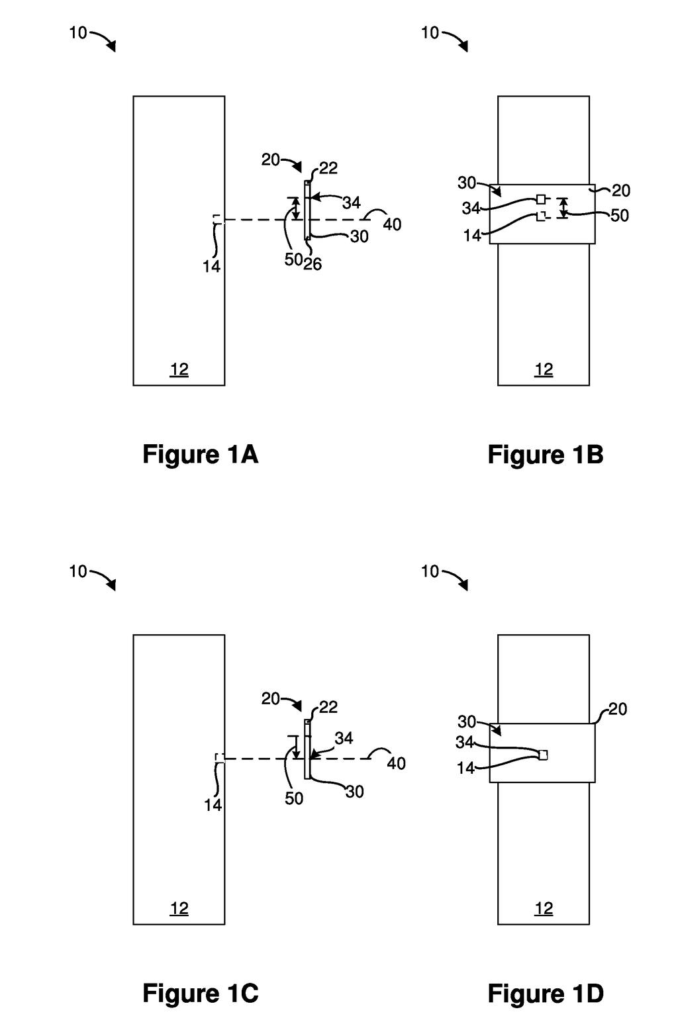
Apple's patent covers a system that fixes that. A camera built into the device takes a picture of the body part it's sitting on, figures out exactly where that body part is relative to the screen, and then adjusts whatever image it's displaying so the two line up. Think of it like the device taking a quick look at what it's covering, then positioning its display as if the screen were a window onto that spot.
The most obvious use case is health and fitness apps that overlay information or visuals directly onto your skin, but the same idea could apply anywhere positional accuracy between a wearable screen and the body underneath it matters.
capturing, via the image sensor, a first image of a body part of a user of the device, wherein the device occludes the body part when the user wears the device …
Translation: The wearable gadget takes a picture of the skin it is currently hiding from view.
How the camera tracks and maps the hidden body part
The patent describes a device (a wearable, most likely) that includes an image sensor, a display, memory, and a processor. The key constraint is that the device physically covers the body part when worn, so the user cannot see it directly.
Here's the sequence the patent lays out:
- The image sensor captures a photo of the body part underneath or adjacent to the device.
- The processor analyzes that image to determine the position of the body part relative to the display (meaning: where is the wrist, finger, or skin patch sitting in relation to the screen's coordinate space?).
- The system generates a second image, the one meant to be shown to the user.
- That second image is rendered in alignment with the detected body-part position, so it lines up correctly rather than sitting at a fixed, potentially mismatched location on the screen.
The claim is intentionally broad about which body part is involved, but the scenario of a watch or band occluding a wrist is the clearest fit. The camera doing the sensing is pointed inward, toward the body, rather than outward toward the environment.
… generating an image for display based on a position of a body part relative to a display of a device …
Translation: It creates a visual to show on the screen based on where your body is positioned under it.
What this means for wearables that cover your skin
For wearables that display health data, augmented overlays, or anything meant to correspond to a specific patch of skin, positional drift matters. A vein visualization, a skin-tone reading, or a fitness graphic that doesn't land in the right spot on screen is both less useful and less trustworthy. This patent addresses that gap at the hardware-software boundary.
Apple has been filing around wearable sensing and body-interaction since at least 2020, and this fits that pattern. If Apple Vision Pro, Apple Watch, or a future device gets a camera pointed at the body it's resting on, this alignment system is the kind of infrastructure patent that makes the whole feature feel polished rather than approximate.
Apple's 39th filing in our Display topic coverage since May follows work like the hospital screen tool and the self-flattening foldable hinge, adding to the screen applications we've tracked.
The tradeoff here is power and privacy for precision. Running a camera continuously to track a body part under the device costs battery life and raises questions about what that image data is stored or shared. The patent doesn't address either concern, which is typical for a filing at this stage, but they're real costs any shipping product would have to answer.
That said, the alignment problem the patent solves is a real one. Fixed-position overlays on wearable screens look sloppy whenever the device shifts even slightly on the body. A system that corrects for that dynamically would be a meaningful improvement in how health or AR features feel to use.
Whether this is worth the camera-on overhead depends entirely on the use case. For a passive health dashboard, probably not. For something like real-time vein mapping or precise skin-contact feedback, the trade reads as worth making.
There are more where this came from
We read every patent application Big Tech publishes and send you the ones worth knowing. Plain English, free, every week.
The drawings
4 drawing sheets from US 2026/0289800 A1 · click any drawing to enlarge


Want this weekly breakdown for a company we don't cover? Patentlyze Pro →
Be the first to weigh in