
Apple Patents a Self-Flattening Hinge for Foldable iPhones
Every foldable phone today leaves a crease where the screen bends. Apple's latest patent targets that crease directly, using spring-loaded parts inside the hinge to push the display back into a flat, taut surface the moment you open it.
What Apple's folding-screen hinge fix actually does
Today's foldable phones fold along a hinge, and that repeated bending leaves a visible crease in the screen. Worse, when you open the phone flat, the display can sag or ripple slightly near the fold. That's the problem Apple is trying to solve here.
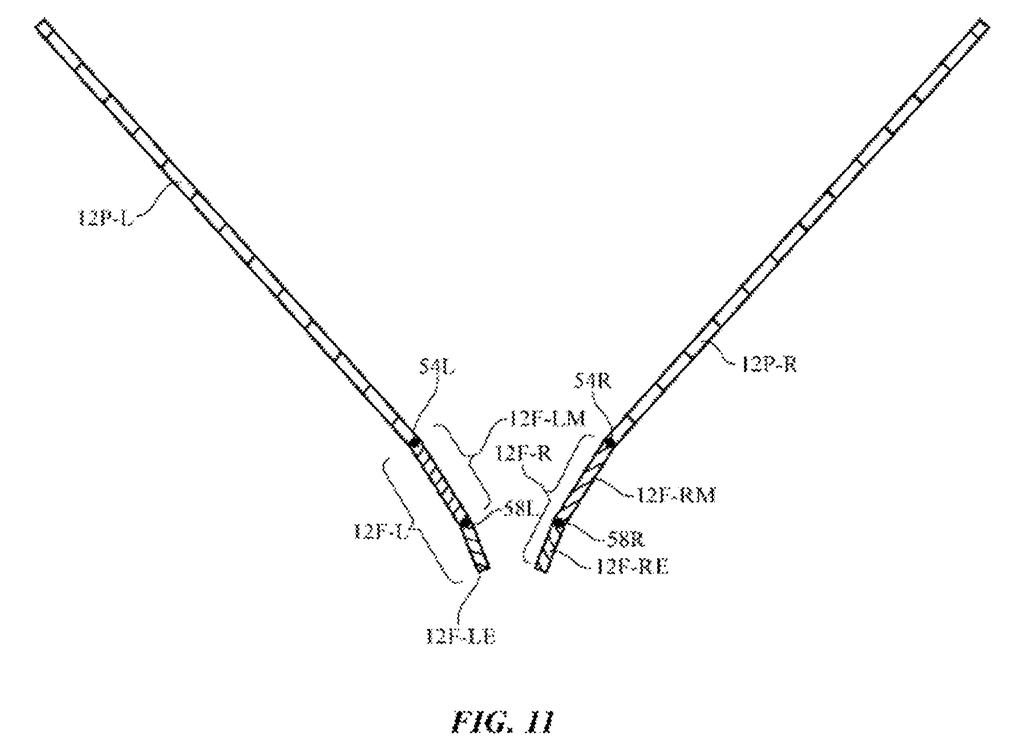
Apple's patent describes a hinge where each half of the phone's body contains a small spring-loaded piece. When you unfold the phone, those springs push outward against the back of the display, gently stretching it toward flat. The effect is a little like pulling a tablecloth from both ends to remove the wrinkles. The springs work passively, meaning no motor or software needed.
The patent also describes small retractable flaps near the hinge. When the phone folds shut, the flaps pull back to clear a path for the bent part of the screen, so the display isn't pinched or stressed while it's folded. Together, the two ideas address both the open-flat crease problem and the folded-closed stress problem in one mechanical package.
… a first biasing structure that biases the first inner member away from the first plate to help flatten the flexible display when the flexible display is unfolded about the bend axis …
Translation: Spring loaded parts push against the screen to remove creases when opened.
How the spring members push the display flat on opening
The patent describes a foldable device, likely a phone, built around a flexible display that bends along a central axis. The housing on each side of that axis is not a single solid piece; it's layered.
Each housing half contains three key elements:
- An outer plate the display is bonded to directly
- An inner member that sits behind the plate, close to the hinge
- A biasing structure (a spring or equivalent mechanism) that pushes the inner member away from the outer plate
When the device is opened flat, those springs extend and push the inner members outward. Because the display is bonded to the plates, this outward push creates tension that helps the display lie flat. Think of it like a window-shade roller creating tension to keep fabric taut. The claim specifies this happens on both sides of the fold symmetrically.
Separately, the hinge mechanism includes movable flaps that retract when the device folds. These flaps normally occupy space behind the display near the hinge, but they pull back when the phone closes, giving the bent portion of the flexible screen room to arc without being compressed against a hard surface. This reduces mechanical stress on the screen during repeated folding cycles.
Movable flaps may be retracted when the housing is bent to create room for a bent portion of the display.
Translation: Internal panels slide out of the way to make space when the phone folds.
What this means for a future foldable iPhone
Crease visibility and screen durability are the two biggest complaints real people have about today's foldable phones from Samsung, Google, and others. A mechanism that passively flattens the display without extra motors or software would be meaningful, since it adds no power drain and nothing to calibrate.
Apple's long bet on foldable displays has been visible in filings for several years, and this patent fits a pattern of solving the hinge-crease problem from the mechanical side rather than the software side. If this approach works as described, it could be one of the design arguments Apple makes when positioning a foldable product against phones already on the market.
Apple's ninth filing we've tracked since May on their foldable iPhone work follows earlier applications on a ceramic cover layer and a protective screen border.
Springs that pull the two halves of a folding phone apart when it bends are doing real work, but every spring loses tension over time, and when that happens the screen loses the protection it was promised from day one.
The flaps that fold away to make room for the bent part of the screen are the more convincing piece of this design, because they solve a problem anyone can picture: a screen that gets pinched shut thousands of times will eventually show it. Making room for that bend automatically is a direct answer to a real cause of failure.
The cost of all this is a hinge packed with small moving parts, each one a place where something can go wrong after two or three years of daily use. That trade reads as worth it only if the parts hold their tolerances long after the warranty expires, which is exactly what launch-day reviews cannot tell you.
There are more where this came from
We read every patent application Big Tech publishes and send you the ones worth knowing. Plain English, free, every week.
The drawings
37 drawing sheets from US 2026/0277281 A1 · click any drawing to enlarge


Want this weekly breakdown for a company we don't cover? Patentlyze Pro →
Be the first to weigh in