
OpenAI Files Patent for a Stop Button That Interrupts Its Voice AI Mid-Answer
Ever wished you could cut off a talking AI mid-ramble without hanging up on it? OpenAI's patent application describes a test screen with exactly that control.
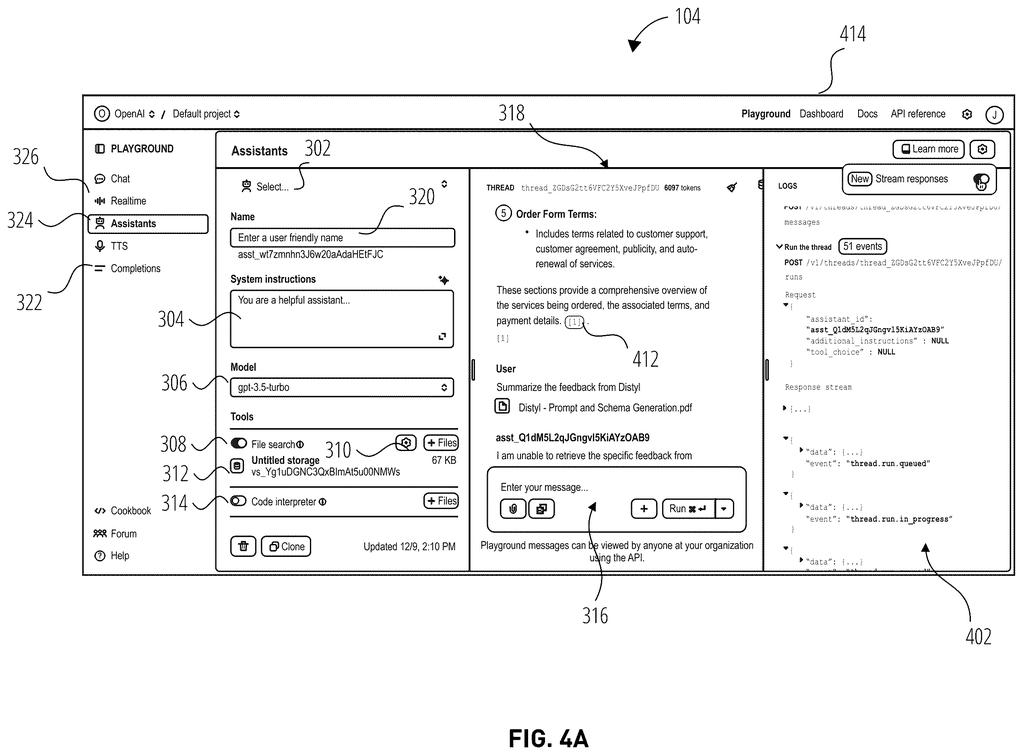
What OpenAI's voice AI stop button does
Imagine you're testing a voice assistant you built, and you ask it a simple question. It launches into a three-minute speech. Many setups leave you to wait it out or shut everything down and start over.
OpenAI's patent application describes a test screen with a button that fixes that. Press it while the AI is mid-answer and it stops talking, but the conversation stays open and remembers everything said so far. Press it again and the AI can answer based on that running chat.
The screen also has a switch for automatic turn-taking, the AI's own guess about when you've finished speaking. Turn it off and the AI stays silent until you tell it to answer, which is handy if you're chatting with a coworker nearby.
… suspend an active response generation operation for the particular response while the response is being streamed without terminating the real-time communication session …
Translation: Users can cut off the AI's current spoken answer instantly without hanging up the phone.
How the generate toggle keeps the session alive
The patent application covers a test screen for developers who build voice and chat apps on top of an OpenAI model. You press a start session button, and a generation control toggle appears. It flips between two states: the AI is producing an answer, or it is not.
Flip it off mid-answer and the interface sends a command telling the AI to give up its turn (stop speaking and stop streaming text) while the session stays open. Flip it on and the AI generates a response based on the chat history (the running record of everything said). The filing also says tapping the control a second time can resume a partly finished reply.
Around that main control, the filing describes several supporting pieces:
- Automatic turn detection toggle: when on, the system decides by itself when you've finished talking and when to respond. When off, it waits for your signal.
- Sound activity monitor: a moving wave line tied to the loudness of the microphone. In the example, it changes from gray to red when the AI detects speech.
- Typing and mute: you can type a prompt instead of speaking, or mute the microphone.
- Manual mode: a talk button records you, converts speech to text (speech-to-text), and sends it to the AI.
The description also covers extras outside the main claim, such as side-by-side panes for comparing two versions of an AI model and a button that writes system instructions from a plain-language description.
… have a generation user interface (UI) element that allows a user to manually stop the response generation by the CGRE …
Translation: The interface includes a dedicated button that lets people interrupt the artificial intelligence whenever they want.
Why voice AI builders could test faster
If you build voice apps, testing is slow when you cannot interrupt the AI or tell it to ignore a nearby conversation. The filing says controls like these can cut testing cycles from hours to minutes, though that is the company's own claim.
For everyone else, the effect is indirect. Voice assistants that you can cut off cleanly, without losing the thread of the chat, tend to feel less frustrating, and this is the kind of tool builders would use to tune that behavior. The filing names OpenAI's Realtime API as its example, so its example setting is OpenAI's developer playground for that API.
One more thing to know: the patent office has already approved this application, and OpenAI has paid the fee to have it issued, so it should become a granted patent soon. The final granted claims may read a little differently from the version described here.
OpenAI's sixth filing in voice and speech AI we've tracked since October builds on earlier applications like on-screen listening cues and forgetting talked-over speech.
Few filings sit as close to a finished product as this one. It needs no new hardware, only a web page with buttons on it, and the filing says the voice features it controls, including turn detection and a choice of voices, already exist in OpenAI's Realtime API.
The shortest route to shipping is a software update to a developer testing screen. The hard engineering, a voice model that can stop mid-sentence and pick the thread back up, lives behind the buttons. What the claims cover is the control layout and the commands it sends.
That makes it a modest idea with an easy path. A stop button that keeps the conversation alive is something you would expect from any voice assistant. For developers, it is a convenience that would probably arrive as a menu item in a tool they already use.
Get our take in your Top Stories
Liked this breakdown? Add Patentlyze as a preferred source on Google, and our plain-English take shows up more often in your Top Stories the next time OpenAI patent news breaks.
There are more where this came from
We read every patent application Big Tech publishes and send you the ones worth knowing. Plain English, free, every week.
The drawings
32 drawing sheets from US 2026/0310943 A1 · click any drawing to enlarge


Show the other 24 sheets


Want this weekly breakdown for a company we don't cover? Patentlyze Pro →
Be the first to weigh in