
Nvidia Files Patent for Faster 3D Views That Spend Extra Effort Only on Fuzzy Spots
To a computer, your face has two very different textures: smooth skin that needs one quick look, and wispy hair that needs many. A new Nvidia patent builds that difference into how 3D scenes get drawn.
What Nvidia's adaptive shell does for 3D scenes
Every time a computer draws a 3D scene from a new angle, it has to decide how much work each pixel deserves. A smooth cheek and a tangle of eyelashes do not need the same amount of effort, yet checking every spot thoroughly is slow.
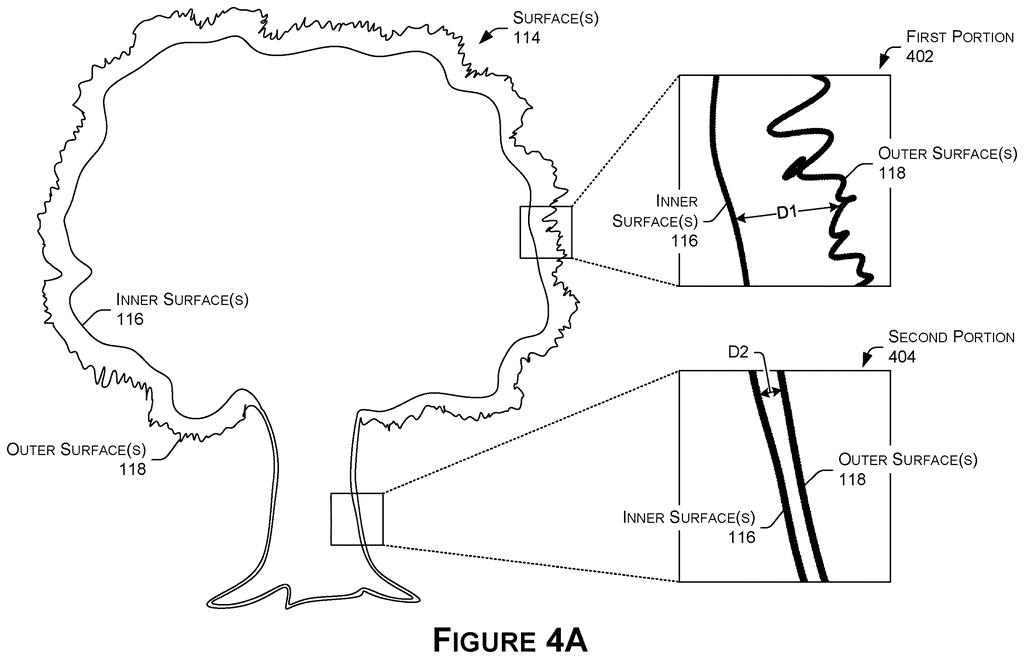
Nvidia's patent describes wrapping an invisible shell around an object, such as a face or a tree. The shell is thin where the surface is solid, like skin or a trunk, and thick where things are fuzzy or see-through, like hair or leaves. The computer then does its checking only inside that shell, taking a single look at solid spots and several looks at fuzzy ones.
The filing says this can cut the number of checks by hundreds or even thousands, while keeping the picture quality high. For you, that could mean 3D views that draw faster in places like virtual reality.
determining, using a machine learning model, one or more characteristics associated with a three-dimensional (3D) representation of an object depicted in one or more first images; determining, based at least on the one or more characteristics, one or more offset distances for a boundary region associated with the 3D representation; …
Translation: AI analyzes pictures of an object to figure out where its edges are blurry and need extra detail.
How the shell gets thick for hair, thin for skin
The filing starts with a neural radiance field (NeRF), a trained AI model that learns what a scene looks like from ordinary photos, then paints it from angles nobody photographed. NeRFs look great but are slow, because the computer must ask the model many questions, called samples, along every line of sight.
Here, the model also outputs a spatially varying kernel size, a per-spot score of how sharp or fuzzy the content is. Solid surfaces like skin or bark get a small value. Fuzzy, see-through stuff like hair or leaves gets a large one. From those scores the system builds a shell with two surfaces:
- An outer surface, made by growing the object's boundary outward (dilation).
- An inner surface, made by shrinking it inward (erosion), which moves faster through low-density areas.
The gap between the surfaces is the shell's thickness. To draw a picture, the renderer shoots rays (imaginary lines of sight) at the shell and takes evenly spaced samples only where a ray passes through it. Empty space is skipped. A thin stretch can need just one sample, while the filing's example of a thick stretch uses seven. If a ray hits the inner surface, it stops, since that is the solid interior.
… the 3D representation may be a neural radiance field that includes, as a neural output, a spatially varying kernel size predicting the characteristics of the object, and the features of the acceleration data structure may be related to the spatially varying kernel size.
Translation: The system uses an artificial neural network to figure out how much computing power each part of the 3D scene requires.
Why faster 3D views matter for AR headsets
NeRF-style 3D scenes look realistic, but the filing itself says they cost too much computing time for uses like augmented, mixed and virtual reality, and that earlier speed-ups often gave up picture quality. This patent aims to keep the detail while cutting the number of checks by hundreds or even thousands.
The filing lists a wide range of uses: AR and VR, 3D content creation, simulation, digital twins, robots and self-driving systems. If it works as described, your headset or a game studio's tools could build new camera angles from a handful of photos without the long wait. That is a big if, since a patent describes an approach and nothing here says a product is coming.
Nvidia's 41st filing we've tracked since July in our GPU rendering race watchlist follows the grainy graphics cleanup patent and the shader pre-loading application.
Claim 1 is wider than the filing's face and tree examples suggest. It asks for a learned model that scores an object, a shell around it whose thickness changes from one spot to another, and pictures drawn from samples taken inside that shell. Ray casting and the shrink-and-grow steps that build the shell appear only in later claims, and the claims never name neural radiance fields at all.
Claim 18 goes further. It drops the learned model entirely and covers a processor that draws images from a shell of varying thickness, where the thickness sets how many samples each area gets. If granted as written, that wording would reach any rendering method built on that single idea, however the shell is made.
It is a simple idea you can explain in one breath: spend effort where the picture is fuzzy. A claim this broad may get narrowed during review, so the final version could look closer to the later, more specific claims.
Get our take in your Top Stories
Liked this breakdown? Add Patentlyze as a preferred source on Google, and our plain-English take shows up more often in your Top Stories the next time Nvidia patent news breaks.
There are more where this came from
We read every patent application Big Tech publishes and send you the ones worth knowing. Plain English, free, every week.
The drawings
18 drawing sheets from US 2026/0320902 A1 · click any drawing to enlarge


Show the other 10 sheets


Want this weekly breakdown for a company we don't cover? Patentlyze Pro →
Be the first to weigh in