
Nvidia Patents an AI System That Pre-Loads Graphics Code Before Your Game Asks for It
Every time a game loads a new scene or effect, it may stall while it compiles the graphics code it needs. Nvidia's new patent describes a cloud server that uses a trained AI model to predict which graphics programs are coming next and ships them to your device before you ever ask.
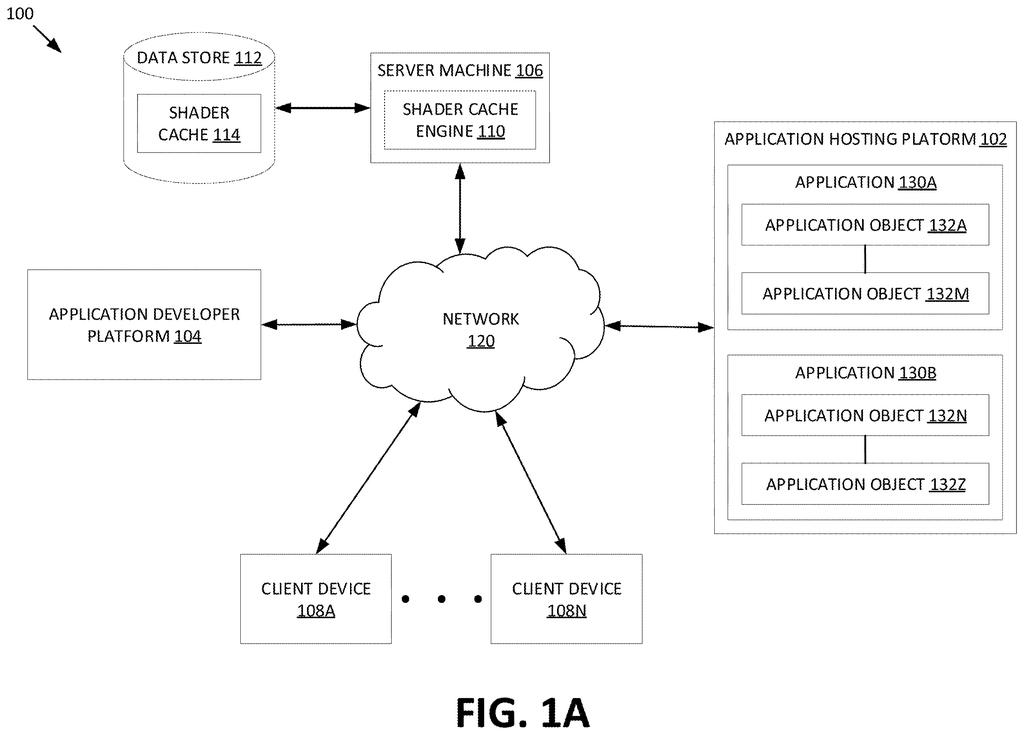
What Nvidia's shader pre-loading system actually does for gamers
You're playing a game streamed from the cloud, and every time you step into a new area, the frame rate drops for a second or two. That stutter happens because the system is scrambling to prepare the graphics code (called a shader) for the new scene right when it's needed.
Nvidia's patent describes a smarter approach running on the cloud server side. When your device requests a shader for one scene, the server feeds that request into an AI model that has learned the patterns of how games use shaders. The model predicts which shaders you're likely to need in the next few moments and assigns each a confidence score. Any shader that scores above a threshold gets bundled up and sent to your device immediately, before you need it.
The result is that the graphics code arrives early, so the game can use it the instant the scene loads. You get fewer freezes, without the server wasting bandwidth sending shaders you'll probably never use.
… obtaining, from the trained model, an indication of one or more additional compiled shader programs and, for each additional compiled shader program of the one or more additional compiled shader program, a level of confidence that the respective additional compiled shader program will be requested within a time window associated with one or more subsequent rendering operations …
Translation: An AI predicts which graphics files your game will need next based on how likely you are to use them soon.
How the trained model predicts and ranks incoming shader requests
When a client device (a phone, thin client, or browser) requests a compiled shader program from the cloud, the server extracts identifying information tied to that request. That information takes two forms:
- Shader key: a fingerprint of the client's hardware and software state, capturing things like the GPU model or driver version in play.
- Shader value: a descriptor derived from the shader's own source code, describing what the program actually does.
Either or both are fed into a trained model (a machine-learning system that has seen many shader-request sequences across games). The model returns a ranked list of additional shaders it expects the device to request soon, along with a confidence level for each. Think of it like a recommendation engine that says, "After this shader, players almost always need these three next."
The server then pulls from a shader cache (a stored library of pre-compiled graphics programs) only those additional shaders whose confidence score meets a set threshold. Those are bundled with the originally requested shader and pushed to the client device in a single response. Shaders with low confidence are left in the cache and not sent, keeping bandwidth use in check.
Apparatuses, systems, and techniques for caching compiled shader programs in a cloud computing environment.
Translation: Methods for storing and sending preprocessed game graphics data over cloud servers.
What this means for cloud gaming stutter and streaming quality
Shader compilation stutter is one of the most persistent complaints in PC and cloud gaming. Games have to translate graphics instructions into code a specific GPU understands, and if that translation hasn't happened yet when a scene loads, the game freezes briefly. It's a problem that hardware alone can't fully solve because the set of shaders a game needs depends on what the player is doing and what hardware they're on.
For cloud gaming specifically, the stakes are higher. The server controls the rendering, so a smart cache at that layer can help every player on every device type at once. Nvidia's interest in cloud rendering infrastructure shows up across a growing range of filings, and this one sits at the intersection of AI prediction and latency reduction in ways that matter most to streaming performance.
Nvidia's 39th filing we've tracked since July in the GPU rendering race builds on their earlier work on parallel 360-degree image math and stopping duplicate image work.
Shader stutter is a real and well-documented problem. Players have complained about it for years, and game developers have built elaborate workarounds, including shader pre-compilation screens at startup, that are themselves unpopular. The problem is significant enough that Sony and Microsoft have both built hardware-level mitigation into their latest consoles.
The cloud angle here is what makes this approach interesting rather than routine. In a cloud gaming setup, the server can accumulate usage data across millions of sessions and train a prediction model that no individual device could ever build on its own. The confidence-threshold mechanism is also practical: it keeps the system from over-sending and wasting the very bandwidth that cloud streaming depends on.
The open question is how well the model generalizes across different player behaviors and hardware configurations. A prediction model trained on one game's shader patterns may not transfer well to another. That's a real engineering challenge, and the patent doesn't fully address it, but the core idea of using server-side AI to smooth out a client-side stutter problem is a reasonable match for the scale of the problem.
There are more where this came from
We read every patent application Big Tech publishes and send you the ones worth knowing. Plain English, free, every week.
The drawings
19 drawing sheets from US 2026/0299906 A1 · click any drawing to enlarge


Want this weekly breakdown for a company we don't cover? Patentlyze Pro →
Be the first to weigh in