
IBM Files Patent to Help Mobile Data Centers Pick the Greenest Wireless Charger
When a robotic data center runs low on power, IBM's filing has it call out to nearby machines for a wireless recharge, then choose the one with the smallest carbon footprint.
What IBM's green-charger patent actually does
You're running a mobile data center in a remote area with no power grid, and the battery gauge is sinking fast. Three robots nearby could beam you some power. Which one do you call? The obvious pick is the closest one, but IBM's filing adds another test: which one does the least damage to the environment?
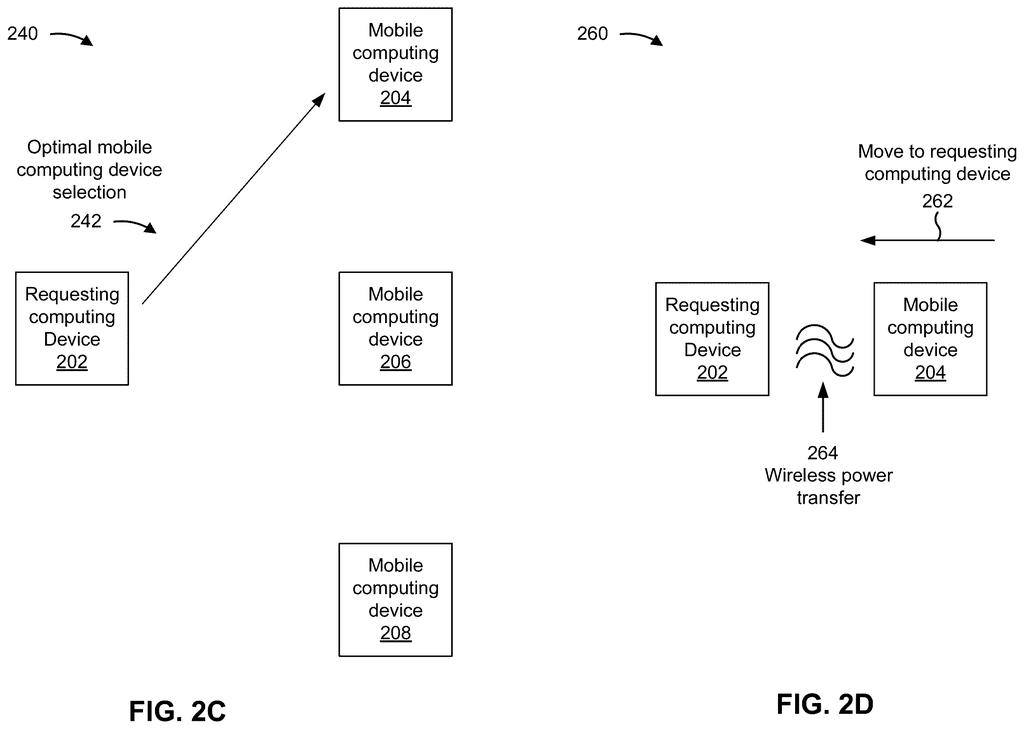
Under the patent, your machine sends out a call for energy. Any robot that can help answers, and the reply says what powers it (solar, wind or fuel), how it would deliver the power, and how far it has to travel. Your machine turns those answers into points, with more for renewable power and shorter trips, then picks the top scorer. That robot drives over and charges you wirelessly.
The filing even describes keeping a tally of carbon credits earned each time the greener option wins, which can be reported to a regulator.
… computing, by the requesting computing device, a respective sustainability metric for each mobile computing device of the one or more mobile computing devices using the one or more respective operating characteristics of each acknowledgment message; …
Translation: The requesting device calculates a green score for each available charger based on its current stats.
How IBM's sustainability score ranks helpers
The setup starts with a requesting device, such as an autonomous ground vehicle or a portable data center, that is running low on power. It estimates how much energy a job will take, using past records (one example is collecting 5 gigabytes of data from IoT devices, meaning internet-connected sensors, over 800 meters). If its battery falls short, it asks for help.
The request can be broadcast to everything in range and can include the amount of energy needed, a location, and a deadline. Each willing helper replies with an acknowledgment listing its operating characteristics:
- Energy source type, such as solar, wind or fuel
- Wireless power method: inductive coupling (magnetic fields between coils), capacitive coupling, or laser
- Travel route and the energy burned reaching the requester
- Energy lost during the transfer
- Energy needed to get back to base
The requester turns these into a sustainability metric, a points total. Points can be fixed (10 for a renewable source, 8 for an efficient method) or ranked against the other helpers. The filing also offers a formula: carbon intensity (emissions per unit of energy) times the power drawn by computing and non-computing equipment, such as cooling.
The top scorer gets a selection message, drives over, and sends the power. Several helpers can share the job, for example 80% renewable and 20% non-renewable.
The requesting computing device may select an optimal mobile computing device from the one or more mobile computing devices by analyzing the respective sustainability metric for each mobile computing device of the one or more mobile computing devices.
Translation: The system picks the best wireless charger by comparing the green scores of all nearby devices.
Why remote data centers could use this
For now this targets a narrow group: machines that work where the grid does not reach, such as data collection or computing support in remote or disaster-stricken areas. If one of those machines can ask for a recharge and choose the cleanest answer on its own, a job is less likely to stall when its battery runs low, and nobody has to arrange the charge by hand.
The bigger angle is carbon bookkeeping. Many companies track their energy footprint, and this filing builds that record into the choice itself, down to a running tally of carbon credits. It remains a patent application, and it describes a method with no product attached.
IBM's 404th filing in our IBM coverage since May continues a software-debugging thread that includes one on flagging blind spots and one turning code into flowcharts.
You will probably never see this one in action. The machines it describes, mobile data centers and robotic vehicles working far from a power grid, are not something most people own. The benefit shows up indirectly: a service running in a disaster zone or at a remote work site keeps going instead of going dark when its battery runs low.
The scoring idea is simple, a points tally where solar beats fuel and a shorter trip beats a longer one. That simplicity helps, since a machine low on power cannot spend much energy deciding who should charge it. The open question is time: the request can carry a deadline, and a clean charger that arrives late would still leave the work stalled.
As a document, it is routine engineering with a green label. The carbon credit tracking is the part a company's sustainability team would notice first.
Get our take in your Top Stories
Liked this breakdown? Add Patentlyze as a preferred source on Google, and our plain-English take shows up more often in your Top Stories the next time IBM patent news breaks.
There are more where this came from
We read every patent application Big Tech publishes and send you the ones worth knowing. Plain English, free, every week.
The drawings
7 drawing sheets from US 2026/0333218 A1 · click any drawing to enlarge


Want this weekly breakdown for a company we don't cover? Patentlyze Pro →
Be the first to weigh in