
Google's New Patent Teaches Energy Converters to Foresee Power Outages Before They Happen
Most power inverters just convert electricity and stay quiet. This Google patent describes one that actively interrogates the grid it's connected to, looking for warning signs of failure before anything breaks.
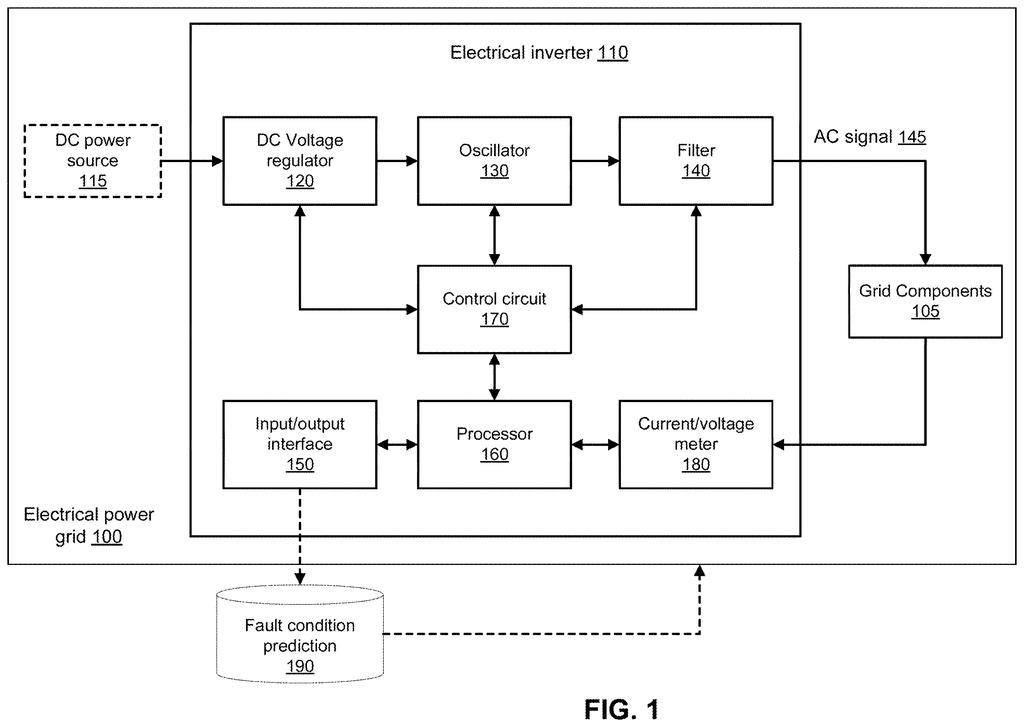
What Google's self-diagnosing inverter actually does
A transformer blows in a neighborhood. Somewhere upstream, nothing saw it coming. That kind of surprise is exactly what this patent tries to eliminate, and it could matter to anyone who depends on the grid staying on.
The idea is to give a power inverter, the device that connects a solar panel or battery to the electrical grid, a way to constantly check the health of the grid around it. The inverter sends out small test pulses at different frequencies, then listens to how the grid responds. If the pattern looks like trouble is brewing, the inverter changes how it operates to cushion the impact.
Think of it like a doctor tapping your knee with a reflex hammer. The inverter is doing something similar: probing the grid, reading the reaction, and adjusting before a problem turns into an outage.
outputting, by the inverter, a plurality of electrical signals of different frequencies to the electrical power grid; measuring, by the inverter, responses of the electrical power grid to the plurality of electrical signals to obtain measurement data …
Translation: The device sends test signals into the grid and listens to how the system reacts.
How the inverter probes the grid with test signals
The patent describes a method where an inverter, a device that turns DC power from solar panels or batteries into AC power for the grid, takes on an active diagnostic role.
Here is the basic sequence:
- The inverter outputs a set of electrical signals at different frequencies into the grid. These are small, deliberate test tones, not random noise.
- It measures how the grid responds to each frequency. The response pattern (sometimes called the grid's impedance signature) reveals the electrical characteristics of everything connected nearby.
- On-board processing converts those measurements into prediction data: a model of what fault conditions are possible and what grid states might trigger them.
- The inverter then adjusts its own operating settings based on that model, changing parameters like output voltage, reactive power, or switching behavior so that if a fault does occur, the inverter's response is already tuned to minimize damage.
The claim language specifies that each predicted fault is linked to one or more grid conditions that could cause it, meaning the system isn't just flagging generic risk; it's mapping specific causes to specific failure modes. That distinction matters for how precisely the inverter can pre-position itself.
… processes the measurement data to generate prediction data that characterizes one or more fault conditions of the electrical power grid. The inverter adjusts an operational setting of the inverter based on the prediction data.
Translation: It analyzes the test results to predict grid failures and automatically changes its own settings to prepare.
What this means for solar and battery grid reliability
For anyone who owns solar panels or a home battery, the inverter is the single piece of hardware that determines how cleanly your system interacts with the utility grid. An inverter that can sense an unhealthy grid and pre-adjust is meaningfully different from one that simply trips offline when something goes wrong.
At a larger scale, the pattern in Google's X Development energy filings suggests a sustained interest in making grid-edge devices smarter about the grid itself, not just about their own internal operation. If inverters like this become standard, they could act as a distributed early-warning network across thousands of homes and businesses, giving utilities and grid operators far more real-time visibility into fault conditions than they have today.
Google's 794th filing we've tracked since May adds to a run of smart-home sensor work, including one that writes you a summary and one that suggests actions, all part of our Google coverage.
The core idea here is teaching a power inverter to probe the electrical grid the way a doctor taps a knee to check reflexes, then use what it learns to prepare for problems before they happen. That loop, test, measure, adjust, runs entirely in software on processors that already exist inside modern inverters. No new hardware required.
The longer road is regulatory. Utilities that manage the grid are understandably cautious about devices that change their own behavior autonomously, and any inverter doing this would need to clear significant approval processes before a utility would allow it near their infrastructure.
If those approvals come, the path to product is surprisingly direct. The manufacturing side is ready; the negotiation is with regulators and utilities, not with engineers trying to build something that doesn't exist yet.
There are more where this came from
We read every patent application Big Tech publishes and send you the ones worth knowing. Plain English, free, every week.
The drawings
5 drawing sheets from US 2026/0302794 A1 · click any drawing to enlarge


Want this weekly breakdown for a company we don't cover? Patentlyze Pro →
Be the first to weigh in