
Samsung Files Patent to Catch Hackers Who Tamper With Your Phone's Security Rules
Samsung describes a way for a phone to keep a locked-away backup copy of its own security rules, then check the live version against it and shut things down if they don't match.
What Samsung's tamper-check patent actually does
You tap the camera button to take a quick photo, and your phone checks that nobody has rewritten its security rules since you last turned it on. If something has been changed, the shutter stays shut and a warning pops up instead.
That's the idea in a new Samsung filing. The phone keeps its important security data (the rules about what each program is allowed to do) in two places. One copy sits in a normal area that the phone's core software, called the kernel, can read and change. The second copy sits in a protected area the kernel can only read, never change.
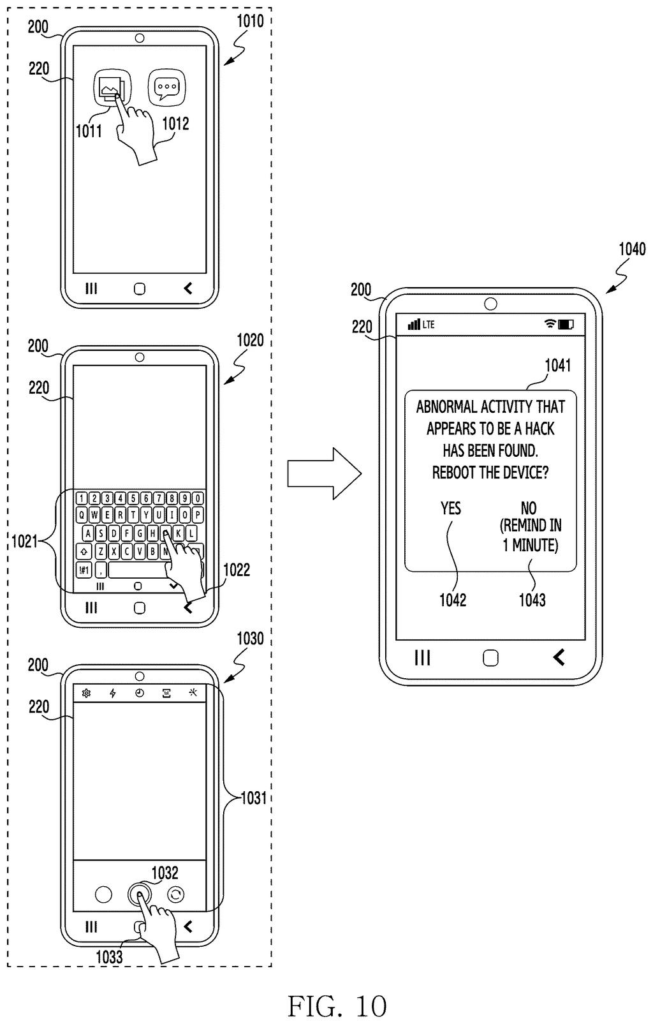
When you open an app, type on the keyboard or take a picture, the phone compares the two copies. If they match, everything carries on. If they don't, the phone treats it as a sign of tampering, blocks the action and tells you.
… compare the second security data and the first security data for the verification of the first security data, and based on identifying the first security data different from the second security data in accordance with comparison, provide a notification representing an abnormal state of the first security data.
Translation: It checks if the security rules match the originals and alerts the system if they were tampered with.
How the phone compares its rules to a locked copy
The filing covers a two-copy integrity check. The kernel (the core of the operating system, which controls hardware like the camera) can read and write the first storage area, where the working security data lives. A second storage area holds a reference copy plus a note of where the working copy sits in memory: its starting address and its size.
The second area is protected by security software with higher authority than the kernel, described as a hypervisor (a layer that sits underneath the operating system and enforces memory rules). Only the hypervisor can write to it. If the kernel tries, the hardware raises an error (a page fault) and hands control to the hypervisor, which does the write on the kernel's behalf.
Checks run on set triggers:
- A system call, which is when an app asks the kernel to do something, like use the camera. The filing says the check can run every so many calls (for example, on the 10th, 20th and 30th) and again before the kernel hands control back.
- A kernel process request, such as a keyboard or timer interrupt, when the security data is about to be used.
If the copies differ, the device blocks the function, shows a warning, and can reboot. The warning screen has two buttons: one reboots, the other defers it for a time (the example is one minute). After about ten deferrals (also an example), the phone reboots anyway. The filing also describes erasing the bad data and writing a fresh trusted copy. Its main example of protected data is SELinux policy, a Linux rulebook for what programs may access.
Why this matters for your Galaxy's security
If this ever reaches a Galaxy phone, the benefit is a safeguard against a quiet kind of attack: malware that doesn't steal your data directly but rewrites the phone's own permission rules so other bad software can run freely. Today you might never know that happened. Here, the phone would refuse to open the camera or run a function until things check out.
The trade-off is interruption. A phone that blocks the camera and nags you to reboot is annoying if it ever raises a false alarm, and the filing's deferral button suggests Samsung has thought about that. For most people this would stay invisible until something is wrong, which is how security features are supposed to work.
Samsung's 1527th filing in our Samsung coverage since May continues its AI push, joining one on predicting signal drops and one on memory chips doing AI math.
The shortest path to a product here is short, because it needs no new hardware. The filing leans on things phone chips already do: marking memory read-only and trapping bad writes. The work is software, and Samsung's own description reads like a design that could live inside the operating system.
The hard parts are tuning and trust. Checking every tenth system call costs a little speed, and a false alarm that blocks your camera would get blamed on the phone, not on an attacker. The reboot-or-defer screen with a ten-tap limit shows the authors know that tension.
Expect this to ship, if it ships, as an invisible layer you never see until something goes wrong. A routine but sensible hardening step, and one of the more practical filings in a crowded area.
Get our take in your Top Stories
Liked this breakdown? Add Patentlyze as a preferred source on Google, and our plain-English take shows up more often in your Top Stories the next time Samsung patent news breaks.
There are more where this came from
We read every patent application Big Tech publishes and send you the ones worth knowing. Plain English, free, every week.
The drawings
11 drawing sheets from US 2026/0330002 A1 · click any drawing to enlarge


Show the other 3 sheets


Want this weekly breakdown for a company we don't cover? Patentlyze Pro →
Be the first to weigh in