
Amazon Files Patent for a Fact-Check on the Links AI Chatbots Cite
Chatbots sometimes cite sources that don't exist. Amazon's filing describes a way to check each cited link against the data the AI learned from, and to flag the ones that don't match.
What Amazon's AI citation checker actually does
Imagine you ask a chatbot how to set up the database for an online game, and it hands you a confident answer with a link to a PDF. You click, and the page doesn't exist. The AI invented it.
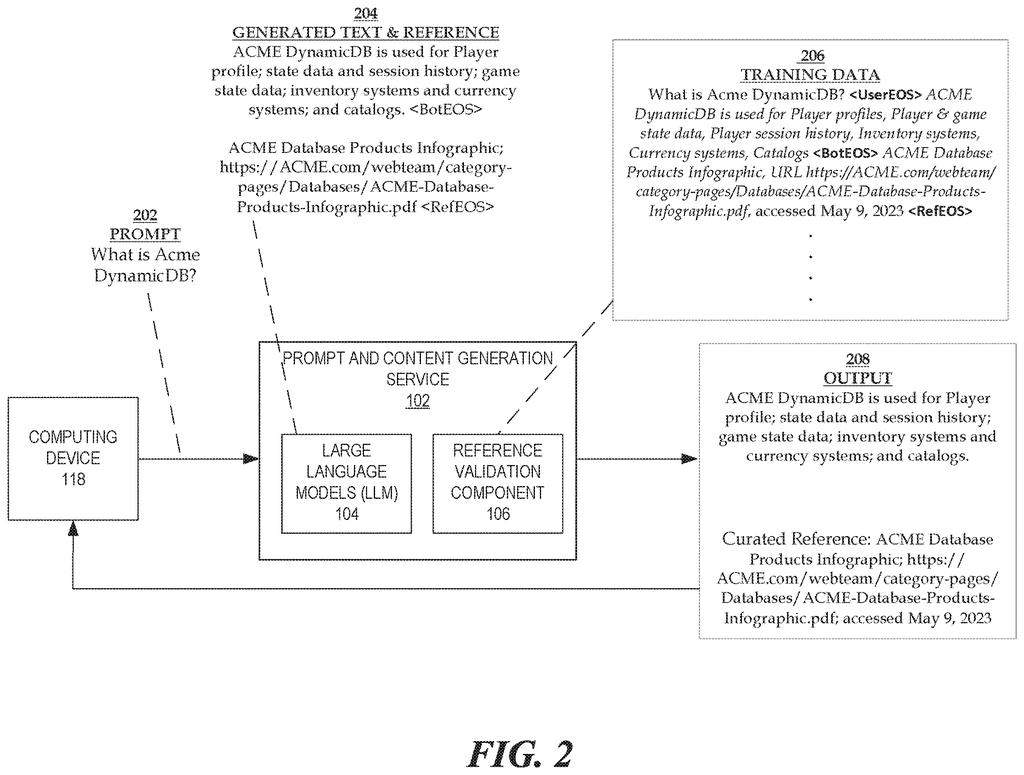
That flaw is a known one, often called hallucination. Amazon's filing describes a checker that looks at the answer and the link the chatbot gave, then searches the material the chatbot was trained on to see whether that link shows up there. If it does, your answer comes back with a note saying the source checks out.
If the match is only partial, you get a percentage and the closest sources. If nothing matches, the system tells you the link may be made up and suggests you verify it yourself. The filing even floats color coding: green, yellow and red.
… determine a degree of matching between the reference included within the output and a source data for the LLM by searching the source data to identify the degree of matching between the reference included within the output and the source data; …
Translation: It checks if the link provided by the AI actually matches its training data.
How the system scores a cited link's match
The claims cover a three-step check on the output of an LLM (large language model, the AI type behind chatbots). First, the system splits the output into two pieces: the content and the reference it cites. Second, it searches source data to measure how closely the reference matches. Third, it creates attribution information (a label saying how well the answer is backed up) and returns it alongside the answer.
The source data can be the model's own training set or passages pulled from existing web content. The reference can be a URL, and the system can check whether that URL points to a site with content supporting the answer. The dependent claims also describe two thresholds: one for how well the reference matches, and one for how well the answer itself lines up with the source.
The description adds detail. Training data can carry special tags (for example, <RefEOS> marks a human-vetted reference), so the search looks for labeled, curated entries instead of fuzzy text. Results fall into three buckets:
- Full match: the reference matches a curated entry character for character, so it counts as verified.
- Partial match: a score such as 60% is shown, and the closest curated references are ranked.
- No match: the answer is flagged as possibly hallucinated, and the system can retry with a fresh answer a set number of times.
The filing also describes a second use that these claims leave out: testing saved training checkpoints (snapshots of a model mid-training) against hundreds or thousands of stored test questions, scoring the pass rate, and stopping training when scores stop improving.
… validate generated references and training data sets of large language models (LLMs).
Translation: The system ensures that the sources cited by the chatbot are genuine.
Why a green, yellow or red label could help
If you use AI to research, shop or learn, a made-up source can waste your time or steer you wrong. A label saying whether a cited link matches vetted material gives you a quick signal about when to trust an answer and when to double-check. The filing suggests green, yellow and red indicators, and its examples involve a chatbot answering questions about a cloud service, such as how to create a storage bucket.
For the companies building chatbots, the same idea is a way to show their work. The checkpoint testing described in the filing could also spare engineers from checking thousands of test questions by hand. As a patent application, it describes an approach, not a finished feature.
Amazon's tenth filing we've tracked on our AI guardrails race watchlist since July builds on earlier applications, including one filtering dangerous content and one blocking unauthorized data access.
Made-up citations cause real harm. A lawyer who submits a fake case reference, a student who builds an argument on a source that never existed, or a doctor who acts on a fabricated study faces consequences that go well beyond embarrassment.
The fix here is deliberately narrow: the system checks whether a cited source actually appeared in the material the model learned from. That covers a meaningful slice of the problem, and for that slice it could prevent serious mistakes.
The honest limitation is that building a labeled training set costs time and money, so anything outside that curated collection still requires a manual check. The problem is large; the solution is targeted. That gap is worth understanding before trusting any citation at face value.
Get our take in your Top Stories
Liked this breakdown? Add Patentlyze as a preferred source on Google, and our plain-English take shows up more often in your Top Stories the next time Amazon patent news breaks.
There are more where this came from
We read every patent application Big Tech publishes and send you the ones worth knowing. Plain English, free, every week.
The drawings
7 drawing sheets from US 2026/0350305 A1 · click any drawing to enlarge


Want this weekly breakdown for a company we don't cover? Patentlyze Pro →
Be the first to weigh in