
IBM Patents a Two-Layer Fact-Check System for AI-Generated Advice
AI chatbots sound confident even when they're wrong. IBM has filed a patent for a system that cross-checks an AI's recommendations against multiple verified knowledge bases before anyone acts on them.
How IBM's AI output checker actually works
AI assistants that answer questions about your company's IT systems, medical procedures, or legal policies can produce responses that sound authoritative but contain errors. Right now, most systems have no automatic way to verify whether the advice an AI gives is actually grounded in facts your organization trusts.
IBM's patent describes a system that picks apart an AI's response, extracts specific claims (who should do what, and when), then checks each claim against two separate reference databases. Each claim gets a score based on how well it holds up, and those scores combine into a single confidence rating for the whole response.
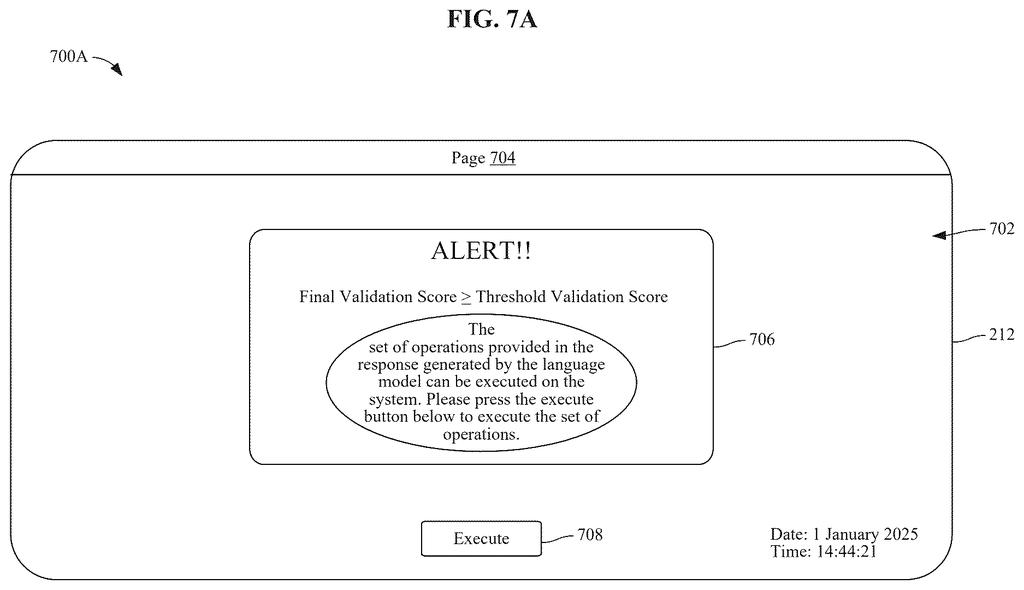
If the confidence rating clears a threshold, the recommendation gets passed along and can even trigger automated actions. If it doesn't, the system can flag the response or hold it for review. The idea is that you never have to just trust the AI's word for it.
identifying, via machine learning, first entity action pairs from a first response of a generative language machine learning model, wherein each of the first entity action pairs comprises a respective entity and a respective action associated with the respective entity …
Translation: The system breaks down the AI response into who did what.
How the entity-action scoring pipeline runs
The system starts by feeding an AI-generated response through a machine-learning layer that identifies what the patent calls entity-action pairs (essentially: who or what is involved, and what action that entity is supposed to take). Think of it as parsing "restart the server" into the entity "server" and the action "restart."
Each extracted pair then gets scored against two knowledge bases:
- A first knowledge base (likely a curated, authoritative internal source, such as official runbooks or policy documents)
- A second knowledge base (a broader or secondary reference, potentially external documentation or historical incident data)
The system produces a first validation score from the first knowledge base and a second set of validation scores from the second. Those are combined into a single final validation score for the whole AI response.
Based on that score, a recommendation from the AI's original response is either surfaced to a user or fed into automated workflows. The patent explicitly ties this to "controlling operations," which suggests the system is designed for environments where AI advice can directly trigger real-world actions, like IT automation or infrastructure management.
A first validation score is determined based on whether the first entity action pairs are present within a first knowledge base and a second set of validation scores is determined based on whether the first entity action pairs are present within a second knowledge base.
Translation: It checks those actions against two different trusted databases to see if they are true.
What this means for AI used in high-stakes decisions
For organizations that have started letting AI systems suggest or even execute changes to infrastructure, software, or business processes, a hallucinated recommendation can cause real damage. A confident but wrong instruction to "reboot this server" or "revoke this user's access" can cascade into an outage or a security gap. IBM's design tries to put a structured verification layer between the AI's output and any consequential action.
the pattern in IBM's AI reliability filings points toward enterprise automation as the company's core concern here. If this system works as described, it could make AI-assisted IT operations meaningfully safer, though its value depends almost entirely on how well-maintained and complete those knowledge bases actually are.
IBM's 55th filing we've tracked since May in our AI safety guardrails watch follows earlier applications like one rewriting rule-breaking responses and one blocking false statements.
The system checks its answers against two reference databases before presenting a recommendation, which sounds reassuring until you ask who keeps those databases current. A policy that changed last month, a product spec that was updated, a rule nobody got around to entering yet: any of those gaps turn a wrong answer into a wrong answer with a gold star on it.
The design also leaves open what happens when the two databases disagree with each other. That conflict-resolution step is the most consequential part of the whole system, and the patent does not spell it out clearly enough to know whether it holds.
The tradeoff reads as acceptable where some structured check is better than none, but the real cost is that maintaining the reference sources becomes as demanding as building the software itself. Organizations that let those sources go stale will find this layer actively misleading them rather than protecting them.
There are more where this came from
We read every patent application Big Tech publishes and send you the ones worth knowing. Plain English, free, every week.
The drawings
10 drawing sheets from US 2026/0289392 A1 · click any drawing to enlarge


Want this weekly breakdown for a company we don't cover? Patentlyze Pro →
Be the first to weigh in