
Sony Patents a Floor-Card-Reading Toy That Teaches Kids to Program
Sony Interactive Entertainment is patenting a toy vehicle that drives over physical cards laid on the floor — each card encoding a movement instruction — so kids can literally build programs by arranging cards in a path.
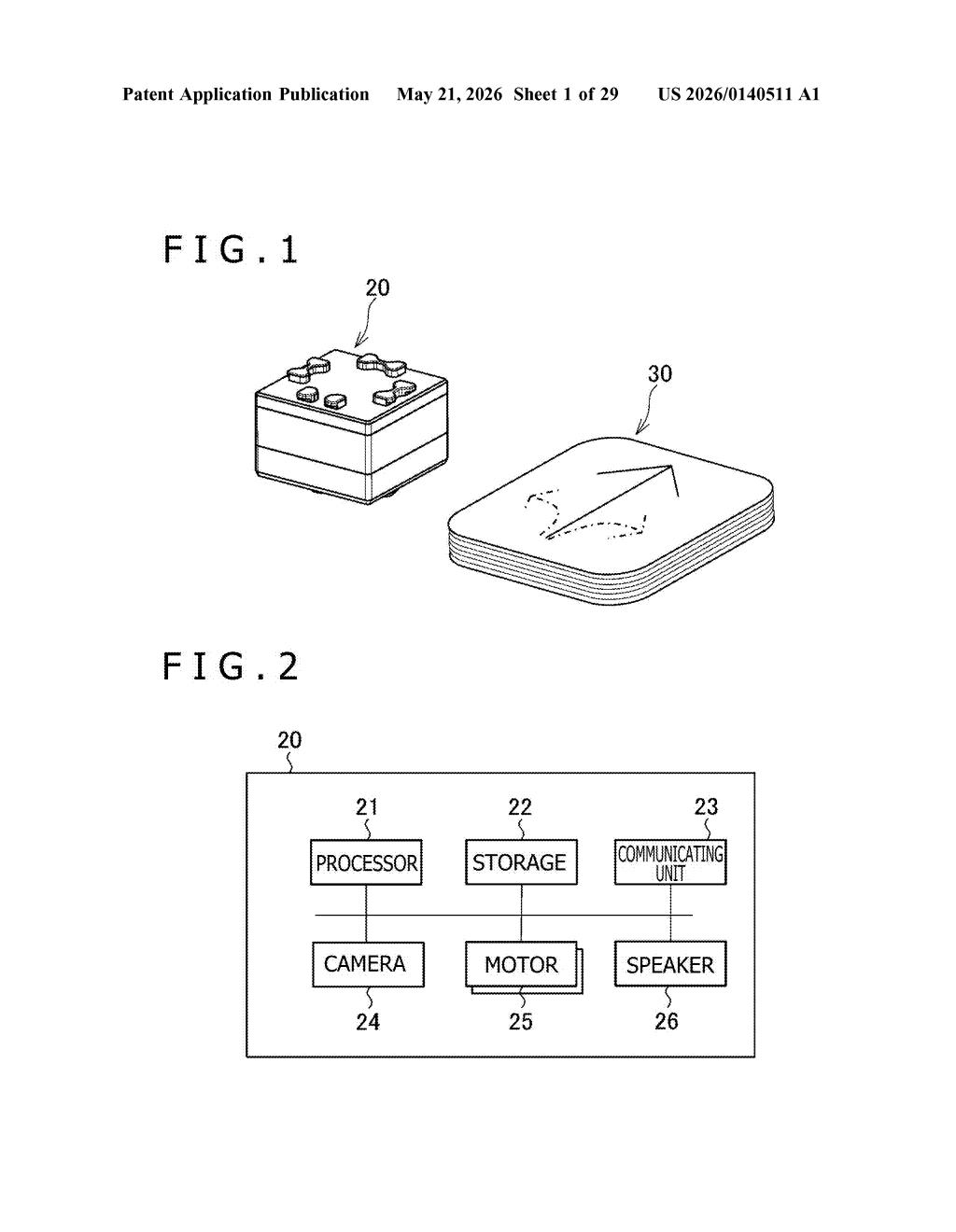
How Sony's card-reading toy car teaches coding without a screen
Imagine laying out a trail of instruction cards on your living room floor — one card says "turn left," another says "speed up," another says "spin" — and then watching a little robot car drive over them and actually follow those instructions in sequence. That's the core idea here.
Sony's patent describes a toy vehicle with a built-in image reader on its underside. As it rolls over each card, it reads a coded symbol printed on it and adjusts its behavior accordingly. The clever bit: if the car rolls off a card and there's no new card underneath, it just keeps doing whatever the last card told it to do until it finds the next one.
This "keep the last instruction going" behavior is actually how real programming loops and state machines work. Kids learn that instructions persist until something new overrides them — a genuinely useful mental model for coding — without ever touching a keyboard or screen.
How the toy reads cards and chains movement instructions
The system has three main components working together:
- Traveling module — the physical drive system that moves the toy vehicle.
- Reading module — an onboard sensor that scans coded images printed on cards placed on the floor by the user.
- Operation control module — the logic layer that translates the scanned image into a movement instruction and sends it to the drive system.
The key behavioral rule is in how the control module handles gaps between cards. When the vehicle is not over any card, it doesn't stop or default to idle — it continues executing the instruction from the most recently read card. Only when it drives onto a new card does it update its behavior. This is essentially a persistent-state execution model (meaning the system remembers and keeps its last known instruction rather than resetting to zero).
Each card carries a distinct coded image — think QR-code-like symbols — corresponding to one of several predefined operation states. Users arrange cards at arbitrary positions around a play area, effectively laying out a physical program that the vehicle will execute by navigating the course.
The patent is filed under USPC 701/23, which covers guidance and navigation control systems, suggesting the control logic here is the primary protectable invention rather than the card-printing or toy hardware alone.
What this means for physical, hands-on coding education
Physical coding toys — think Cubetto or Bee-Bot — have carved out a real niche in early STEM education because they make abstract programming concepts tangible. Sony's twist is the "keep the last instruction" persistence rule, which introduces a subtler programming concept (state retention) than most beginner toys bother with. That's a meaningful step up in educational depth without adding complexity for the child.
For Sony Interactive Entertainment specifically, this is an interesting move into the physical toy and edtech space. PlayStation has historically been screen-first, so a no-screen, floor-play coding toy would be a genuine category expansion. Whether this becomes a product or stays a patent is unclear, but the filing signals Sony is at least thinking about the sub-10 age group in a new way.
This is a genuinely well-conceived educational toy idea. The persistent-state mechanic — where the car keeps doing the last thing it was told until a new card overrides it — teaches a real programming concept that most kids' coding toys skip entirely. It's not flashy IP, but if Sony actually ships this, it could compete seriously in the physical edtech toy market.
There are more where this came from
We read every patent application Big Tech publishes and send you the ones worth knowing. Plain English, free, every week.
Want this weekly breakdown for a company we don't cover? Patentlyze Pro →