
Patent: Wrist Sensor Band That Snaps Into Correct Position Automatically
Meta is designing a wristband that reads electrical signals from your muscles, and it needs the sensors to land in exactly the right spot on your wrist every single time. A clever magnet arrangement is how they're solving that.
What Meta's self-aligning neural wristband actually does
Imagine a fitness tracker that needs to press against a very specific spot on your wrist to work properly. If it shifts even a little, it stops reading your body accurately. That's the challenge Meta is trying to solve with this patent.
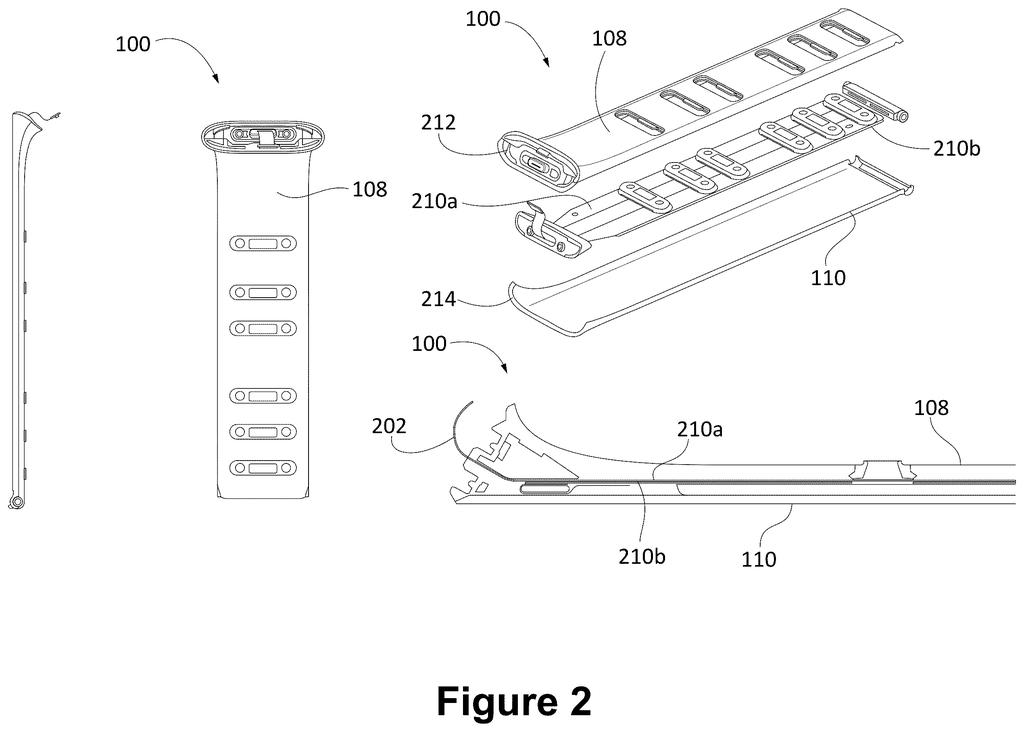
The wristband is split into two sections that clasp together. Instead of a standard buckle or clip, each section hides magnets inside arranged in a particular pattern: the center of one magnet is positive while the edges are negative, and the other section is the opposite. When you bring the two halves close together, those opposite poles snap toward each other and pull the band into exactly the right position automatically.
The goal isn't just comfort. The sensors on the inside of the band are designed to pick up neuromuscular signals, tiny electrical impulses your muscles send when you move your fingers or hand. Getting those sensors to land in the right place on your wrist, every time you put the device on, is what makes this magnet trick genuinely useful.
How the opposing magnet layout locks the band sections together
The patent describes a two-section wristband where neuromuscular-signal sensors (electrodes that detect the small electrical activity your muscles produce during movement) sit on the inner face of one section, pressed against the skin of your wrist.
The alignment system relies on a specific magnet geometry. The first band section contains a magnet with a positive-polarity center flanked by negative-polarity edges. The second section carries one or more magnets with the opposite layout: negative center, positive edges. Because opposite poles attract, each center pulls toward the nearest center, and each edge pulls toward the nearest edge, creating multiple attraction points that resist sideways slipping.
This multi-point magnetic lock means:
- The band resists sliding left or right once snapped together
- The sensor array lands in a consistent position across every wear
- No manual adjustment is needed after clasping
Consistent sensor placement matters because neuromuscular signals are highly location-dependent. A few millimeters of drift can mean the device picks up signals from the wrong muscle group, reducing the accuracy of whatever gesture or control input the system is trying to detect.
Why sensor placement is everything for wrist-worn neural devices
Meta has been openly building toward a wristband that lets people control AR glasses or other devices by moving their fingers, with neural-signal sensing as the core technology. That whole approach only works if the sensors reliably land in the same spot on your wrist each time you wear the device. A buckle that lets the band float around is a fundamental problem, and this patent is a direct engineering answer to it.
For you as a potential user, this means a device that is meant to work the same way on day one as it does on day one hundred, without recalibrating or repositioning. The magnet design is also passive, no buttons, no moving parts, so there is less to break over time.
This is a small but genuinely necessary piece of engineering for Meta's wrist-control ambitions. Neural-signal wristbands are useless if the sensors drift, and this magnet geometry is a clean mechanical solution to an annoying real-world problem. It's not a headline product, but it's the kind of foundational detail that separates a device that ships from one that stays in the lab.
There are more where this came from
We read every patent application Big Tech publishes and send you the ones worth knowing. Plain English, free, every week.
The drawings
9 drawing sheets from US 2026/0211501 A1 · click any drawing to enlarge


Want this weekly breakdown for a company we don't cover? Patentlyze Pro →