
Apple Patents a Stylus Whose Tip Can Feel Like a Brush, Pencil, or Marker
Apple is exploring a stylus that doesn't just draw — it physically changes the stiffness and resistance of its tip to mimic the feel of a real pencil, brush, or marker. That's a meaningful leap beyond what the current Apple Pencil offers.
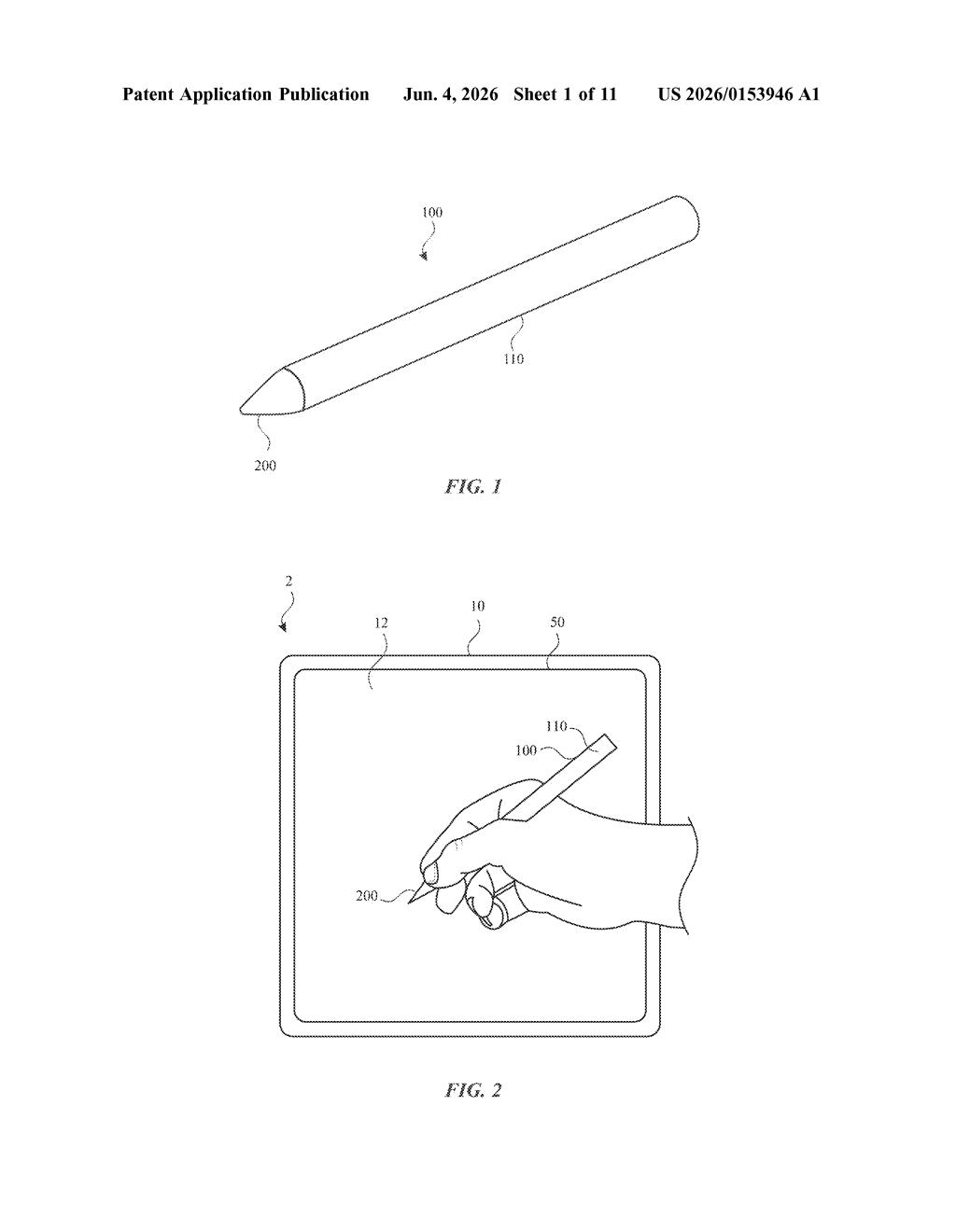
What Apple's shape-shifting stylus tip actually does
Imagine picking up a stylus and feeling like you're actually writing with a soft brush one moment, then a stiff ballpoint the next — without swapping tools. That's the core idea in this Apple patent.
Apple's design describes a stylus tip that can move side-to-side and change how much it resists that movement. An internal electromagnet adjusts the magnetic force on the tip, making it feel stiffer or looser depending on what you're doing. Select a paintbrush in your app, and the tip could flex like a real bristle; switch to a technical pen, and it snaps back to firm and precise.
Right now, the Apple Pencil gives you pressure sensitivity on screen, but the physical feel of the tip itself never changes — it always feels like plastic on glass. This patent is about closing that gap between digital input and the tactile reality of analog drawing tools.
How electromagnets control the tip's range of motion
The patent describes a stylus with a tip that can translate laterally — meaning it can wobble or shift side-to-side relative to the stylus's main axis, like a real brush or flexible nib would under pressure.
The key mechanism is an electromagnet housed inside the stylus body, paired with a magnet embedded at the tip. By varying the current through the electromagnet, the stylus can control a "biasing force" — essentially, how strongly the tip is pulled back toward center alignment. A stronger biasing force means a stiffer, more resistant tip. A weaker one means the tip can flex more freely, like a soft brush.
The patent also mentions simulating weight distribution and moment of inertia — the way a tool feels heavy or balanced in your hand. These are the subtle physical properties that make a thick marker feel different from a fine-line pen, even before you touch paper.
- Lateral tip translation: the tip physically moves off-axis under force
- Electromagnet control: adjustable magnetic field sets tip stiffness in real time
- Biasing force tuning: determines how far the tip can deflect and how quickly it returns
- Tool simulation: mimics pencils, brushes, markers by matching their physical feel profile
What this means for iPad artists and note-takers
For iPad artists and designers, the biggest limitation of any stylus has always been the gap between what you see on screen and what you feel in your hand. Pressure sensitivity tells the app how hard you're pressing, but the stylus still feels like the same plastic nub regardless of whether you've selected a watercolor brush or a ballpoint pen. A tip that physically changes resistance would make that feedback loop feel dramatically more real.
This also signals that Apple is thinking about the Apple Pencil as a haptic and physical experience, not just a pointing device. If this technology shipped, it would likely target the professional end of the iPad lineup — the kind of users who currently buy dedicated drawing tablets precisely because the physical feel of the tool matters to their workflow.
This is one of the more genuinely interesting Apple Pencil patents in recent memory. Adjustable tip stiffness via electromagnet is a concrete, testable mechanism — not vague hand-waving about 'improved input.' The hard part will be fitting all of this into a slim stylus without destroying battery life, but the underlying idea is sound and the patent is specific enough to suggest real engineering work has gone into it.
There are more where this came from
We read every patent application Big Tech publishes and send you the ones worth knowing. Plain English, free, every week.
Want this weekly breakdown for a company we don't cover? Patentlyze Pro →