
Samsung Patents a Display That Pre-Brightens Where Your Eyes Are Headed
Your eyes move before your brain registers it — and Samsung wants its displays to exploit that gap. A newly filed patent describes a screen that watches where you're looking, predicts where you'll look next, and adjusts brightness region-by-region before your gaze even lands there.
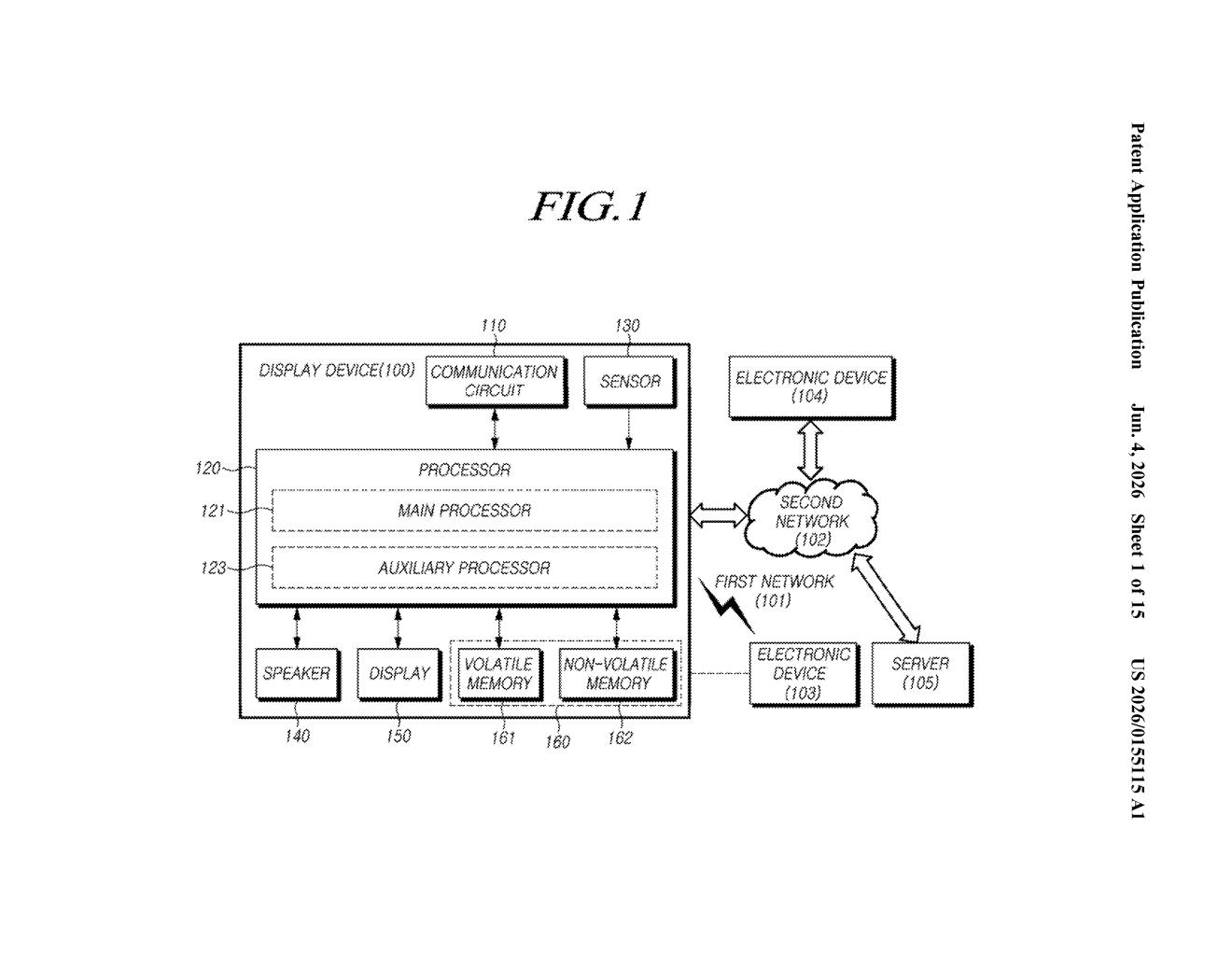
What Samsung's gaze-predictive brightness actually does
Imagine reading an article on a big screen. Your eyes are about to drift from the headline to a paragraph below, but the screen doesn't know that yet — it's treating the whole panel with the same brightness. Samsung's new patent describes a display that watches your eye movements, learns the pattern of where your gaze travels, and uses that history to predict where you're going to look next.
Once the display predicts your next focal point, it brightens that region in advance and dims everything else. You'd see the content you're about to read in full vivid detail, while the rest of the screen uses less power. It's essentially a spotlight that stays one step ahead of your eyes.
The practical benefit is twofold: content looks punchy right where your attention lands, and areas you're not looking at can run at lower power. For a large OLED or QLED panel, dimming unused zones could translate into real energy savings without you ever noticing a compromise in picture quality.
How the display predicts your next glance and adjusts light
The system works in three stages. First, a gaze-tracking sensor (likely a camera or infrared emitter-detector pair) continuously records where on the screen your eyes are pointed, building a running log of viewpoint coordinates — essentially an X/Y position history of your gaze over time.
Second, the processor analyzes that movement path to calculate a predicted viewpoint coordinate — where your eyes are most likely to land next. The patent doesn't lock in a single prediction algorithm, but the claim language implies a trajectory-based model: if your gaze has been moving left-to-right across a line of text, the system extrapolates that motion forward.
Third, the display splits into at least two zones:
- First display area — the region around the predicted next-gaze point, driven at a higher luminance value
- Second display area — everything else, driven at a lower (or different) luminance value
This zonal brightness control is applied dynamically as your gaze moves, meaning the high-brightness spotlight follows the predicted trajectory in real time. The architecture is general enough to apply to TVs, monitors, tablets, or phones — any display paired with a sensor capable of gaze tracking.
What this means for Samsung TVs, monitors, and mobile screens
For large-screen displays — Samsung's bread-and-butter business — this kind of localized dimming could meaningfully reduce average power draw without touching peak brightness performance. OLED panels already support per-pixel brightness control; adding predictive gaze logic on top is a natural extension that could show up as a selling point in a future QLED or MicroLED line.
For mobile devices, where battery life is perpetually under pressure, dimming the 80% of the screen you're not currently focused on has obvious appeal. It also sets up an interesting arms race with competing eye-tracking features from Apple and others, where the display itself — not just the UI — becomes gaze-aware.
This is a solid, focused patent that does one specific thing well: it connects gaze prediction to luminance control in a way that's genuinely implementable on hardware Samsung already sells. It's not a wild moonshot — eye-tracking displays have been talked about for years — but tying it specifically to predictive brightness zoning rather than just reactive brightness is a meaningful distinction worth watching.
There are more where this came from
We read every patent application Big Tech publishes and send you the ones worth knowing. Plain English, free, every week.
Want this weekly breakdown for a company we don't cover? Patentlyze Pro →