Latest semiconductor & chip patents, Page 54
From processors and AI accelerators to the packaging and cooling that hold them together, this is where the silicon race lives. Every chip filing, decoded without the jargon.
- in the Nov 19 release
- 4
- in November so far
- 25
- filings tracked
- 651
- last 90 days
- 205
Recent filings
Newest first · 651 total-
Nvidia · Published May 14
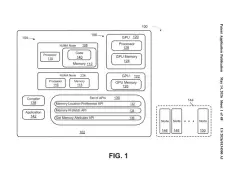
Nvidia Patents an API for Fine-Grained GPU NUMA Memory Control
On a server with dozens of CPUs and GPUs, memory location is everything — the wrong node can quietly tank performance. Nvidia is patenting an API that lets software explicitly tell a GPU exactly which memory node to use.
-
Nvidia · Published May 14
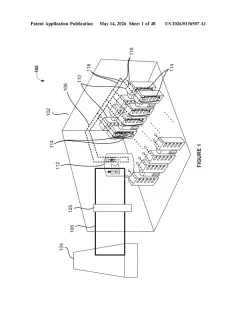
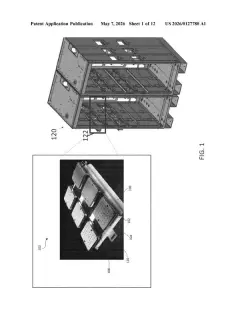
Nvidia Patents an Intelligent Two-Phase Cooling System for AI Datacenters
As AI chips push heat density to extremes, Nvidia is patenting a smarter cooling system that can switch between two different refrigerant loops on the fly — automatically ramping up when your GPUs start running hot.
-
Nvidia · Published May 14
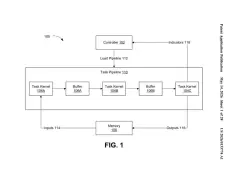
Nvidia Patents a Compiler-Driven System for Concurrent Task Pipeline Execution
Running software tasks one-at-a-time wastes GPU muscle. Nvidia's new patent describes a compiler-level system that identifies which parts of a program can safely run at the same time — potentially squeezing a lot more work out of the same hardware.
-
Nvidia · Published May 14
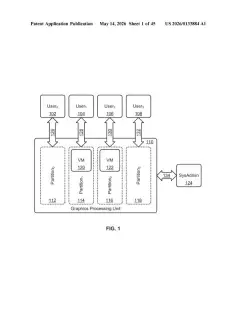
Nvidia Patents a GPU Memory Error Isolation System for Parallel Workloads
One bad memory cell on a GPU shouldn't crash every workload sharing that chip — but without careful fault isolation, it can. Nvidia is patenting a way to catch that error early, quarantine the offending partition, and let everything else keep running.
-
Nvidia · Published May 14
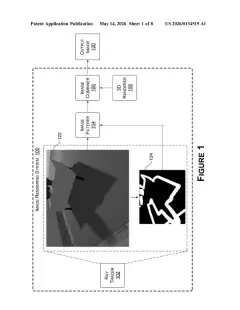
Nvidia Patents a Smarter Denoising Filter for Ray-Traced Shadows
Ray-traced shadows look stunning, but cleaning up their noise is expensive. Nvidia's patent describes a way to skip that cleanup work entirely in areas where it wouldn't matter anyway.
-
Nvidia · Published May 14
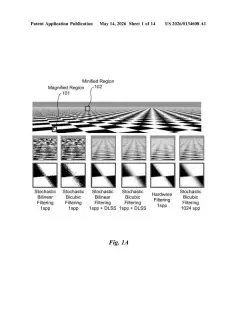
Nvidia Patents a Stochastic Texture Filtering System for Faster, Sharper GPU Rendering
Nvidia wants to replace one of the oldest tricks in GPU texture rendering — weighted color blending — with something more elegant: deliberate randomness. The surprising part is that it's faster and looks better.
-
Samsung · Published May 14
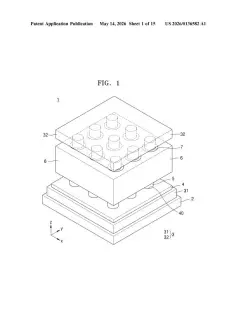
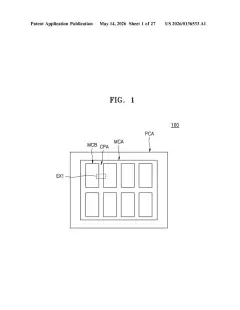
Samsung Patents a Vertical Transistor Design That Grows Its Own Channels
Samsung is filing patents on a vertical transistor architecture where the semiconductor channel material is grown directly out of the electrode beneath it — a fabrication shortcut that could simplify how ultra-dense chips are built.
-
Samsung · Published May 14
Samsung Patents Selective Metal Deposition Process for Memory Cell Transistors
Building a transistor inside a memory chip is a bit like trying to paint the inside of a thimble — precision is everything. Samsung's latest patent describes a way to deposit metal exactly where it needs to go, and nowhere else.
-
Samsung · Published May 14
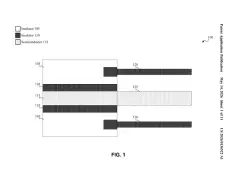
Samsung Patents a Stepped Isolation Layer Design for Next-Gen 3D Memory Chips
As memory chips get more densely packed, the walls that separate individual memory cell blocks have to do more work in less space. Samsung's latest patent describes a clever stepped architecture for those dividing walls — a small structural detail that could matter a lot at the nanometer scale.
-
Nvidia · Published May 7
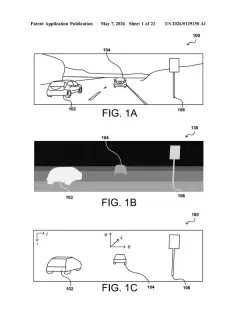
Nvidia Patents a Bird's Eye View Generator for Embedded Vision Systems
Nvidia has filed a patent describing a way to convert raw stereo camera depth data into a bird's eye view image — all on a low-power embedded chip, no beefy GPU required.
-
Tesla · Published May 7
Tesla Patents a Visualization Tool for Wafer-Scale Computing Systems
Tesla is quietly building tools to manage computing systems so large they span entire silicon wafers — and this patent is about making sense of what's inside them.
-
Apple · Published Apr 30
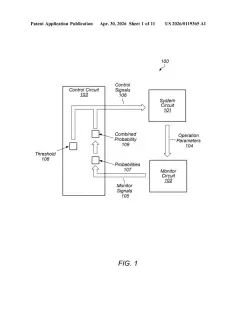
Apple Patents a System That Lets Chips Detect and Fix Their Own Stress
Apple is patenting a way for its chips to continuously monitor their own operating conditions — and automatically dial things back before stress causes real damage. Think of it as a nervous system built directly into the silicon.