
Adobe Patents a Generative Video Pipeline for 3D Model Super-Resolution
Adobe has filed a patent for a clever workaround to a persistent problem in 3D graphics: instead of trying to upscale a 3D model directly, it converts the model into a video first, uses a generative AI video upsampler to sharpen it, and then reconstructs the 3D object from the higher-resolution footage.
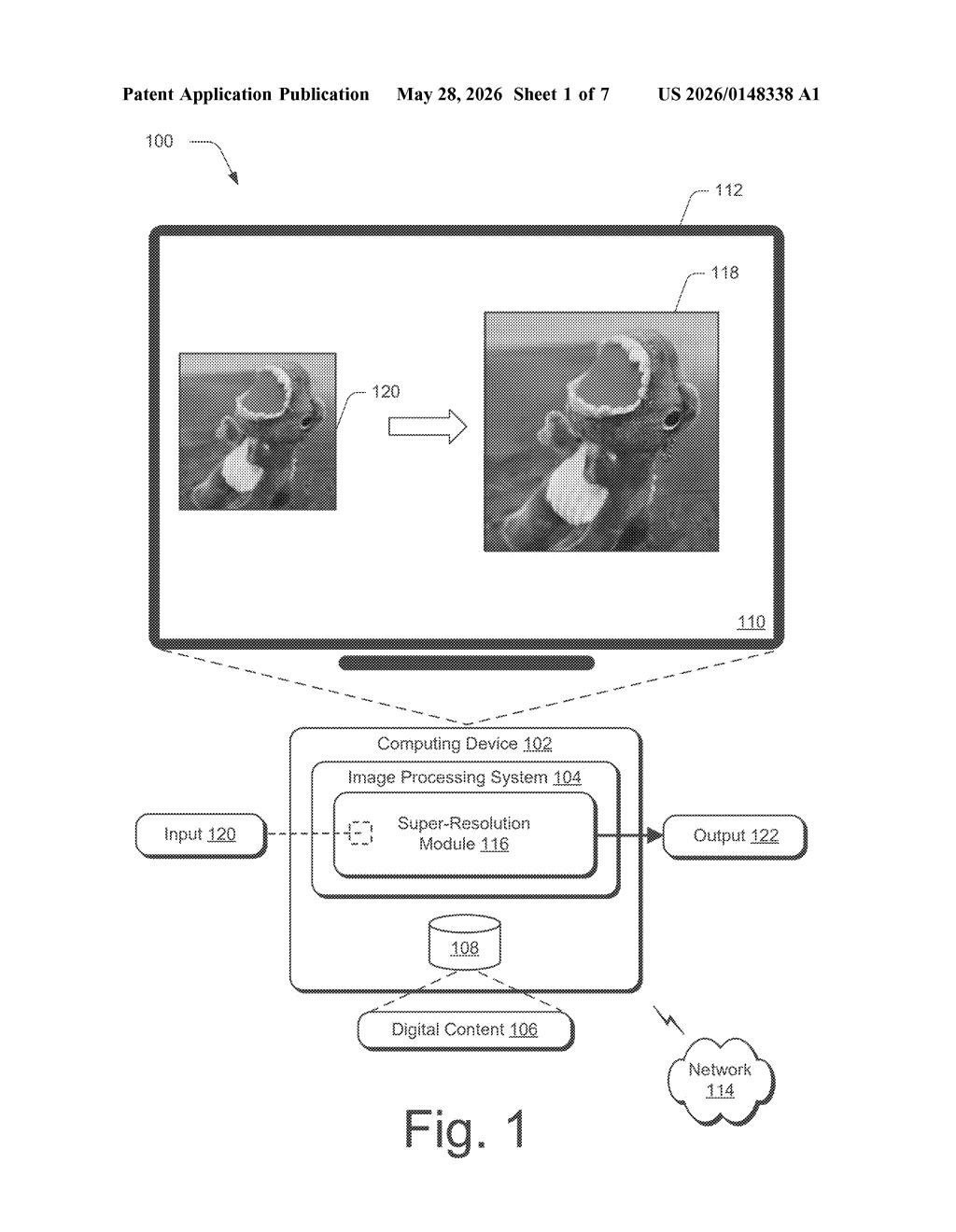
How Adobe's system sharpens blurry 3D objects
Imagine you have a 3D scan of a coffee mug, but it looks blocky and low-detail — like something out of a mid-2000s video game. Making it look better is surprisingly hard, because 3D models store geometry in a fundamentally different way than photos or videos.
Adobe's approach sidesteps that problem with a neat trick: rather than upscaling the 3D model itself, the system "films" the object from many different angles to produce a short video. That video gets fed into an AI model trained to make videos look sharper and more detailed. The result is a higher-resolution video of the same object.
Finally, the system runs a 3D reconstruction pass on that upscaled video — essentially figuring out what 3D shape could have produced those sharper frames — and outputs a new, more detailed 3D model. You end up with a higher-quality version of your original object without ever having to manually add detail.
How the video upsampler rebuilds 3D geometry
The patent describes a 3D super-resolution pipeline with four main stages:
- Input: A low-resolution 3D representation of an object — this could be a Neural Radiance Field (NeRF), a 3D Gaussian Splatting scene, or a mesh.
- Intermediate video generation: The system renders the 3D object from multiple camera viewpoints to produce a short multi-view video. Think of it as doing a slow orbit shot around the object.
- Generative video upsampling: A machine-learning model — specifically described as a video-based generative upsampler — takes that video and outputs a higher-resolution version. This is where the AI fills in fine detail that wasn't in the original geometry.
- 3D reconstruction: The upscaled video frames are used to reconstruct a new, higher-resolution 3D representation of the object.
The key insight is that video generative models are already extremely good at synthesizing realistic textures and fine detail across time-consistent frames. By routing the problem through that domain, Adobe avoids having to build a purpose-specific 3D upscaler from scratch. The multi-view consistency of the rendered video gives the reconstruction step enough geometric signal to produce a coherent 3D output, not just a set of pretty 2D images.
What this means for 3D content creation in Adobe tools
If this pipeline makes it into Adobe's tools — think Substance 3D, or any future AI-assisted 3D workflow — it could meaningfully lower the bar for working with 3D assets. Right now, getting a high-quality 3D scan or model often requires expensive equipment or hours of manual cleanup. A system that can take a rough low-res scan and automatically output something render-ready would matter a lot to game developers, VFX artists, and product designers.
More broadly, this patent reflects a growing strategy across the industry: use 2D generative AI as a stepping stone to solve 3D problems. Rather than waiting for 3D-native AI to mature, companies are piping 3D content through the already-powerful 2D/video generation stack. That's a pragmatic bet, and Adobe is clearly placing it.
This is a genuinely clever idea — routing a hard 3D problem through the well-developed video upsampling pipeline is the kind of systems thinking that tends to actually ship. It's not a moonshot; it's an engineering shortcut that happens to be smart. Watch for this to show up quietly in Substance 3D or a future Firefly 3D feature.
Get our take in your Top Stories
Liked this breakdown? Add Patentlyze as a preferred source on Google, and our plain-English take shows up more often in your Top Stories the next time Adobe patent news breaks.
There are more where this came from
We read every patent application Big Tech publishes and send you the ones worth knowing. Plain English, free, every week.
Want this weekly breakdown for a company we don't cover? Patentlyze Pro →