
Salesforce's New Patent Wants to Replace Your Procurement Team With AI Agents
Salesforce is patenting a system where AI agents don't just suggest procurement actions — they take them, autonomously contacting suppliers on your company's behalf without a human clicking 'send.'
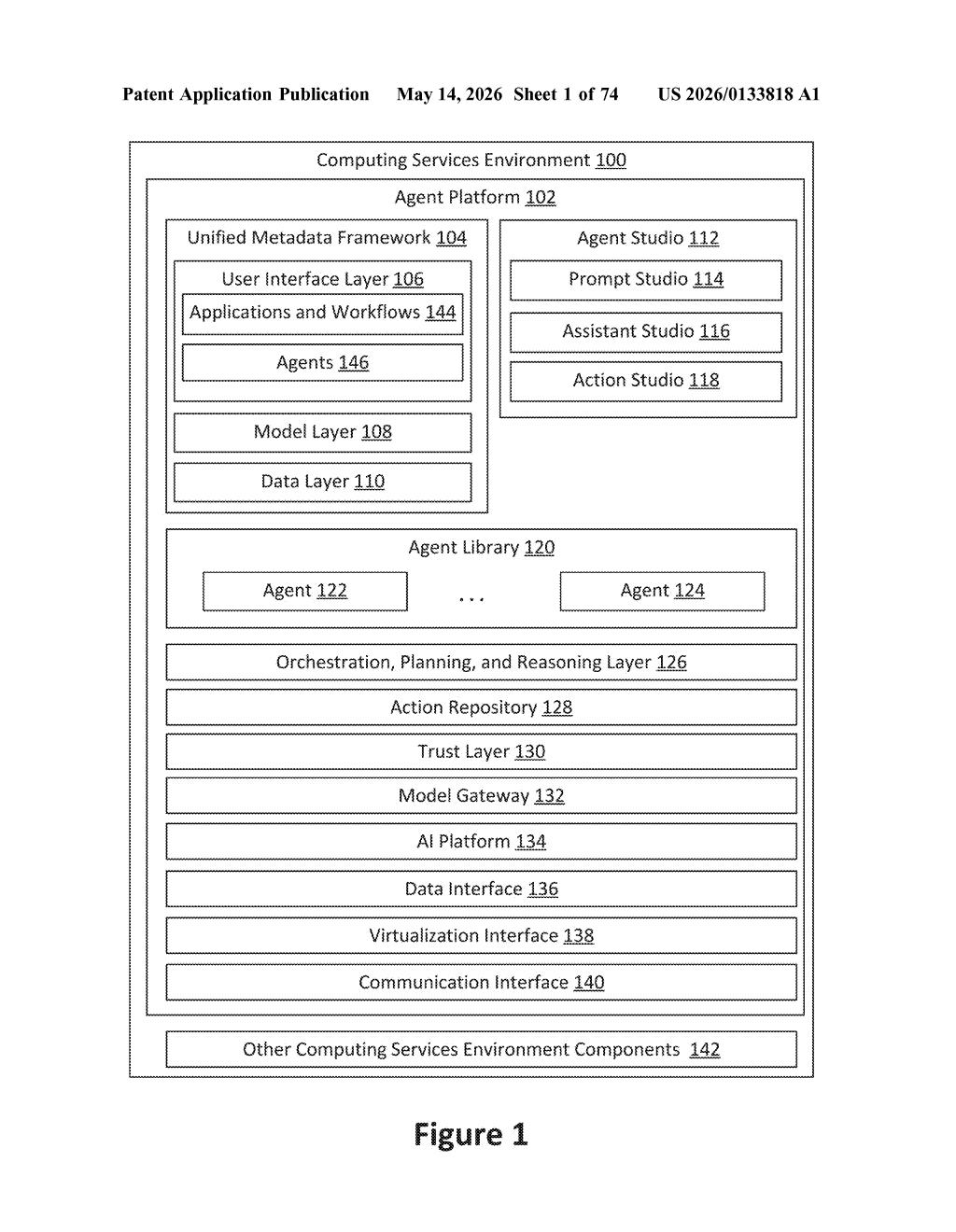
What Salesforce's autonomous procurement agents actually do
Imagine your company needs to reorder 10,000 units of a component from a supplier. Normally, someone in procurement logs into a portal, checks inventory levels, drafts a purchase request, and fires off an email. Salesforce's patent describes a system where AI agents do all of that automatically — reading your supplier data, deciding what needs to happen, and actually sending the message to the vendor.
The system lives inside Salesforce's cloud platform and uses a shared database of supplier relationship records — things like past orders, contracts, and contact history. An AI planning layer figures out the right sequence of steps for any given request, then spins up specialized software agents to carry those steps out.
The key detail: these agents don't just draft a recommendation for a human to approve. They're designed to act — transmitting supplier requests autonomously. That's a meaningful step beyond a chatbot that helps you write an email.
How the orchestration layer plans and dispatches AI agents
The patent describes a four-part architecture layered inside a cloud environment:
- SRM database — a repository of Supplier Relationship Management records capturing every interaction between a client company and its vendors (orders, contracts, communications).
- Unified metadata framework — a library of reusable "agent definitions" and "action definitions" (think: blueprints that tell an agent what it's allowed to do, like query a record or send a message).
- Orchestration layer — a planning engine that uses a generative language model (an LLM, like the kind powering ChatGPT) to read an incoming request and produce a step-by-step plan — what the patent calls "novel planning text" — deciding which actions need to happen and in what order.
- Agent service — the execution engine that spins up multiple autonomous agent instances inside a shared virtualized environment, feeds them the relevant slice of SRM data for that specific client, and runs the plan to completion.
The end result: the system can autonomously transmit a supplier request message to a vendor on a client's behalf — no human clicks required. The shared virtualized environment means many agents for many clients can run efficiently on the same infrastructure without stepping on each other's data.
What this means for enterprise procurement and Agentforce
Salesforce has been heavily pushing its Agentforce platform — a suite of AI agents for enterprise tasks. This patent fits squarely into that roadmap, specifically targeting procurement and supply chain, which is a massive and often clunky part of enterprise operations. If this capability ships, it means procurement teams could delegate routine supplier communications entirely to software, which has obvious efficiency appeal — and obvious risk if an agent sends the wrong order.
For you as an enterprise buyer or IT decision-maker, this is a signal that Salesforce is trying to extend AI agents beyond sales and service (its traditional turf) into back-office operations. That puts it in direct competition with SAP, Oracle, and Coupa in the procurement automation space.
This is a real, strategically coherent patent — not a speculative moonshot. Salesforce is essentially filing the IP foundation for autonomous procurement agents inside its existing CRM/SRM infrastructure, and the timing aligns tightly with its Agentforce push. The autonomous action angle (actually sending supplier messages, not just drafting them) is the part worth watching closely, because that's where liability and trust questions get interesting.
There are more where this came from
We read every patent application Big Tech publishes and send you the ones worth knowing. Plain English, free, every week.
Want this weekly breakdown for a company we don't cover? Patentlyze Pro →