
IBM Patents a System That Ranks Parking Options for Drivers in Real Time
Parallel parking stress may be universal, but IBM thinks a cloud server that knows your car's dimensions, your driving history, and the exact shape of the parking spot could take most of the guesswork out of it.
What IBM's ranked parking assistant actually does
Imagine you're circling a tight parking garage and your car's screen shows you three options: "back in from the left," "pull straight forward," or "use the wider spot on level 2", each with turn-by-turn instructions tailored to your car and how confident a driver you are. That's roughly what IBM is describing here.
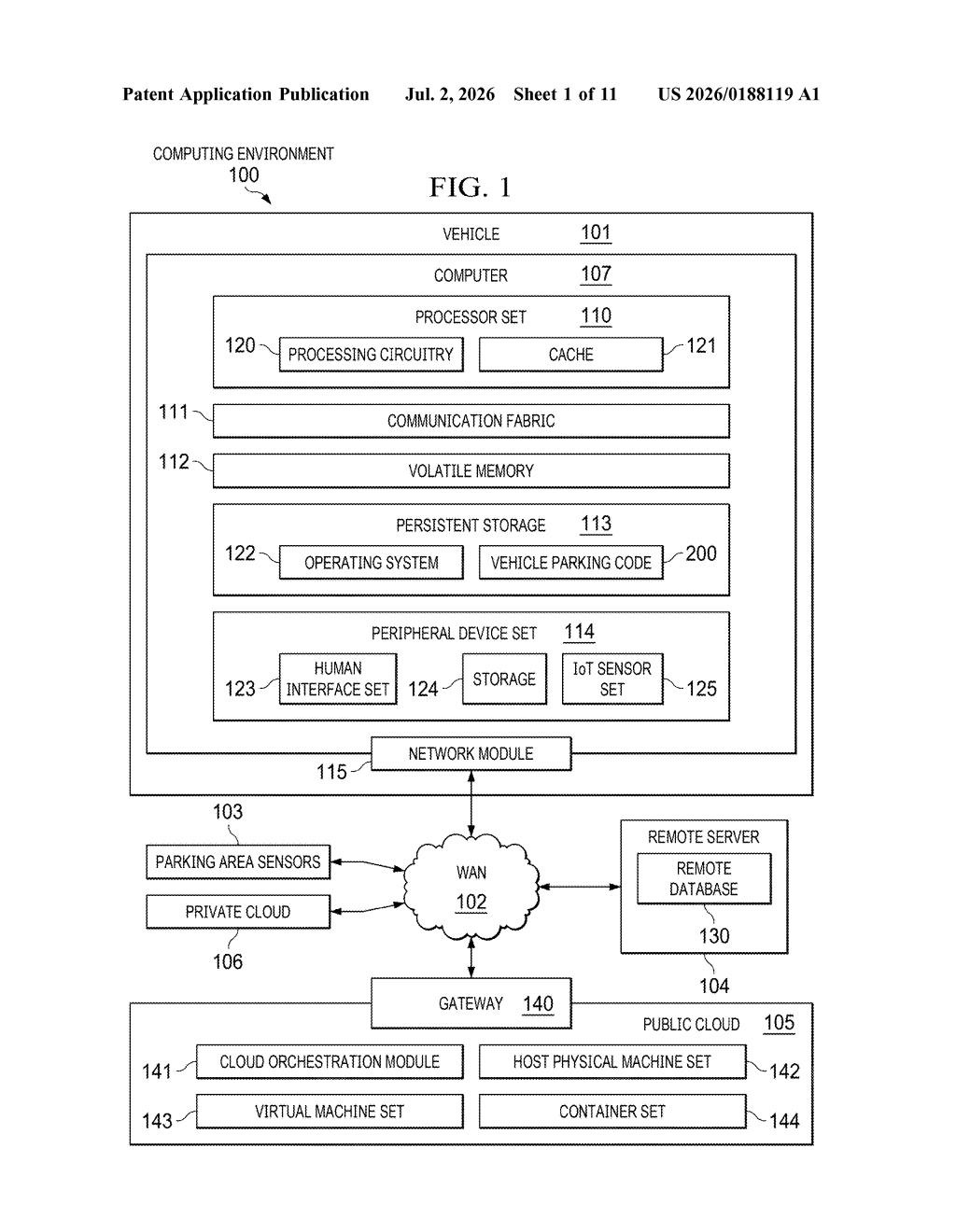
The system collects data from your car's sensors (think cameras, distance detectors, and the like), combines it with details about the parking area and your personal driving preferences, then ships all of that to a remote server. The server crunches the numbers and sends back a ranked list of parking options, each with specific step-by-step instructions.
You see the options on your dashboard or screen and pick the one that suits you. A nervous driver might get a gentler route with more room to spare; an experienced driver might get the most efficient option first. The instructions are generated fresh each time, based on the actual conditions around you.
How the server builds and ranks your parking options
The patent describes a three-step loop running between an in-car computer and a remote server.
- Profile assembly: The car's onboard computer gathers a "parking profile" from multiple sources: sensor readings about the physical parking area (space dimensions, obstacles, other cars), vehicle data (size, turning radius), driver identity, and stored preferences and driving experience.
- Server-side ranking: That profile is sent over a network to a remote server. The server uses it to generate a ranked set of parking options, each with specific step-by-step instructions. The ranking accounts for the driver's skill level and stated preferences, so the top suggestion is theoretically the best fit for that particular person in that particular spot.
- On-screen output: The ranked list is transmitted back to the vehicle and displayed through a "human interface" (a screen, voice assistant, or similar) for the driver to review and choose from.
The claim doesn't specify what AI or algorithm the server uses to do the ranking, only that it factors in the full profile. The round-trip to the cloud is central to the design, meaning the heavy computation stays off the car's own hardware.
What this means for in-car navigation and driver assist
Most current parking-assist systems either take over the wheel entirely or give you a single camera feed and leave the decision to you. IBM's approach sits in the middle: it keeps the driver in control while offloading the spatial reasoning and personalization to a server that has more computing headroom than a dashboard chip.
For fleet operators, rental companies, or any service where many different drivers use the same vehicle, a system that adapts instructions to each individual driver's experience level could meaningfully reduce low-speed fender-benders. For regular drivers, it's a step toward parking guidance that feels less like a generic beep-and-arrow and more like advice from someone who actually knows your car.
This is a sensible idea solving a real frustration, but the patent itself is fairly thin on the interesting parts: it doesn't describe the ranking algorithm, the sensor fusion method, or how the system handles poor network connectivity in underground garages. IBM is staking a claim on the overall architecture of cloud-personalized parking instructions, not on any specific clever technique. Worth a glance, but don't expect this to be the patent that defines the category.
Get our take in your Top Stories
Liked this breakdown? Add Patentlyze as a preferred source on Google, and our plain-English take shows up more often in your Top Stories the next time IBM patent news breaks.
There are more where this came from
We read every patent application Big Tech publishes and send you the ones worth knowing. Plain English, free, every week.
Want this weekly breakdown for a company we don't cover? Patentlyze Pro →