
Intel Patent Targets Streaming Costs by Skipping Empty Video Frame Regions
Intel has patented a system that uses AI to figure out what's actually important in a video frame, then only compresses and transmits that part, skipping the background entirely.
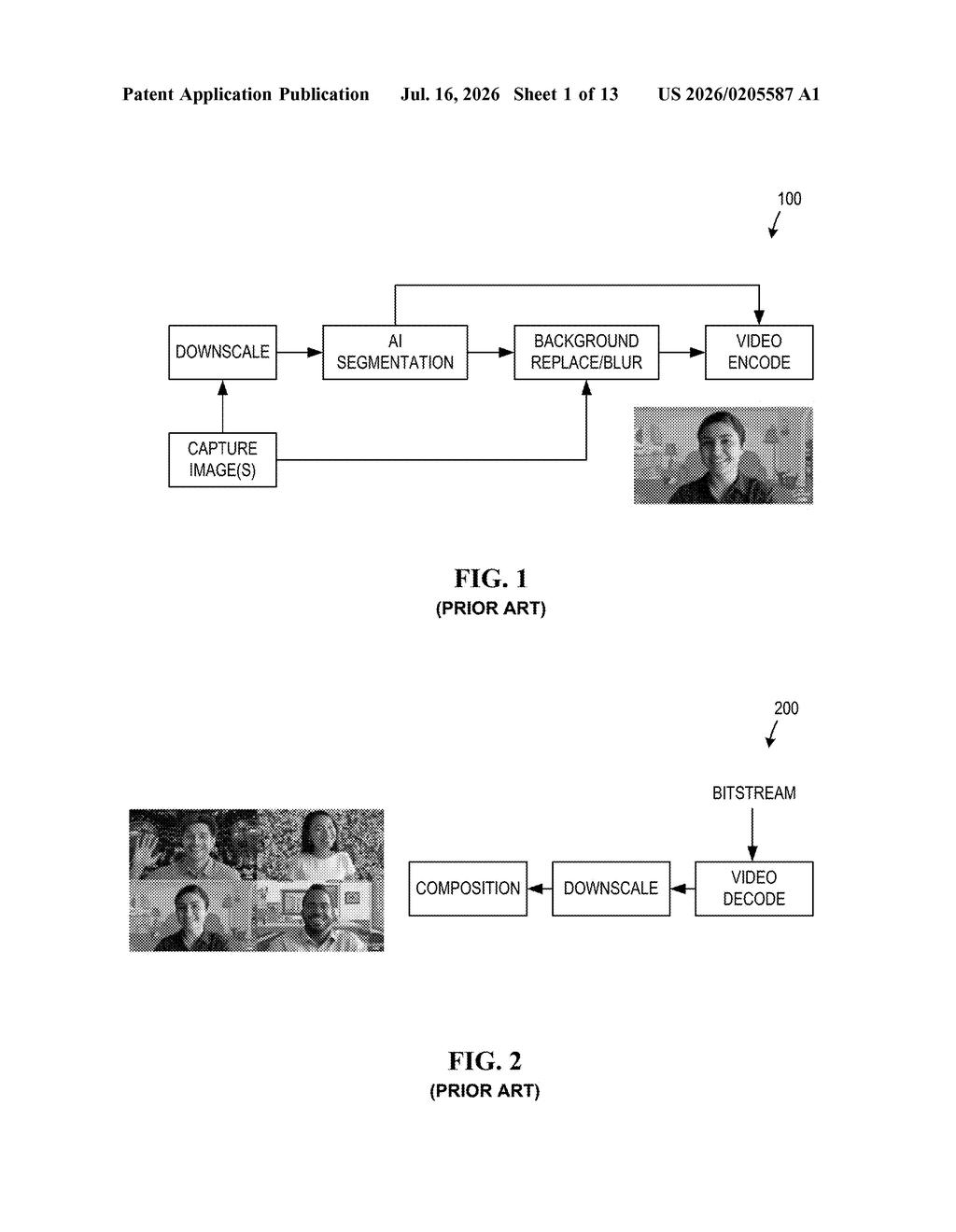
How Intel's AI decides what in a video frame matters
Imagine you're on a video call. Behind you is a plain wall, a bookshelf, maybe a window. Your coworkers don't need a crystal-clear picture of your bookshelf, but your face and hands? That's the whole point of the call. Right now, most video systems compress everything in the frame, background included, even though much of it barely changes between moments.
Intel's patent describes a chip-level system that uses AI to automatically separate what's in the foreground (you, in this scenario) from what's behind you, then only encodes and sends the foreground portion. The background gets skipped at the encoding stage entirely, not blurred or replaced, just not transmitted.
The result could be significantly less data sent over a network for the same perceived video quality, which matters a lot on slow connections, in large video conferences, or when a company is paying for bandwidth by the gigabyte.
How the segmenter splits frames into tiles and bounding regions
The patent describes three connected pieces of circuitry working together inside a device.
- Video frame segmenter circuitry runs an AI model on each incoming video frame to classify pixels as either foreground or background, producing what the patent calls "segmentation data" (essentially a map of which parts of the frame are which).
- Video encoder circuitry reads that map and draws bounding regions around the foreground and background areas. It then breaks the foreground region into smaller chunks called virtual tiles, which are compact rectangular sections of the frame used to make encoding more efficient.
- Only the foreground virtual tiles get encoded into the video data bitstream (the compressed stream of data sent over a network). The background bounding region is not encoded at all at this stage.
This is meaningfully different from existing approaches that compress everything and then try to reduce quality selectively. Here, the background is excluded before compression even starts, which can save processing work as well as bandwidth. The patent situates this logic at the hardware level, meaning it could be built into a chip rather than handled by software.
What this means for video calls and streaming bandwidth
Video is by far the largest category of internet traffic, and a meaningful slice of that is live video: calls, conferencing, remote work tools, streaming. Any technique that cuts the data a device needs to send without visibly degrading quality has real value, especially as video resolution keeps climbing.
For Intel specifically, this fits a clear business interest: the company makes chips that go into laptops, conferencing hardware, and data center servers, all places where this kind of on-chip AI preprocessing would live. If the system works as described, it could give Intel silicon a concrete, measurable advantage in video workloads compared to competitors who handle encoding more generically.
This is a practical, well-scoped idea aimed squarely at a real bottleneck: video bandwidth. The core concept, encode only what's visually important, isn't new in spirit, but building it into dedicated circuitry with explicit foreground-background segmentation at the hardware level is a specific enough claim to be worth watching. The canceled claims (claims 1-20) suggest this application is a continuation or revision, which means Intel has been working on this approach for a while.
There are more where this came from
We read every patent application Big Tech publishes and send you the ones worth knowing. Plain English, free, every week.
Want this weekly breakdown for a company we don't cover? Patentlyze Pro →
Be the first to weigh in