
Apple Patents a Laser Sensor That Knows When Your Headset Slips
Apple wants your headset to know the moment it starts sliding down your nose — using the same laser-speckle physics that makes optical mice work, but aimed directly at your nasal bone.
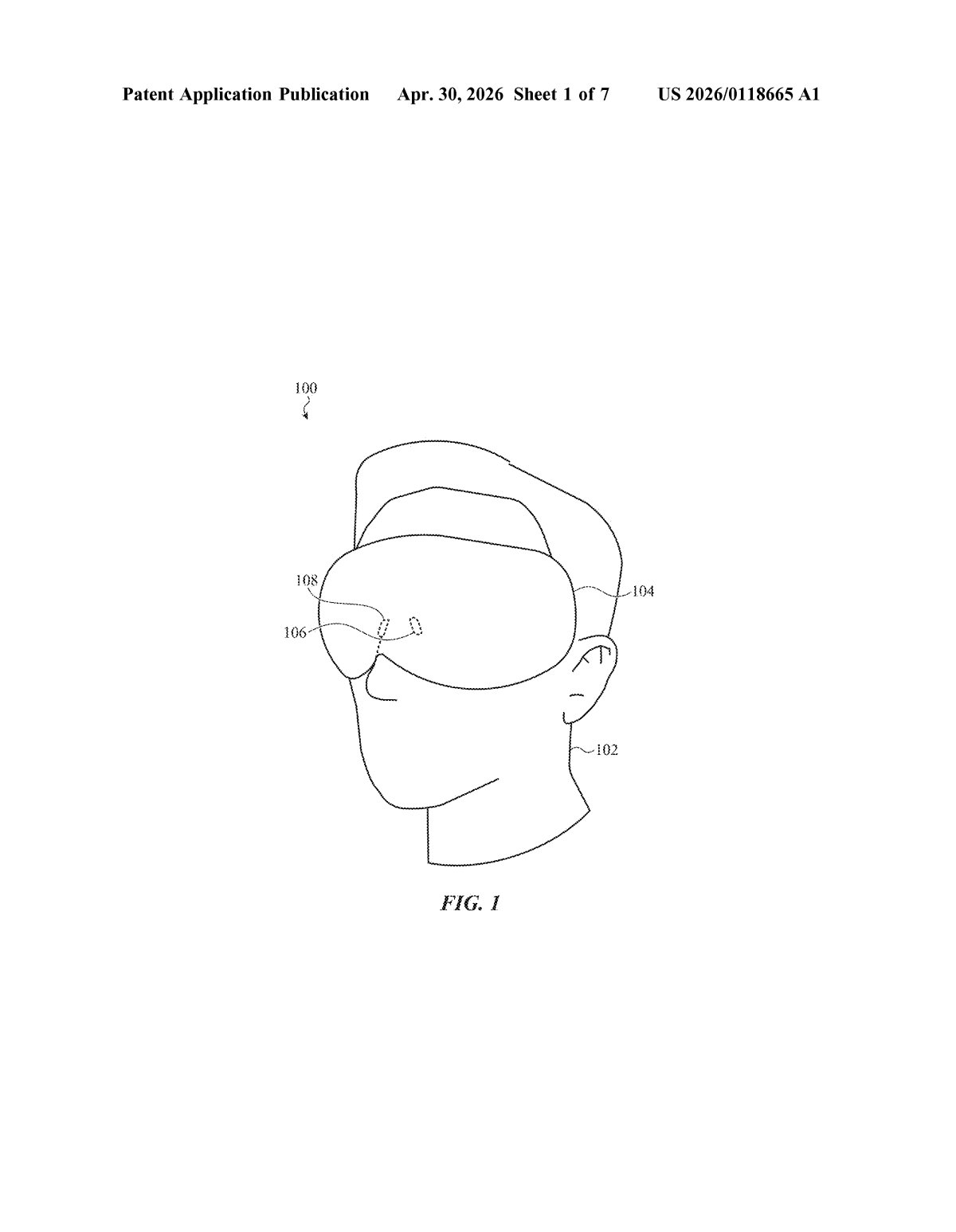
What Apple's nose-pad slip detector actually does
Imagine you're deep into a Vision Pro demo and the headset slowly creeps down your face. The display drifts, the eye-tracking goes off, and suddenly nothing lines up. It's a subtle problem, but it quietly wrecks the experience.
Apple's solution is to embed a tiny laser sensor inside the nose pad — the part that already rests against your nose. The laser fires a beam at the skin over your nasal bone, and a small camera watches the resulting light pattern. When the headset moves relative to your face, that pattern shifts, and the device knows a slip has occurred.
Think of it like the sensor under your computer mouse, except instead of tracking movement across a desk, it's tracking movement across your nose. The moment it detects a drift, it can alert the system to recalibrate — or alert you to readjust.
How laser speckle patterns catch headset movement
The patent describes a relative position change sensor tucked into the nose pad of a head-mounted device. It has three core components:
- Laser element: emits coherent (single-wavelength) laser light aimed at the skin surface over the wearer's nasal bone — a part of your face that stays relatively still.
- Image sensor: offset from the laser, it captures frames of the resulting speckle pattern — the grainy, interference-based light texture that forms when laser light hits a rough surface like skin.
- Processor: compares consecutive frames; if the speckle pattern has shifted in the image plane, that shift is proportional to how far the headset has moved relative to your face.
The key physics here is laser speckle — when coherent light hits a microscopically rough surface, it scatters into a characteristic random-but-stable pattern. That pattern moves predictably when either the light source or the surface moves. It's the same principle optical mice use to track movement across a mousepad, but here the "mousepad" is your nasal bone skin.
When a shift crosses some threshold, the sensor reports a slippage event to the device — essentially raising a flag that the headset's position relative to your face has changed and something downstream (recalibration, a user alert, display adjustment) should respond.
What this means for Vision Pro fit and comfort
For a device like Apple Vision Pro, positional accuracy is everything. Eye tracking, display alignment, and spatial audio all depend on the headset sitting exactly where it's supposed to sit on your face. A few millimeters of slip can degrade the entire experience — and right now, the device has no way to know it's happening.
This sensor gives the headset a way to actively monitor fit in real time. That could mean automatic recalibration when you shift in your seat, smarter alerts when a workout session causes the device to migrate, or even personalized fit feedback. It's a small piece of hardware solving a problem that gets more important the longer you wear the device.
This is a genuinely clever application of laser-speckle physics to a real, underappreciated wearable problem. Fit detection isn't glamorous, but it's the kind of foundational sensing layer that makes everything else on a headset work reliably — and nobody else seems to be doing it this way.
There are more where this came from
We read every patent application Big Tech publishes and send you the ones worth knowing. Plain English, free, every week.
Want this weekly breakdown for a company we don't cover? Patentlyze Pro →