
Heartbeat Data Patent Could Warn You About Hidden Heart and Diabetes Risk
Apple is working on a way to use the heart rate sensor already in its wearables to warn you about metabolic syndrome, a cluster of conditions (high blood pressure, excess blood sugar, abnormal cholesterol) that raises your risk of heart disease and diabetes.
How Apple's watch could flag metabolic health risk
Imagine your watch noticing that something about the rhythm of your heartbeat has been off for a while, and then telling you it might be worth talking to a doctor. That's the basic idea here.
Metabolic syndrome is not a single disease but a collection of warning signs: high blood pressure, elevated blood sugar, excess body fat around the waist, and abnormal cholesterol levels. Doctors usually catch it through blood tests. Apple wants to see if a wearable can catch early signals just by watching your heart.
The patent describes a system that gathers heartbeat data over a stretch of time, crunches statistics about how those beats vary and behave, and then runs that data through an AI model that produces a risk score. If the score crosses a threshold, your device would alert you to a potential health concern.
The set of time interval statistics may be processed using a machine-learning model to generate a risk score for the time interval. The device may determine that the risk score is greater than a predetermined threshold, and in response, output an indication of a health risk that is associated with a user of the device.
Translation: An algorithm checks your heart stats and warns you if your risk score goes past a certain limit.
How heartbeat stats feed Apple's risk-scoring model
The system works in three stages.
- Data collection: The device records a set of heartbeats across a defined time window, not just a snapshot but a sustained reading that captures how the heart behaves over time.
- Feature extraction: It divides that window into smaller portions and computes statistics for each slice, things like beat-to-beat interval lengths and how much those intervals vary (a measure called heart rate variability, or HRV, which reflects how the nervous system is regulating the heart). Multiple heartbeat data types are used, and each produces its own statistical summary.
- ML scoring: Those statistics are fed into a machine-learning model that was presumably trained on labeled health data to recognize patterns linked to metabolic syndrome. The model outputs a single risk score.
If the risk score clears a preset threshold, the device surfaces a health warning to the user. The patent doesn't specify what kind of alert, just that an "indication of a health risk" is shown. The entire pipeline is designed to run on the device itself, not on a server.
What this means for Apple Watch health ambitions
Metabolic syndrome affects roughly one in three American adults, and most people don't know they have it until a doctor runs a blood panel. A wearable that can surface that risk passively, without a needle, would be a meaningful shift in how everyday health monitoring works.
For Apple Watch, this fits a clear pattern: Apple has spent years adding clinically validated sensors (ECG, blood oxygen, crash detection) to what started as a fitness tracker. A metabolic risk feature would extend that trajectory deeper into chronic disease prevention, which is the territory doctors and insurers actually care about. Whether the underlying signal is strong enough to be clinically useful in the real world is the open question, and the patent itself doesn't answer it.
This is one of the more medically interesting Apple patents in recent memory. Metabolic syndrome is common, underdiagnosed, and expensive, and a passive screening tool built into a consumer wearable would be genuinely useful if the accuracy holds up. The hard part is always whether heart rate variability alone carries enough signal to be clinically meaningful, and that's a question the patent filing can't answer. Worth watching when Apple's health researchers publish validation data.
There are more where this came from
We read every patent application Big Tech publishes and send you the ones worth knowing. Plain English, free, every week.
The drawings
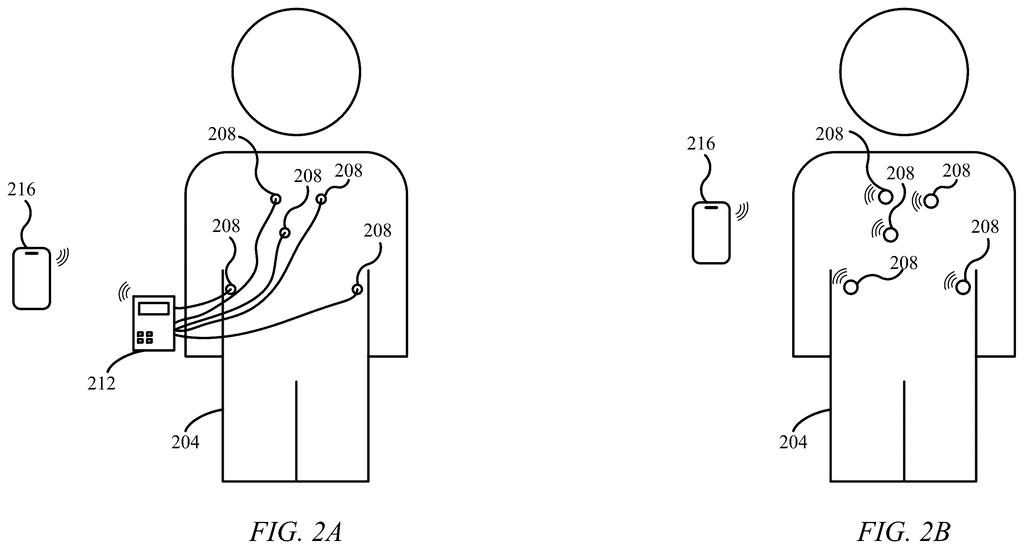
8 drawing sheets from US 2026/0229364 A1 · click any drawing to enlarge


Want this weekly breakdown for a company we don't cover? Patentlyze Pro →
Be the first to weigh in