New Apple Health Sensor Patents, and What They Point To
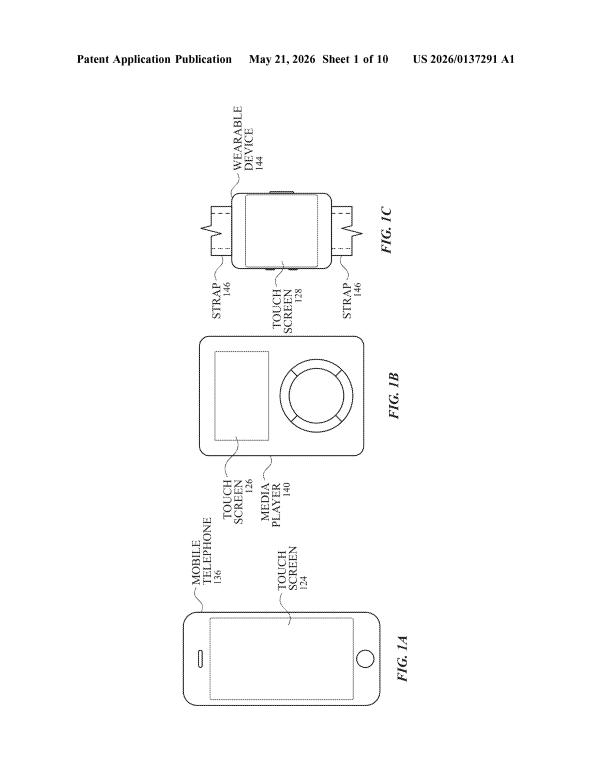
This tracker follows Apple's patents on sleep-mode switching, breath and heart-rate sensing, muscle tracking, nutrition-linked workout goals, and health data synced across iPhone, Watch and headset. Together they suggest a phone and wearable set that watches your body all day and hands the data back in useful form.
10 filings
· tracking since Apr 2026 · latest Aug 2026 · updates weekly
based on all tracked filings in this watchlist · refreshes every week
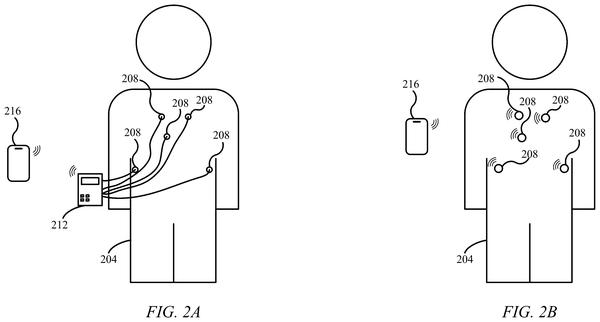
Apple is filing patents around turning its devices into personal health monitors, using cameras, light sensors, and motion tracking to read things like heart rate, breathing, body temperature, and even muscle mass from your body.
The filings cluster most heavily around heart and breathing tracking, with several patents focused on reading those signals more accurately during movement or sleep.
the problems Apple keeps filing on · each with its three newest filings · new filings join every week
Heart and Blood Health Tracking 2 filings
Keeping tabs on your heart from your wrist or pocket is hard when your body keeps moving. These filings cover ways to read your heartbeat more accurately and flag early signs of heart trouble or diabetes.
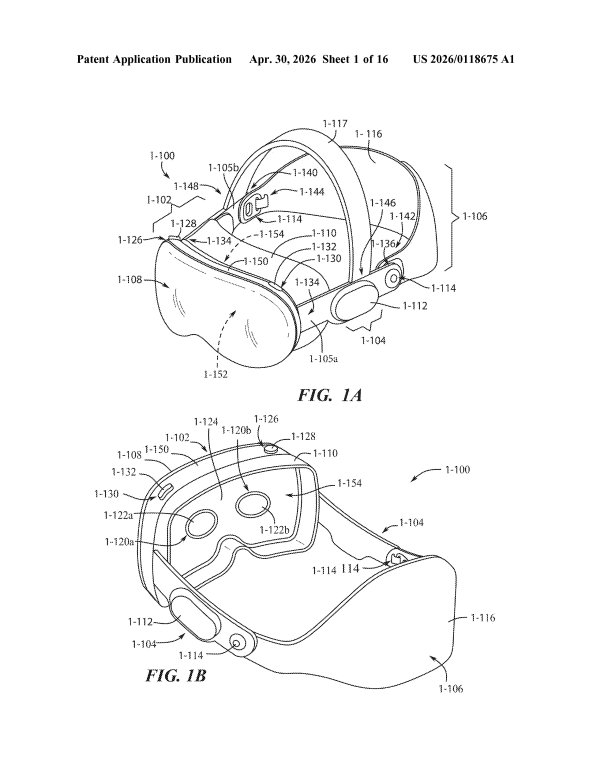
Knowing how you breathe and whether you have a fever can reveal a lot about your health. These filings cover a headset that reads temperature and breathing from inside your ear, and a wearable that tracks breathing using light.
Generic workout targets ignore what you ate or how your body is built. These filings cover adjusting exercise goals based on food intake and reading muscle size through a camera.
Health information spread across multiple devices or apps can get out of sync or hard to use. These filings cover keeping health data consistent across all your devices and delivering it to you in a clearer way.
Rhythm changes in heartbeat patterns over time could signal metabolic syndrome risk, letting the watch flag conditions normally caught only through lab work and clinical visits.
Personalizing audio output to individual hearing profiles could let Apple Watch and AirPods apply hearing-corrected sound without requiring a separate audiologist visit, extending health sensing beyond vital signs into sensory accommodation.
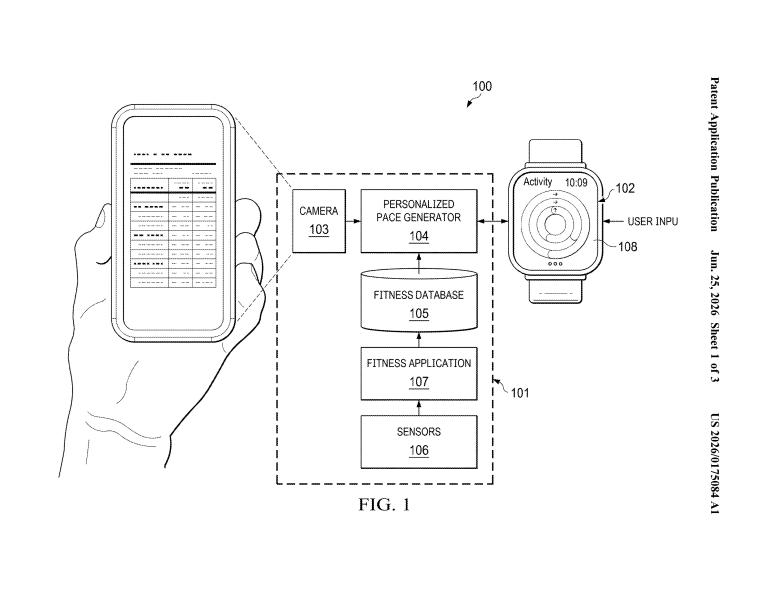
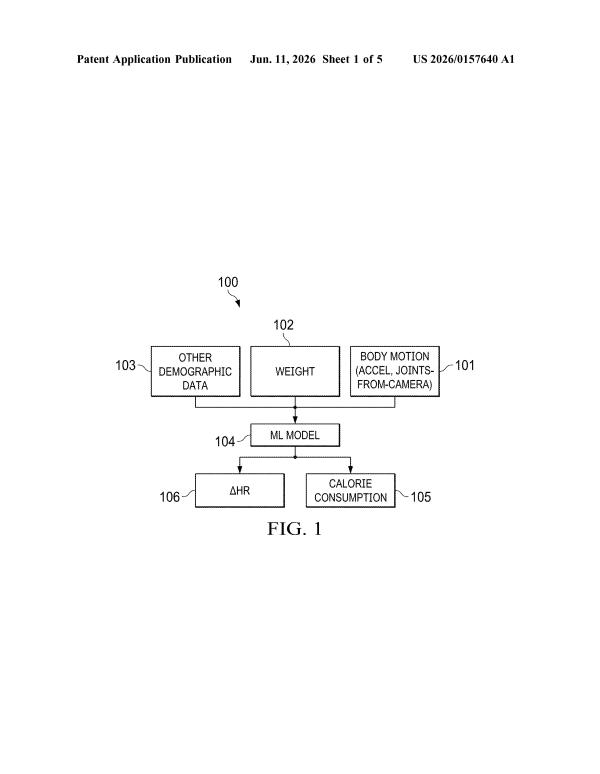
Integrating nutrition data into live workout targets means your watch could adjust calorie-burn goals mid-session based on actual intake rather than estimates, closing a gap between what you eat and what you burn.
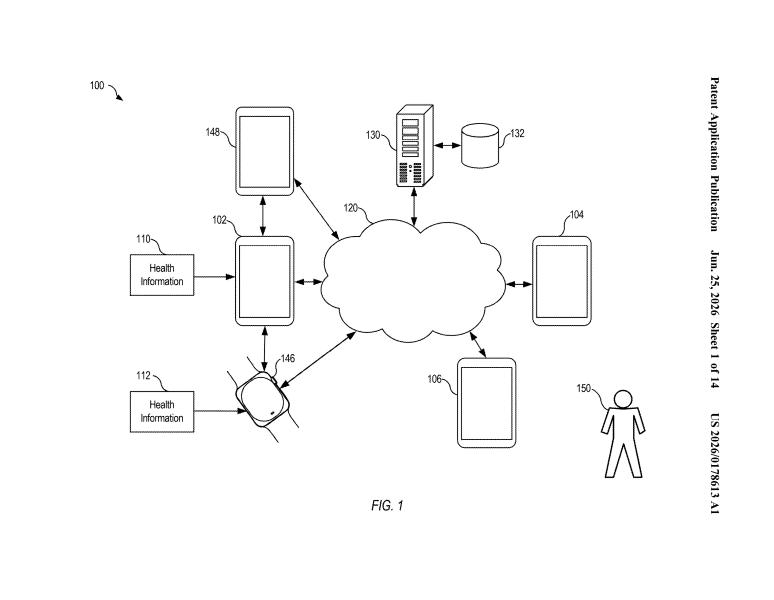
Building on the watch and phone sensors already patented, this filing shows how Apple plans to stitch data from multiple devices into one coherent record, solving the sync problem that arises when health tracking happens across your entire ecosystem.
Using a camera to estimate muscle composition fills a gap in Apple's health stack: existing wearables track activity and heart rate, but can't distinguish between two people doing identical workouts if their body composition differs.
Measuring core body temperature without contact sensors requires inferring internal heat from facial thermal patterns, a sensing problem that shifts from wrist or finger placement to the continuous facial access a headset provides.
The watch's heart rate readings have long suffered from motion noise; this filing shows Apple is filtering out unreliable moments rather than just processing messy data after the fact.
Measuring sleep consistency requires tracking actual bedtimes and wake times across multiple nights, this filing shows Apple automating that data collection through the phone's built-in sensors rather than relying on user input or wearables alone.
Contextualizing health data around daily activities rather than presenting raw metrics separately lets the device anticipate what information matters at what moment, shifting from passive logging to actionable guidance.
Face-worn optics could catch breathing depth from skin movement alone, filling a gap where wrist-based sensors lose precision at rest.
Questions readers ask
Does this mean my next iPhone or Apple Watch will track my breathing and heart rate more accurately?
Not necessarily. These are patent filings, which show what Apple's engineers are researching and protecting, not features confirmed for a shipping product. The breathing and heart-rate patents in this watchlist describe sensor designs Apple could use, but whether or when they reach an iPhone, Watch or headset is not something a patent filing tells you.
Why does Apple keep patenting ways to sync health data across devices?
Several filings here deal with health data that lives on both an iPhone and an Apple Watch and sometimes falls out of sync. Apple's patents suggest engineers are working on keeping one consistent record across devices and on presenting that data back to users in a clearer way, rather than just adding more sensors.
What is Apple trying to solve with motion-gated heart rate sensing?
The patent describes a way to time heart rate readings around movement, so a reading isn't taken mid-stride or mid-pedal stroke when the number would be least accurate. It points to Apple trying to make existing Apple Watch heart rate sensors more reliable during exercise, rather than adding new hardware.
Are these health sensor patents only for the Apple Watch?
No. The filings in this watchlist span the iPhone, Apple Watch and a headset, with sensors described for wrist wear, phone software and even the inside of a headset for breathing and temperature. The pattern suggests Apple is spreading health sensing across several devices rather than concentrating it in one.
Want this weekly breakdown for a company we don't cover?
Patentlyze Pro →
The weekly email: the best of Big Tech's filings, in plain English. Free.