
Apple Patent Aims to Extend Battery Life Through Intermittent Wireless Charging
Your phone charger is running at full blast even when your battery barely needs a trickle. Apple's latest patent describes a system that fixes that by switching wireless power on and off in rapid bursts, transmitting only when it's efficient to do so.
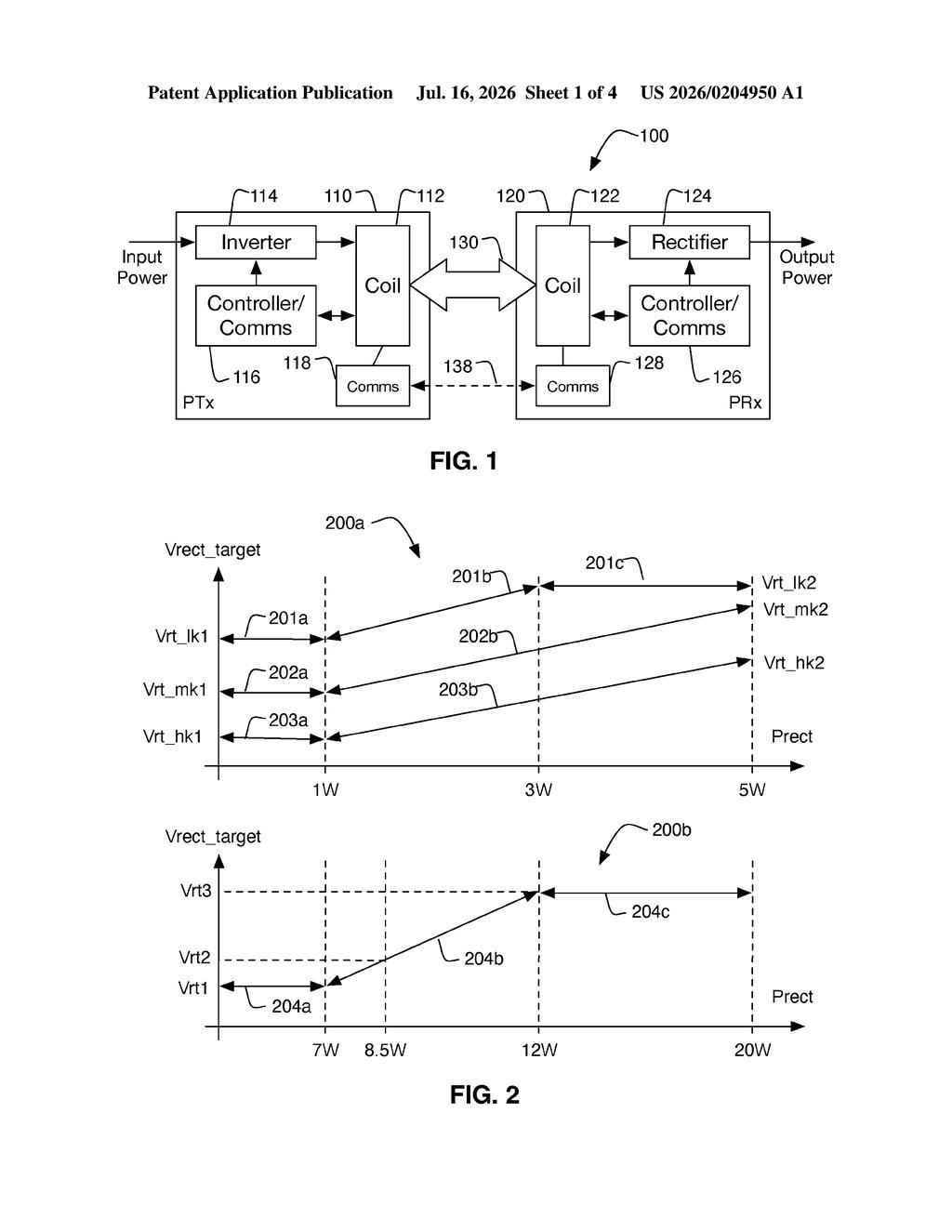
What Apple's pulsing wireless charger actually does
Imagine leaving your phone on a wireless charging pad overnight. For most of that time, your battery is already topped up, but the charger is still humming along at full power turning electricity into heat instead of useful charge. That wasted energy adds up.
Apple's patent describes a charging system that can switch between a normal, steady-charging mode and what it calls an intermittent power profile: a pattern where the charger rapidly alternates between an active burst and a complete rest. The charger or the phone itself decides when this pulsing mode is more efficient and kicks the switch automatically.
You wouldn't notice the difference in day-to-day use. Your device would still charge. But behind the scenes, the system would be doing less unnecessary work, potentially running cooler and drawing less power from the wall when a full-power stream isn't needed.
How the charger picks its on-off duty cycle
The patent outlines a wireless power system (think a charging pad and a receiving device like a phone or earbuds) that can operate under multiple transfer profiles, not just one fixed approach.
The new addition is the intermittent power profile, which structures wireless charging around a macro duty cycle: a timed ratio that defines how long the charger stays in an active state (actually sending power) versus a quiescent state (fully off, drawing no energy). That ratio can be tuned based on how much power the receiving device actually needs at any given moment.
The decision to switch modes is made autonomously. Either the transmitter (the pad) or the receiver (the device) can calculate whether pulsing would be more efficient than continuous transmission, and then one of them triggers the transition. The patent lays out the handshake logic for coordinating that switch without interrupting the charging session.
- Active state: the coil transmits power normally
- Quiescent state: the system goes fully silent, drawing near-zero energy
- Macro duty cycle: the ratio controlling how much time is spent in each state
What this means for MagSafe and future charging pads
Wireless charging has a well-known inefficiency problem: it converts more electricity to heat than wired charging does, especially when the receiving device doesn't need much power. A pulsing approach that only transmits when doing so is worthwhile could meaningfully reduce that waste, which matters both for your electricity bill and for device temperatures over long charging sessions.
For Apple, this fits into a broader push to make MagSafe and other wireless charging hardware more energy-efficient. With regulators in Europe increasingly scrutinizing standby and charging power consumption, a patent like this could also help Apple meet future efficiency requirements without changing the physical hardware you already own.
This is unglamorous but genuinely useful engineering. Wireless charging efficiency is a real problem that most people notice as heat, not wasted watts, and a system smart enough to throttle itself based on actual demand is a practical fix. Whether this ends up in a firmware update for existing MagSafe hardware or only in future devices is the real question, but either way it's a meaningful direction.
There are more where this came from
We read every patent application Big Tech publishes and send you the ones worth knowing. Plain English, free, every week.
Want this weekly breakdown for a company we don't cover? Patentlyze Pro →