
Samsung Patents a Chip That Automatically Corrects Photo Colors Before They Leave the Camera
Every photo your phone takes goes through a color translation process before it looks right on your screen. Samsung is filing patents to bake that translation directly into a single chip, using a prebuilt table of color conversions rather than calculating them on the fly.
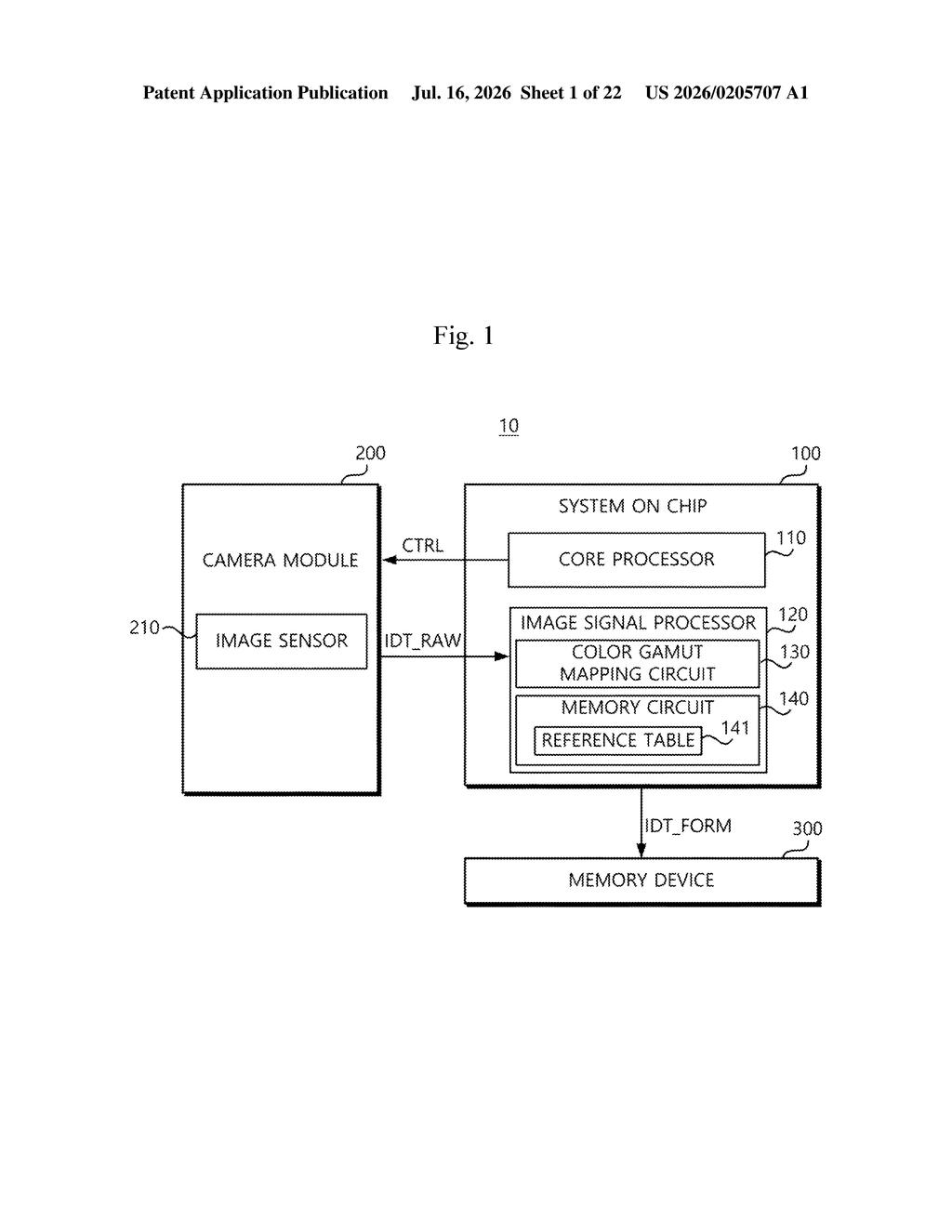
What Samsung's color gamut mapping chip actually does
Imagine you're translating a book from French to Spanish. You could translate every sentence fresh each time, or you could build a massive dictionary of common phrases and just look them up. Samsung's patent applies that same idea to color.
When a camera sensor captures a photo, the raw colors it records don't automatically match what your screen can show. There's a gap between the color range the camera sees and the color range the display uses. Bridging that gap normally takes real-time computation. Samsung's approach is to pre-calculate a huge table of color conversions and store it on the chip, so the translation happens almost instantly using lookups instead of math.
The whole system sits on a single chip alongside the camera sensor's image processor. That means less back-and-forth between separate components, which can speed up image processing and potentially reduce the power needed to do it.
How the reference table maps one color space to another
The patent describes a system-on-chip (a single piece of silicon that combines multiple functions) with a dedicated color gamut mapping circuit. A color gamut is the full range of colors a device can capture or display. Converting between two different gamuts, say, from a wide camera gamut to a narrower display gamut, is a mathematically intensive task.
Samsung's design stores a prebuilt three-dimensional reference table (often called a 3D lookup table or 3D LUT) in on-chip memory. Each entry in the table contains a pre-calculated answer to the question: 'If a pixel has these color values in Gamut A, what should its values be in Gamut B?' Instead of computing that answer fresh for every pixel, the chip simply looks it up.
The method for building that table involves several steps:
- Starting with raw color data at a specific bit depth (the precision level of each color value)
- Applying color correction to fix any inaccuracies from the sensor
- Generating the mapped color values for the target gamut
- Quantizing the result (rounding values to fit within memory constraints) before storing them in the table
The image signal processor on the chip then uses this reference table to convert incoming raw images in real time, outputting color-corrected, gamut-mapped image data ready for display or further processing.
What this means for camera image processing pipelines
For end users, this kind of technology affects how accurate and consistent your photos look across different screens and apps. Color gamut mismatches are a common reason why an image that looks great on your phone looks slightly off when shared to a TV or edited on a laptop. A faster, more power-efficient conversion process built directly into the camera chip could make that translation more reliable and less of a battery drain.
For Samsung, integrating this into a single chip is partly a manufacturing and performance play. Fewer separate components means simpler device designs, and precomputed lookup tables are much faster than real-time computation for tasks like this. Given Samsung's position as both a major chip maker and a major display maker, tighter control over how its own chips handle color translation is a logical piece of its broader imaging strategy.
This is a fairly specific engineering patent covering the internals of image processing pipelines. It's not a new camera feature you'll see advertised on a spec sheet, but it's the kind of low-level work that makes camera systems faster and more consistent. Worth a glance if you follow Samsung's chip design roadmap, but not essential reading otherwise.
There are more where this came from
We read every patent application Big Tech publishes and send you the ones worth knowing. Plain English, free, every week.
Want this weekly breakdown for a company we don't cover? Patentlyze Pro →
Be the first to weigh in