
New VR Patent Mimics Natural Eye Focus for Sharper Images
Your eyes don't pay equal attention to everything in a VR scene, so why send equal amounts of image data for every part of it? Sony's latest patent describes a way to pack more visual information where you're looking and less toward the edges, before sending that image to a headset.
What Sony's eye-centered VR image trick actually does
Imagine watching a movie in a VR headset. The part of the image right in front of you, where you're focused, matters a lot. The stuff at the very edges of your vision? Much less so. But most VR systems treat every part of the image the same way, sending the same amount of detail everywhere.
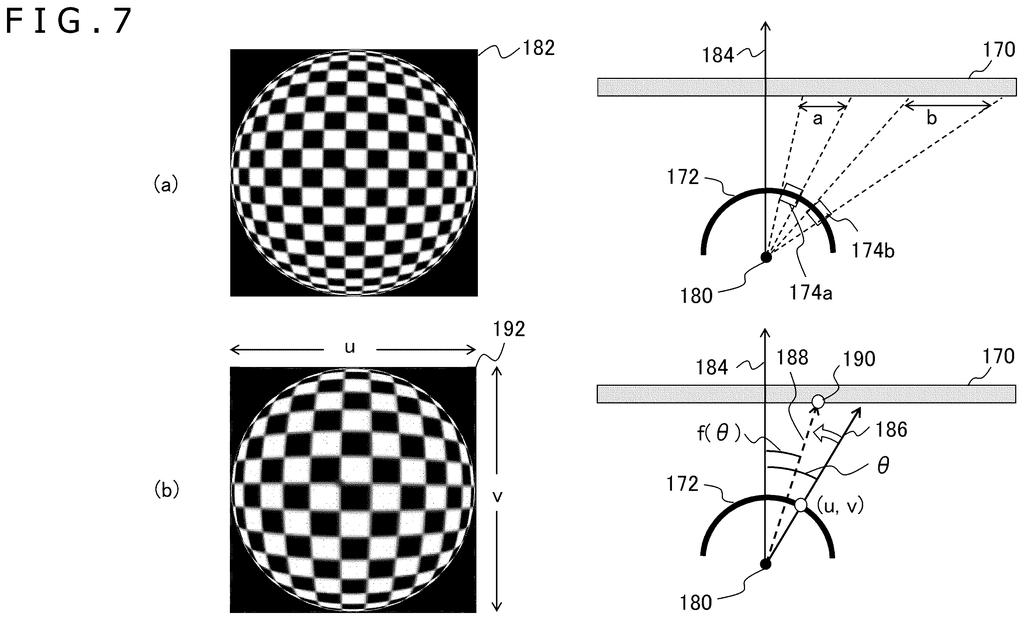
Sony's patent describes a smarter encoding step. Before transmitting a VR frame, the system bends the conceptual "screen" it samples colors from, so it captures more detail in the center and less at the edges. The result is a source image where the middle is stretched out and the edges are compressed, which then gets re-shaped back into normal proportions when displayed on the headset's screen.
This is similar to how a fisheye lens works in reverse. The trick lets Sony send one image that contains more useful visual information where your eyes need it, potentially reducing the data that needs to be transmitted without making the experience look worse.
How the curved viewscreen changes pixel density by angle
The patent describes an image transmission device that creates a specially distorted "source image" before sending it to a VR headset or display device.
Here's the process step by step:
- The system places a virtual curved screen in the 3D scene, centered on the user's line of sight (the center axis).
- It samples color information from the scene at varying angular intervals, meaning it takes more samples per degree near the center and fewer samples near the edges.
- This produces a source image that looks magnified in the middle and squished toward the edges, similar to the distortion an eyepiece lens creates.
- The receiving device (the headset or display) then re-maps pixels from the source image back onto a flat screen, effectively un-distorting it so the final image looks normal to the viewer.
The key technical idea is changing the density of directions in which color data is sampled, based on the angle from the center axis. Objects near the center of your gaze get encoded with higher fidelity; objects at the periphery get encoded with lower fidelity. The distortion intentionally mimics what an eyepiece lens would introduce, so the decoding step at the headset can use a matching correction.
What this means for streaming VR to a headset
For VR streaming, bandwidth is a constant bottleneck. Sending a full high-resolution frame for every direction the viewer might look is expensive. Sony's approach means the most visually important part of the image, the center where your eyes are pointed, gets the most data, while the periphery gets less. That's a more efficient use of every byte transmitted.
This is especially relevant for cloud gaming and remote VR rendering, where frames are processed on a server and streamed to a headset. If Sony can encode frames this way at the source, the PlayStation network could deliver sharper-looking VR at the same bandwidth, or the same quality at lower bandwidth, which matters a lot for users without a top-tier internet connection.
This is a genuinely practical compression idea for VR streaming, not just a theoretical rendering trick. The approach borrows from a well-understood concept in optics and adapts it to network-efficient encoding, which fits neatly into Sony's PlayStation streaming ambitions. It's not flashy, but it addresses a real and persistent problem in wireless and cloud VR delivery.
There are more where this came from
We read every patent application Big Tech publishes and send you the ones worth knowing. Plain English, free, every week.
The drawings
12 drawing sheets from US 2026/0221120 A1 · click any drawing to enlarge


Want this weekly breakdown for a company we don't cover? Patentlyze Pro →
Be the first to weigh in