
Adobe Patents On-Device AI Content Generation Driven by Local Subscription Data
Adobe is filing for a system that personalizes digital content — think ads, recommended creative, or tailored offers — entirely on your device, using subscription data that never leaves it. It's a privacy-preserving spin on AI-generated advertising.
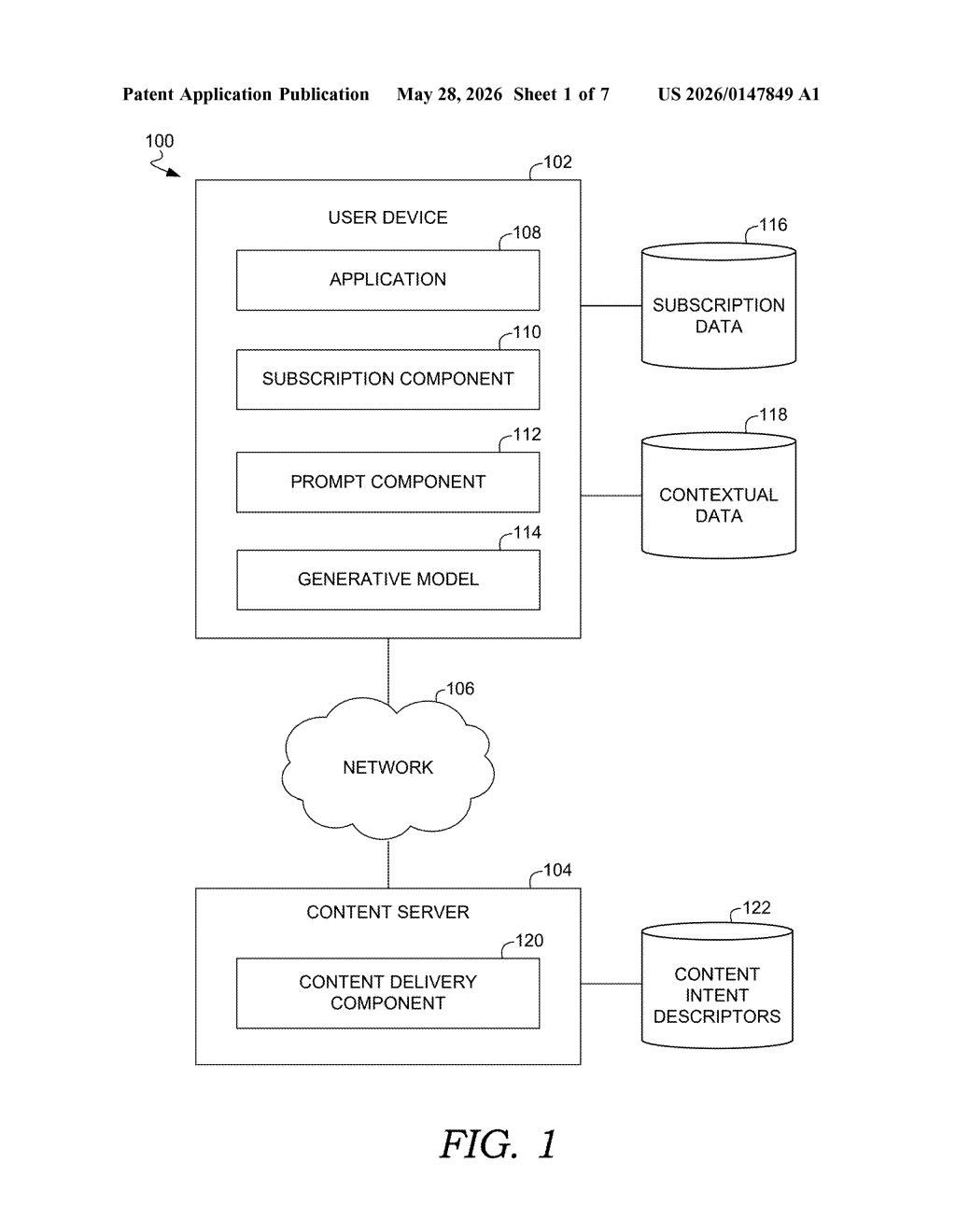
How Adobe's on-device ad system keeps your data local
Imagine you subscribe to Adobe Creative Cloud. Instead of a server tracking your usage habits and beaming targeted ads back at you, your device already knows what you use and care about. A new Adobe patent builds on exactly that idea.
Here's how it works at a high level: a content server sends your device a lightweight "intent descriptor" — essentially a description of what kind of content to show, not the content itself. Your device then looks at your local subscription data, combines the two, and uses a generative AI model to actually create the personalized content right there on your phone or laptop.
The key detail is what doesn't travel over the network: your personal subscription and usage data stays on your device the whole time. The server never sees it. The result is personalized content without the privacy cost of sending your data to Adobe's (or anyone else's) cloud.
How the content intent descriptor drives on-device prompts
The system has three moving parts working together on the device:
- Content Intent Descriptor: A lightweight signal sent from a content server over the network. Think of it as a brief — "show this user something related to video editing" — without including any user-specific information.
- On-Device Subscription Data: Locally stored information about the user's subscriptions, preferences, and usage context. This data never leaves the device.
- On-Device Generative Model: A local AI model (think a small language or multimodal model running on-device) that takes a prompt constructed from the intent descriptor plus the local subscription data and generates the actual digital content item.
The comparison step is the critical privacy mechanism. Before any prompt is constructed, the device checks whether the incoming intent descriptor is relevant to the local subscription data. Only if there's a meaningful match does the device proceed to generate content — and the generative model runs locally, not on a remote server.
The patent also mentions contextual data as a supplementary input, suggesting the system could factor in things like time of day or app state when building the prompt. The final output — the generated content item — is then rendered directly on the device.
What this means for privacy-first personalized advertising
The ad-tech and content-delivery industry has been under pressure since Apple's App Tracking Transparency crackdown, and the deprecation of third-party cookies has pushed the whole sector toward on-device or privacy-preserving alternatives. Adobe's approach here is a credible architectural answer to that problem: move the personalization logic to the device, send only a thin intent signal over the wire, and let a local generative model do the heavy lifting.
For you as a user, this means personalized content that doesn't require your behavioral data to be harvested by a remote server. For Adobe, it means a way to deliver highly tailored creative — inside their own apps or on partner surfaces — while staying on the right side of evolving privacy regulations. Whether this architecture stays within Adobe's ecosystem or becomes a platform play for third-party publishers is the open question.
This is a genuinely interesting architectural move that sits at the intersection of on-device AI and privacy-preserving advertising. Adobe is in a unique position here because they already know what their subscribers use — that subscription data is legitimately on-device and consent-based, which sidesteps the shadiest parts of behavioral ad targeting. The real test will be whether the on-device generative model can produce content good enough to be worth the compute cost on consumer hardware.
There are more where this came from
We read every patent application Big Tech publishes and send you the ones worth knowing. Plain English, free, every week.
Want this weekly breakdown for a company we don't cover? Patentlyze Pro →