
Adobe Patents an Evolutionary AI System for Untangling Cause and Effect in Data
Most AI systems are great at spotting patterns, but terrible at answering the harder question: did this action actually cause that result? Adobe is patenting a system that tries to answer exactly that, using a technique borrowed from biology.
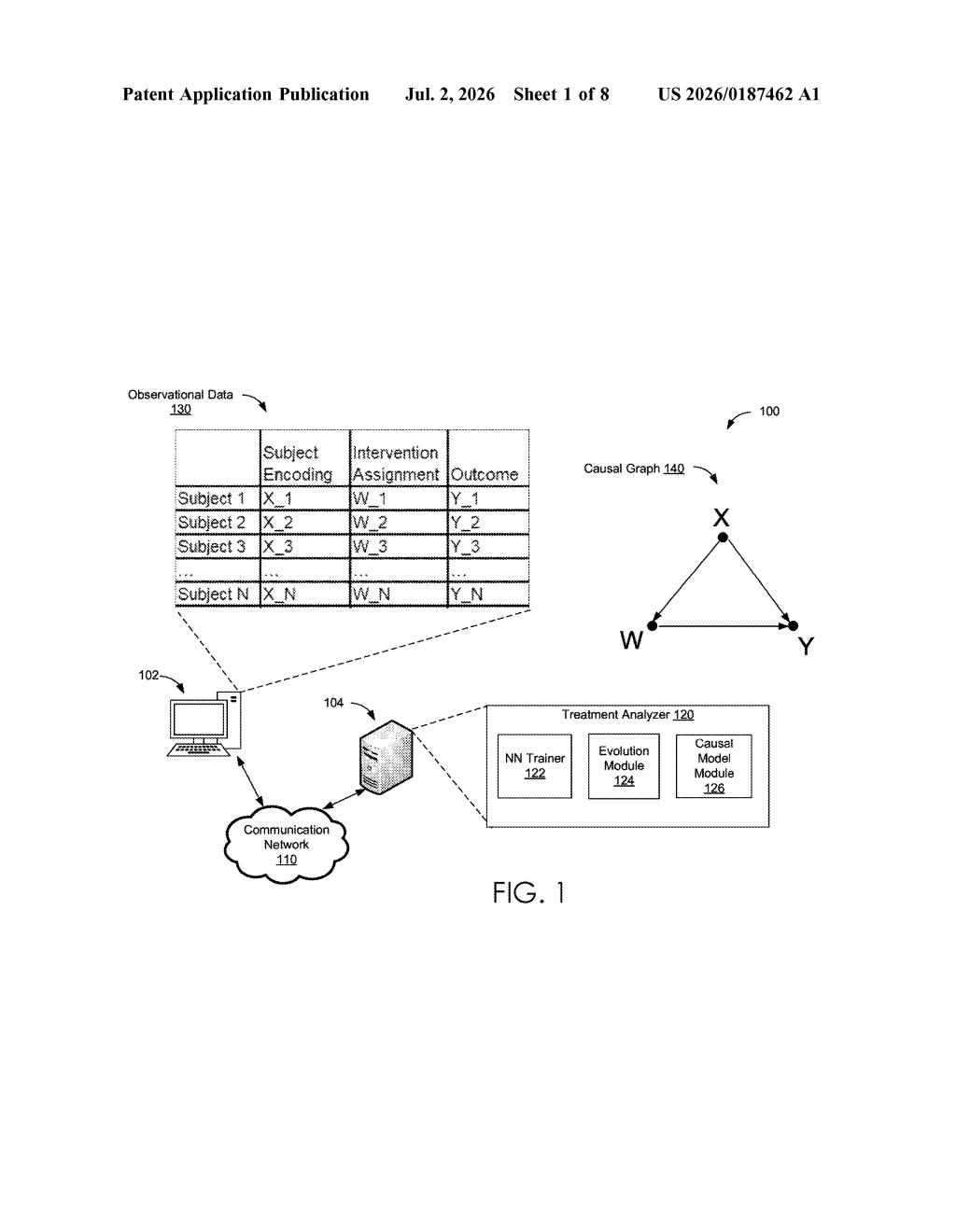
What Adobe's cause-and-effect AI actually does
Imagine a company wants to know whether sending a discount coupon actually caused customers to buy something, or whether those customers would have bought anyway. That's a deceptively hard question for software to answer, because data alone rarely tells you what would have happened if you'd done something different.
Adobe's patent describes a system that trains many competing AI models at once, then selects the best ones and "breeds" them together, much like survival of the fittest. The twist is how it defines "best": a model earns a high score not just for predicting outcomes well, but for learning a view of the data where the treatment (say, showing an ad) can be identified separately from everything else about the customer.
The result is a model that can estimate causal effects for new people it has never seen before. In plain terms: it tries to predict not just what happened, but what would have happened if the company had made a different choice.
How the evolutionary model selection loop works
The patent describes a method called neuroevolutionary causal inference. It combines two ideas: evolutionary algorithms (where models compete, reproduce, and improve over generations) and causal modeling (figuring out true cause-and-effect rather than just correlation).
Here's the core loop:
- A large batch of neural networks is created and trained to predict an outcome (like whether a customer converts) from a feature set (customer attributes).
- Each model is paired with a second network that tries to predict the treatment assignment (which customers got the intervention, like an ad) using a compressed version of the first model's internal representation.
- A model gets a high fitness score if the paired network cannot easily predict treatment from its internal representation. That signals the model has learned a view of the data where the treatment variable is cleanly separated from confounding factors.
- Top-scoring models are selected as "parents" and combined via row-wise crossover (mixing rows of their internal parameter matrices, similar to genetic recombination) to produce a new generation of models.
The winning model then re-encodes the training data into a latent space (a compressed, transformed version of the original data) that a final causal model uses to estimate how a treatment affects outcomes for subjects it has never seen.
What this means for Adobe's personalization tools
Causal modeling is the backbone of any serious personalization or experimentation platform. Adobe's Creative Cloud and Experience Cloud products serve marketers running A/B tests and audience-targeting campaigns constantly. A system that can reliably estimate whether an action caused a result, rather than just correlating with it, would be genuinely valuable for those customers.
The evolutionary selection twist is not just an academic flourish. By rewarding models that learn to separate treatment from confounders automatically, Adobe sidesteps a notoriously difficult manual step in causal analysis. If this works in practice, it could give marketers more trustworthy lift estimates without requiring a data scientist to hand-engineer the causal structure of each campaign.
This is a real research-grade idea, not a routine filing. Causal inference is one of the genuinely hard problems in applied AI, and combining evolutionary model selection with the goal of disentangling treatment from confounders is a non-obvious approach. Whether it outperforms existing causal ML methods in Adobe's actual products is a separate question, but the intellectual ambition here is credible.
Get our take in your Top Stories
Liked this breakdown? Add Patentlyze as a preferred source on Google, and our plain-English take shows up more often in your Top Stories the next time Adobe patent news breaks.
There are more where this came from
We read every patent application Big Tech publishes and send you the ones worth knowing. Plain English, free, every week.
Want this weekly breakdown for a company we don't cover? Patentlyze Pro →