
Disney Patents a Way to Teach AI How to Cut Actors Out of Film Footage
Cutting an actor out of a scene frame by frame is one of the most tedious jobs in Hollywood. Disney is patenting a way to train AI to do it automatically, by teaching the model on a mix of real and computer-generated footage it assembles itself.
What Disney's rotoscope AI training actually does
A rotoscoper sits in a dark room, tracing the outline of an actor, frame by frame, for hours. That work, called rotoscoping, is how visual effects studios separate a person from their background so they can be placed into a different scene. It has been done largely by hand for decades.
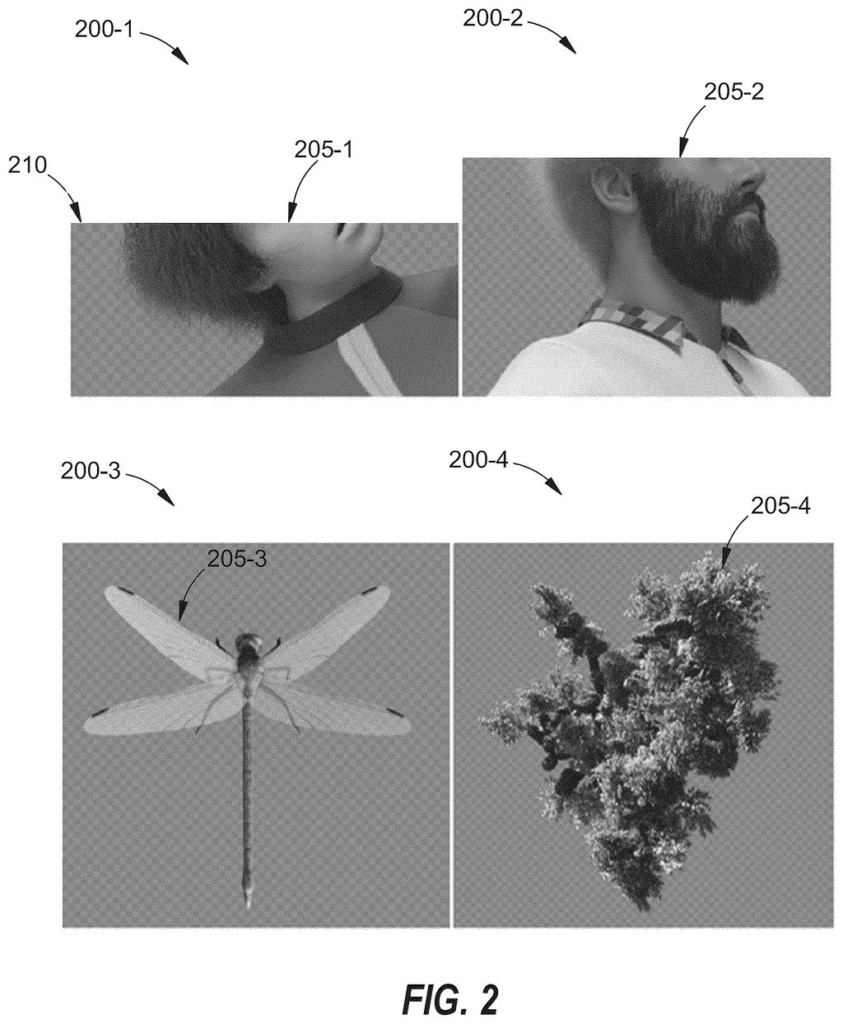
Disney's patent describes a training method for an AI that could take over a big part of that job. The core idea is to build a large library of practice images, some captured from real cameras using a special color-based lighting rig, and some generated entirely by computer. The system then labels each image with a precise outline of the subject, teaching the AI what counts as foreground and what counts as background.
The AI learns by studying thousands of those labeled examples, so that when it sees a fresh frame of footage, it can draw the outline itself. You'd still have a human refining the result, but the tedious first pass could become automatic.
… generating one or more composite training samples by combining at least one of the one or more foreground objects with one or more simulated backgrounds; generating a first training dataset for a segmentation model …
Translation: The system builds practice data by dropping actors or objects into fake digital backgrounds.
How the system builds and labels its own training images
The patent describes a pipeline for generating training data for a segmentation model (an AI that draws a precise outline around a subject in an image, separating it from the background).
Training data comes from two sources:
- Real-world capture: Objects or actors are filmed using a color triangulation setup, a rig that uses multiple differently colored lights or backgrounds to mathematically isolate the subject with high precision. This lets the system extract a clean foreground element without a traditional green screen.
- Synthetic generation: Computer-rendered objects are created using multi-dimensional rendering models (essentially high-quality 3D software), producing foreground elements that never existed in the real world.
Those foreground elements are then composited onto simulated backgrounds, creating artificial training scenes. Each composite image is annotated with a segmentation mask, a pixel-level map that marks exactly which parts of the image belong to the foreground subject.
The segmentation model is trained on that labeled dataset so it can predict the correct mask for any new input frame. A second phase of the pipeline, referenced in the patent, extends this into full alpha matting, which handles semi-transparent edges like hair or motion blur, the hardest part of any rotoscope job.
Embodiments provide techniques for training machine learning models for rotoscoping and matting in VFX workflows. The method includes generating one or more foreground objects, comprising capturing real-world objects against one or more backgrounds using a color triangulation setup …
Translation: This technology helps train AI to cleanly cut actors out of their backgrounds for visual effects.
What this means for VFX studios and production costs
For VFX studios, rotoscoping is a significant line item on any production budget. Large films can require thousands of hours of frame-by-frame tracing. A reliable AI that handles the rough cut would let smaller teams tackle bigger projects, or free experienced artists to focus on the detailed edge work that still requires human judgment.
Disney has its own major VFX pipeline across Marvel, Lucasfilm, and its animation studios, so the in-house motivation is obvious. If this training approach produces a model accurate enough to use in production, the pattern in Disney's AI-for-production filings points toward a studio that wants to own these tools rather than license them from outside vendors.
This is the second Disney filing we've tracked in our AI photo editing race watchlist since September, following one on video object masks.
Getting training examples right is the quiet, foundational work that determines whether everything built on top of it succeeds or fails, and that is exactly what this patent covers.
A finished tool would still need the actual AI model built and proven on real production footage, software that editors can operate without a manual, and integration with the pipeline systems studios already rely on every day. None of those exist in this document, and the filing includes no performance numbers to suggest the approach even clears the bar a film crew would set.
The shortest path to something shippable runs straight through all of that, so what Disney has secured here is a documented method for generating better practice data, which matters, but sits several meaningful development stages before anyone on a production would see a button to click.
There are more where this came from
We read every patent application Big Tech publishes and send you the ones worth knowing. Plain English, free, every week.
The drawings
10 drawing sheets from US 2026/0278805 A1 · click any drawing to enlarge


Want this weekly breakdown for a company we don't cover? Patentlyze Pro →
Be the first to weigh in