
Samsung Patents a Foldable Phone Speaker That Redirects Sound When You Fold It
Every time you fold your phone shut, the speaker grille gets partially blocked. Samsung's answer is a second speaker hole that only opens when the phone is closed.
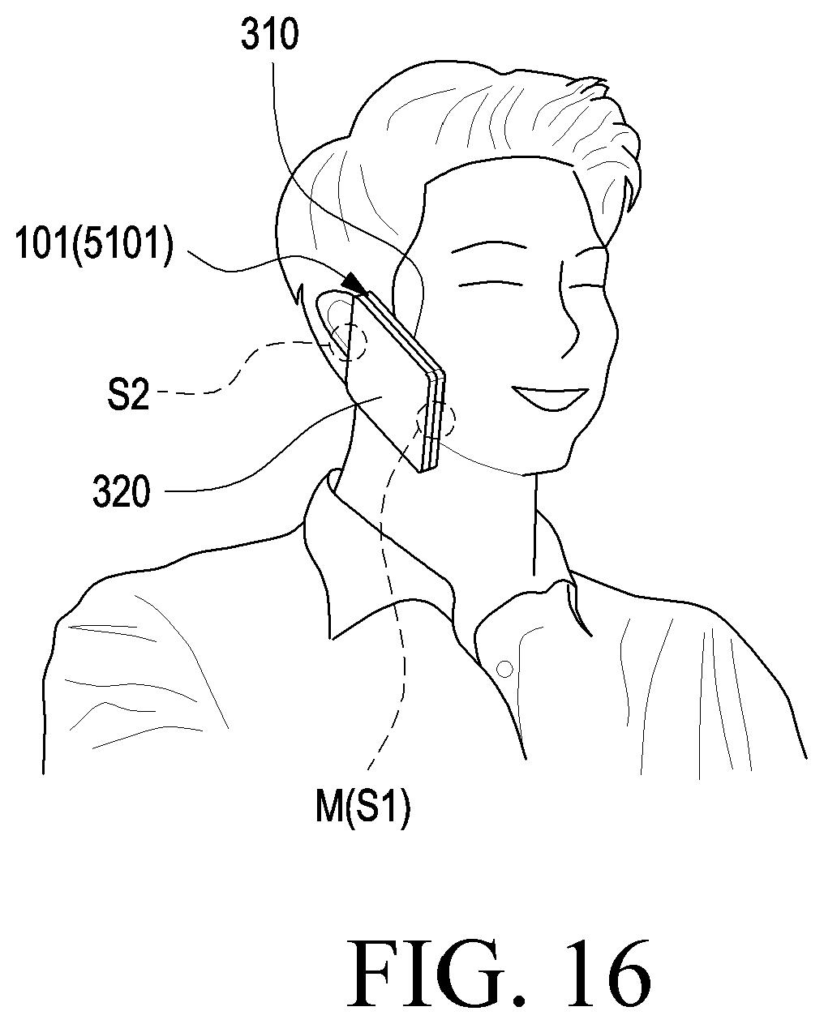
What Samsung's dual-path foldable speaker actually does
Imagine using your foldable phone as a little music player while it's folded up in your hand. The speaker on the inside of the device is now half-buried against the other half of the phone, so the sound gets muffled. That's a real problem with today's folding phones.
Samsung's patent describes a phone with two separate speaker holes. One hole faces outward when the phone is fully open and flat. The other hole is positioned so it only becomes unobstructed when the phone is folded shut. The same speaker inside the device drives both paths, but only the correct path is open depending on the phone's position.
The result is that whether you're watching a video with the phone unfolded or listening to a podcast with it folded up like a candy bar, you're always getting clean, unblocked audio output rather than sound fighting its way past a partially covered grille.
How the two speaker holes open and close with the hinge
The patent covers a foldable device with a first housing and a second housing connected by a hinge, with a flexible display stretched across both. A single speaker sits inside the first housing.
The clever part is how sound gets out. There are two distinct sound output paths, each with its own speaker hole:
- First sound output path: its speaker hole is open and unobstructed when the device is unfolded flat, but gets at least partially covered when the device is folded closed.
- Second sound output path: its speaker hole is open when the device is folded closed, but gets at least partially covered when the device is unfolded.
Critically, both holes are located on the first housing, the same half that contains the speaker. The second housing acts as a natural cover, blocking one hole or the other depending on the fold angle. No moving mechanical parts or electronic switching are described as necessary since the hinge geometry itself handles which path is exposed.
The system is fundamentally passive: the physical relationship between the two housings determines audio routing, not software or actuators.
What this means for sound quality on folding phones
Foldable phones have always made an awkward audio compromise. The speaker placement that works well when the screen is open tends to get choked when you fold the device. Samsung selling tens of millions of Galaxy Z Flip and Z Fold units per year means this is a real, recurring annoyance for a lot of people, not a niche edge case.
A passive dual-path design is appealing because it adds no extra components to drive, power, or fail. If this approach makes it into a shipping Galaxy Z device, you could get decent speaker output in both the open and folded configurations without any manual adjustments or settings menus.
This is a practical, unglamorous fix to a genuine usability problem that anyone who has owned a flip-style foldable has noticed. It's not a headline feature, but it's the kind of quiet engineering detail that separates a good product from an annoying one. Worth watching to see if it surfaces in a future Galaxy Z Flip.
There are more where this came from
We read every patent application Big Tech publishes and send you the ones worth knowing. Plain English, free, every week.
The drawings
24 drawing sheets from US 2026/0222481 A1 · click any drawing to enlarge


Want this weekly breakdown for a company we don't cover? Patentlyze Pro →
Be the first to weigh in