
Google Patent Reveals AI That Tracks Which Words Users Actually Stop to Read
Most AI chatbots only know what you type. Google is patenting a system that also watches what you tap, hover over, or pause on, and folds those signals into the conversation.
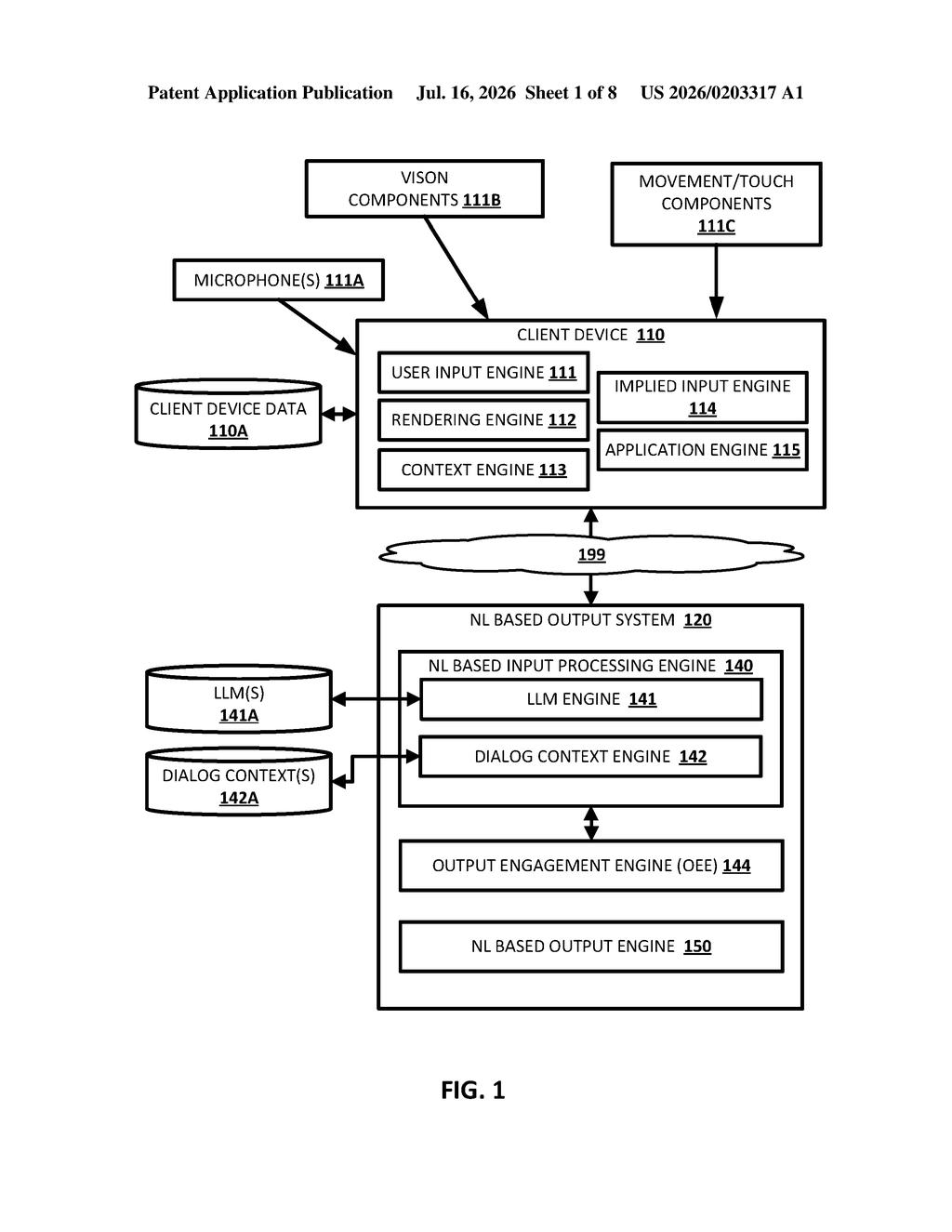
How Google's session-aware AI watches your cursor, not just your words
Imagine you ask an AI assistant about your retirement options and it gives you a long response. You pause on the phrase 'Roth conversion' and tap it to highlight it. Right now, most AI systems ignore that gesture entirely. Google's patent describes a way to change that.
The idea is that when you interact with a specific word or phrase in an AI's response, the system logs that as a signal of interest. The next time you ask a follow-up question, the AI already knows that 'Roth conversion' caught your eye, so it can tailor its answer around that topic without you having to spell it out.
This works within a single conversation session. The AI isn't building a permanent profile on you. It's more like a thoughtful conversationalist who noticed what made you lean in, and keeps that in mind for the rest of the chat.
How a tap or hover rewrites the AI's next prompt
The patent describes a system built around session-based engagement detection. When an AI (specifically a large language model, or LLM) generates a response and displays it, the system monitors input signals from the user's device, things like mouse hovers, taps, text selections, or cursor pauses on specific words or phrases.
When one of those engagement events is detected on a particular term, the system captures metadata about that term (its position in the response, surrounding context, the full sentence it appeared in). That information gets written into the conversational context, which is the running record of everything said so far in the chat session.
When the user then types a follow-up question, the system builds a new prompt for the AI that bundles together:
- The user's actual follow-up question
- The prior conversation history
- A note indicating which specific term the user previously engaged with
The AI then generates its next response conditioned on that engagement signal, meaning it treats the tapped or hovered term as implicit context, similar to how a human would if they noticed you kept circling back to a specific idea.
What this means for Google's Gemini and AI search products
For users, the practical effect would be a chatbot that feels more attentive. If you're reading a long AI response and something catches your eye, you wouldn't need to rephrase your next question to include that detail. The AI would already know where your curiosity landed. This is especially useful in research-heavy or technical conversations where a single response might contain dozens of unfamiliar terms.
For Google, this fits directly into its work on Gemini and AI-powered search, where the goal is to make multi-turn conversations feel natural rather than repetitive. It also gives Google a way to improve relevance without asking users to fill out preferences or click explicit feedback buttons. The engagement signal is passive and frictionless, which is exactly the kind of data Google has always been good at collecting and acting on.
This is a genuinely clever idea that solves a real friction point in AI chat: the gap between what you say and what you actually meant. The patent is well-scoped (session-only, not persistent profiling), and the core mechanic of treating a hover or tap as implicit intent is something conversational AI has been missing. Whether it makes it into a shipping product depends on how reliably engagement signals can be detected across keyboards, touchscreens, and voice interfaces.
There are more where this came from
We read every patent application Big Tech publishes and send you the ones worth knowing. Plain English, free, every week.
Want this weekly breakdown for a company we don't cover? Patentlyze Pro →
Be the first to weigh in