
Google Patent Reveals AI Assistant That Remembers Users Over Time
Google is patenting a way for its AI assistant to remember things you've told it before and weave that context back into every new answer it gives you, without you having to repeat yourself.
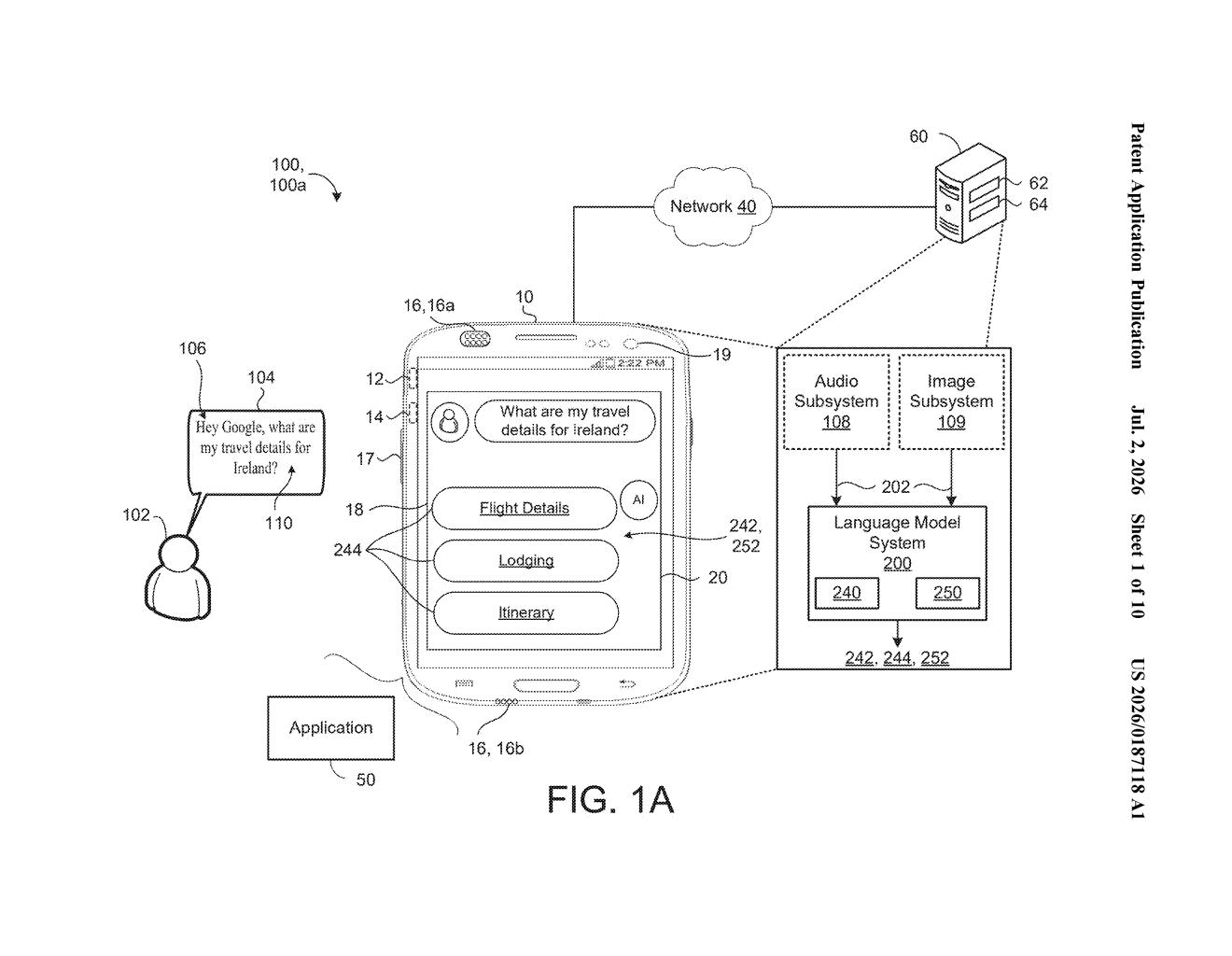
How Google's AI would remember your past requests
Imagine asking your voice assistant to "book the usual table" and it actually knows what "usual" means for you, because it has been building a memory of your habits over time. Most AI assistants today start fresh with every question. Google's patent describes a system that doesn't.
Every time you interact with Google's AI, it saves small compressed notes about you and your preferences. When you ask a new question, the assistant searches those notes, finds the ones most relevant to what you just asked, and uses them to shape its answer before it even starts generating a response.
The result is an assistant that can give you a personalized reply based on your history, without you having to spell out the background every single time. Think of it like an assistant who actually pays attention and takes notes.
How the assistant stitches memory chunks into live prompts
The patent describes a retrieval-augmented generation (RAG) system, a technique where an AI model searches an external store of information before formulating a response, rather than relying only on what it learned during training.
Here's the sequence the patent lays out:
- A user sends a query to an assistant-enabled device (a phone, smart speaker, or similar).
- The system searches a personal datastore of "embedding chunks" (small, compressed numeric representations of past interactions or stored facts about the user) to find the one most relevant to the current query.
- That chunk is combined with the live query to form what the patent calls an "on-the-fly prompt", basically a richer version of your question that carries personal context along with it.
- The assistant LLM processes that combined prompt and returns a personalized response.
The key detail is that the LLM itself is responsible for both storing the embedding chunks over time and retrieving the right one when a new query comes in. The system is designed to work on-device or across Google's backend infrastructure.
What persistent AI memory means for Google Assistant's future
For users, this kind of system closes the gap between a general-purpose AI assistant and one that actually feels like it knows you. Right now, asking Google Assistant or Gemini something personal means supplying your own context every time. A memory layer changes that dynamic significantly, and it's an area where rivals like OpenAI and Apple are also actively working.
For Google, the strategic angle is obvious: a more personalized assistant is a stickier one. If your preferences, routines, and past requests are stored and actively used, switching to a competitor's assistant means starting from scratch. The patent covers the core retrieval-and-stitching mechanic, which is the part that would make or break whether any of this actually works in practice.
This is a real and meaningful patent covering infrastructure that Google will almost certainly need to ship a competitive personal AI assistant. The RAG-plus-personal-memory approach is well-established in research, but patenting the specific loop of storing, retrieving, and stitching user-context chunks is a clear signal Google is building this seriously into its assistant stack.
Get our take in your Top Stories
Liked this breakdown? Add Patentlyze as a preferred source on Google, and our plain-English take shows up more often in your Top Stories the next time Google patent news breaks.
There are more where this came from
We read every patent application Big Tech publishes and send you the ones worth knowing. Plain English, free, every week.
Want this weekly breakdown for a company we don't cover? Patentlyze Pro →