
Google Patents Grammar Checking That Runs Entirely on Your Phone
Google wants your phone to catch grammar mistakes without ever sending your words to a server. The entire correction process would happen on the device itself.
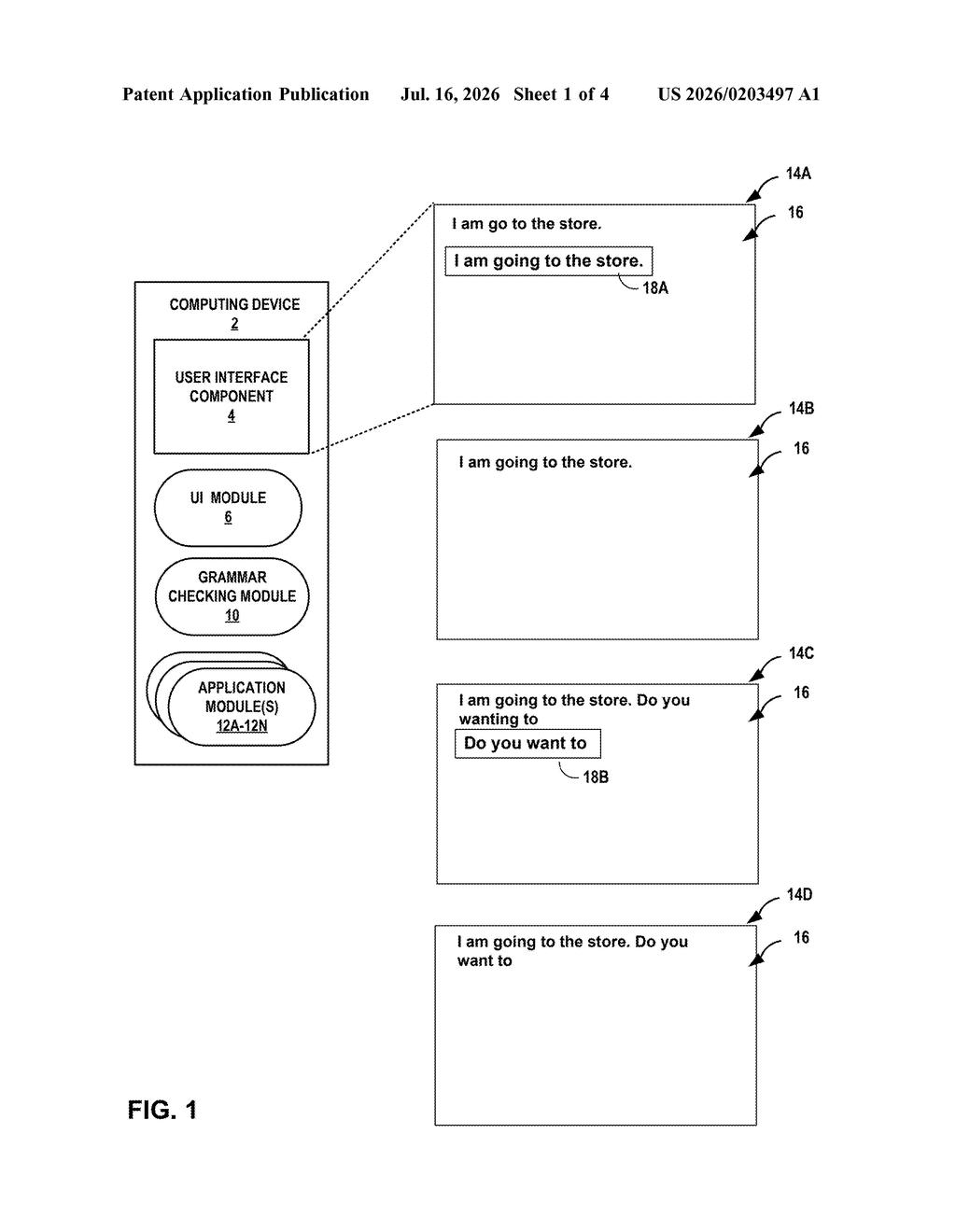
What Google's offline grammar checker actually does
Normally, when an app checks your grammar, your text gets sent to a company's servers, processed in the cloud, and a suggestion gets sent back. That round trip takes time, and your words leave your device entirely. Google's patent describes a different approach: grammar checking that lives on your phone, handled by a small AI model stored locally.
The way it works is conceptually simple. You type something, the on-device model silently generates what a grammatically correct version of that text would look like, then compares the two. If they don't match, your phone surfaces a suggested fix, just like you'd see with a spellchecker underline today.
Nothing gets transmitted. Your drafts, messages, and notes never leave the phone during this process. For anyone typing sensitive content, medical notes, private messages, confidential work documents, that's a meaningful difference from how grammar tools typically work today.
How the on-device neural network catches grammar errors
The patent describes a method where a mobile device runs one or more neural networks (AI models trained on language data) entirely locally to perform grammar checking. There is an explicit requirement in the claim: the device must do this "without communicating with an external device," meaning no server calls.
The core mechanism works in two steps:
- Generation: The neural network takes the sequence of words you typed and produces what it considers the grammatically correct version of that sequence.
- Comparison: The phone then checks whether what you actually typed matches that corrected version.
- Suggestion: If there's a mismatch, the device displays the corrected version as a suggested replacement, similar to autocorrect suggestions, but grammar-aware rather than just spelling-aware.
The patent is filed specifically for mobile computing devices, which signals that the neural network models involved are designed to be compact enough to run on smartphone-class hardware without draining battery or requiring constant connectivity. This is a real engineering challenge: large language models that handle grammar well are typically too big for on-device use, so Google's work here likely involves model compression or distillation techniques to make the AI small but still accurate.
What this means for your writing privacy on Android
Grammar-checking tools like Grammarly have long relied on cloud processing, which means your text flows through third-party servers constantly as you write. A fully on-device system changes that equation entirely. Your words stay on your phone, which matters in contexts like legal writing, healthcare notes, or simply private personal messages where you'd rather not have your sentences logged anywhere.
For Google, this fits into a broader push toward on-device AI across its Android and Pixel ecosystem. If this ships in a keyboard like Gboard, it could give Google a privacy-focused differentiator against cloud-dependent competitors, and potentially work in airplane mode or areas with poor connectivity, where current cloud grammar tools simply fail.
This is a genuinely useful privacy improvement dressed up in fairly dry patent language. On-device grammar checking isn't flashy, but the fact that it explicitly prohibits server communication in the claim itself shows Google is serious about the privacy angle, not just treating it as a marketing footnote. Whether the on-device model is actually as good as cloud-based tools is the real question this patent doesn't answer.
Get our take in your Top Stories
Liked this breakdown? Add Patentlyze as a preferred source on Google, and our plain-English take shows up more often in your Top Stories the next time Google patent news breaks.
There are more where this came from
We read every patent application Big Tech publishes and send you the ones worth knowing. Plain English, free, every week.
Want this weekly breakdown for a company we don't cover? Patentlyze Pro →