
Google's New Patent Fixes the Dark-Face Problem in Backlit Photos
Your phone's camera picks one exposure for an entire scene — which is why your friend's face goes dark when there's a bright window behind them. Google's new patent wants to fix that by exposing each object in your shot independently.
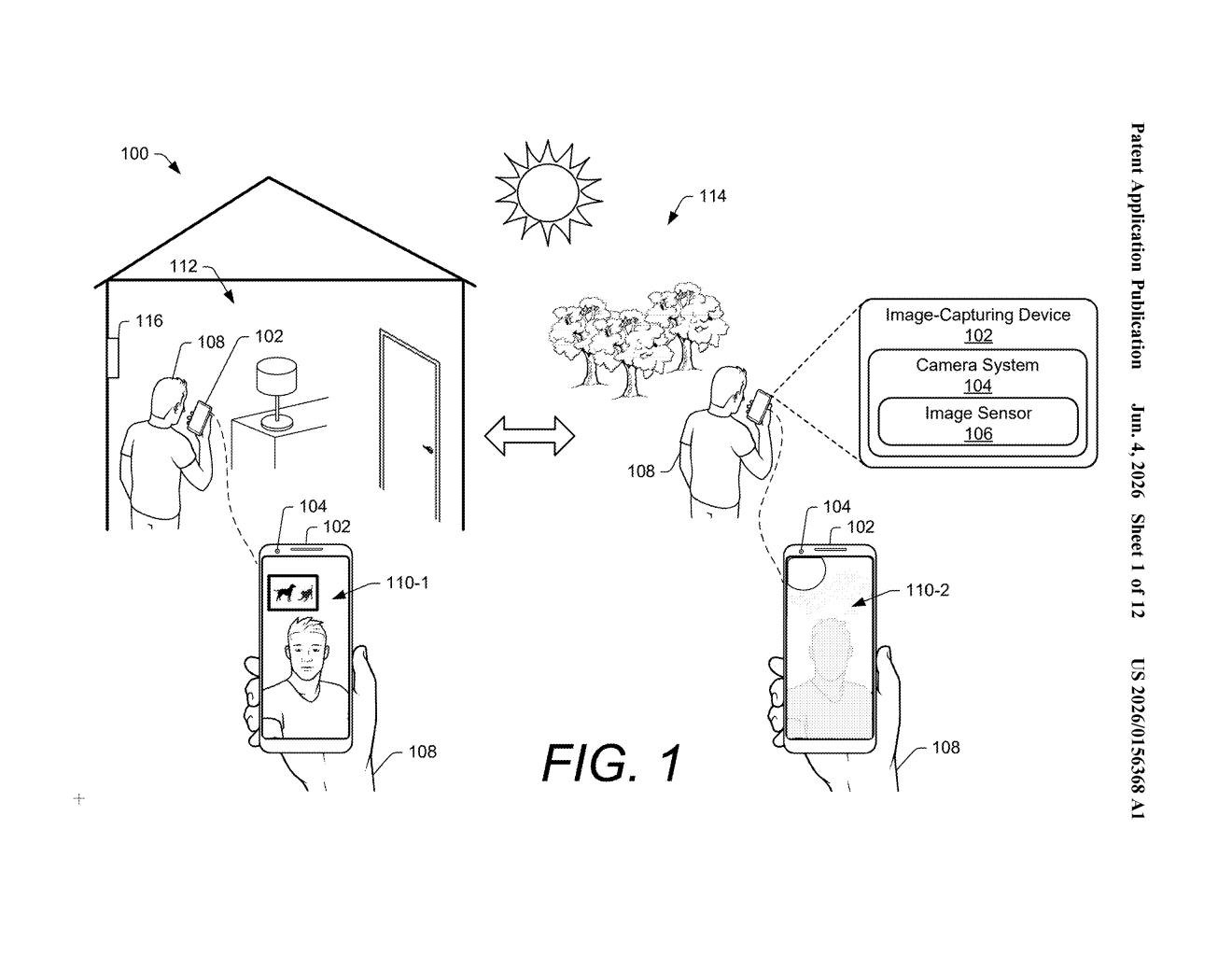
What Google's per-object HDR exposure actually does
Imagine you're taking a photo of someone standing in front of a sunny window. Your camera has to pick one exposure setting for the whole frame — either your friend's face looks right and the window blows out white, or the window looks right and your friend turns into a silhouette. That tradeoff is the core problem with standard HDR photography.
Google's patent describes a system where the camera's image sensor can set different exposure times for different objects in the same scene. The camera first takes a low-resolution preview frame, runs object detection on it to find things like faces, cars, or bright light sources, then figures out how bright each of those things actually is.
With that brightness information in hand, the camera carves the sensor into zones — each zone aligned to a detected object — and independently adjusts how long each zone's pixels stay open to light. The result: your friend's face and the bright window behind them can both look correctly exposed in the same shot.
How the sensor zones pixels to match each detected object
The system works in two main stages across two successive frames.
In the first frame, the camera generates a downsampled grayscale image (a low-resolution, simplified version of the scene — cheaper to process quickly) and runs object detection on it. Object detection here means the camera's software identifies discrete things in the scene — a person, a lamp, a window — and draws boundaries around each one.
Once object boundaries are known, the system collects luminous level statistical information (essentially brightness histograms — how bright each object region is and how that brightness is distributed) for each bounded region. It then uses those brightness profiles to zone the pixel array on the image sensor, dividing it into regions that correspond to individual detected objects.
For each zone, the camera adjusts the electronic shutter speed (how long the sensor's pixels are exposed to incoming light — longer means brighter, shorter means dimmer) before capturing the second, full-resolution frame. Zones covering dark objects get longer exposures; zones covering bright objects get shorter ones. The key technical move is doing this at the sensor level, on individual pixel groups, rather than blending multiple full-frame shots together in post-processing — which is how most computational HDR works today.
What this means for Google's next smartphone cameras
Most HDR photography today works by capturing several full frames at different exposures and stitching them together in software. That approach creates motion blur artifacts — if anything moves between shots, the merged image looks ghosted. By setting per-object exposure before the capture happens, Google's approach could produce cleaner HDR images of moving scenes in a single frame pass.
For Pixel smartphone cameras, which already lean heavily on computational photography, this would be a meaningful upgrade in tricky lighting — think indoor portraits near windows, concerts, or any mixed-light environment. It also suggests Google is pushing more intelligence down into the sensor pipeline itself, rather than relying entirely on post-capture AI processing.
This is a genuinely interesting approach to a real problem that every smartphone photographer hits constantly. The clever part isn't HDR itself — it's doing the exposure adjustment per-object at the sensor level, before capture, rather than merging multiple full-frame exposures afterward. If it works as described in practice, it could make a meaningful difference in exactly the kinds of high-contrast scenes where phone cameras still struggle.
There are more where this came from
We read every patent application Big Tech publishes and send you the ones worth knowing. Plain English, free, every week.
Want this weekly breakdown for a company we don't cover? Patentlyze Pro →