
New AR Glasses Patent Fixes Distortion From Bent Frames
If your AR glasses get slightly bent from being sat on or shoved in a bag, the digital images they project could drift out of position. Google's latest patent tackles that problem by letting the glasses figure out how warped they are and correct the display on the fly.
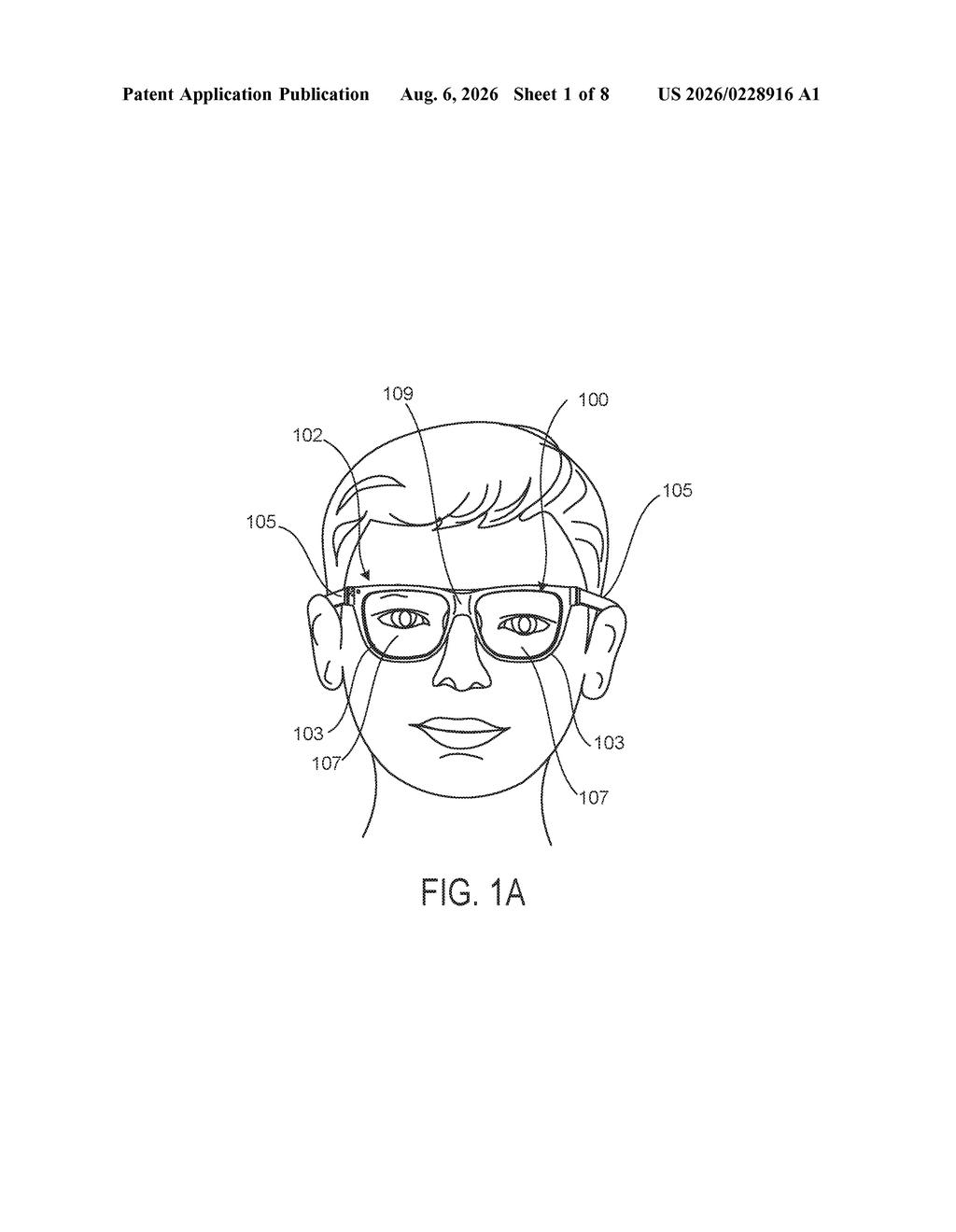
What Google's bent-frame fix actually does for you
Imagine you put on your AR glasses after tossing them in a backpack, and suddenly the floating text or directions they show you are hovering in the wrong place. That happens because even a tiny bend in the frame shifts the cameras and display out of alignment with each other, and the glasses have no way to know.
Google's patent describes a fix where the glasses continuously check whether the frame has deformed. They do this by using two cameras already built into the device: one pointing at the world and one watching your eye. By looking at the same point in the real world through both cameras, the glasses can calculate exactly how much the frame between them has flexed or bent.
Once the glasses know the bend angle, they shift the position of whatever digital image they're showing you to compensate. The result is that the AR overlay stays where it's supposed to be, even if your glasses are no longer perfectly shaped.
… calculating a hinge angle about a hinge center between the world-facing camera and the eye-tracking camera based on the projection data, the hinge angle indicating a level of deformation of the frame of the smartglasses device; …
Translation: The glasses figure out how much the frame is bending by measuring changes between the two cameras.
How two cameras calculate the frame's bend angle
The patent describes a calibration system that runs while you're wearing the glasses, not just when you first set them up.
It works by treating the frame section between the two cameras as a kind of hinge. The system models the frame as two rigid line segments joined at a pivot point. When the frame bends, those two segments rotate relative to each other at that pivot, like a door hinge flexing. The unknown variable the system needs to solve for is the hinge angle, meaning how many degrees off from flat the frame currently is.
To find that angle, the patent describes capturing projection data (essentially, where the same real-world point appears in each camera's image). Because both cameras are now slightly misaligned due to bending, the same object lands in subtly different spots in each image than geometry says it should. The system uses that discrepancy to back-calculate the hinge angle.
- World-facing camera captures a point in the environment
- Eye-tracking camera captures the same point from its slightly shifted vantage
- The difference tells the software exactly how much the frame has bent
- The display then shifts the AR overlay to the corrected position
Because this runs continuously (what the patent calls online calibration), the correction updates in real time as the frame flexes during use.
… modeling the frame portion between the world-facing camera and the eye-tracking camera as a hinge that rotates about an axis on and normal to the frame portion.
Translation: The software treats the flexible part of the glasses frame like a simple door hinge to track its bend.
What this means for wearable AR displays
AR glasses live or die on whether the digital images they show you feel like they belong in the real world. If a floating arrow points slightly left of the actual door, or a label hovers an inch above the object it's supposed to tag, the illusion collapses fast. Frame deformation is one of those quiet, physical problems that no amount of software polish fixes unless the hardware knows it's happening.
Google's approach is notable because it doesn't require extra sensors or a trip back to a calibration menu. The same cameras that are already on the device do the diagnostic work. That's a practical advantage for a consumer product, where the glasses need to just work without asking you to hold still and stare at a dot. Whether this makes it into a shipping product is another question, but the problem it addresses is real.
This is unglamorous but genuinely important engineering. Frame flex is the kind of failure mode that gets ignored in demos but shows up constantly in real use, and solving it with existing hardware rather than bolted-on sensors is the right instinct. Worth taking seriously as a signal of how Google is thinking about making AR glasses durable enough for daily life.
There are more where this came from
We read every patent application Big Tech publishes and send you the ones worth knowing. Plain English, free, every week.
The drawings
8 drawing sheets from US 2026/0228916 A1 · click any drawing to enlarge


Want this weekly breakdown for a company we don't cover? Patentlyze Pro →
Be the first to weigh in