
Google Patents Smart Glasses That Build Your Vision Prescription Into the Display
One of the biggest unsolved annoyances with AR glasses is that they basically ignore the fact that millions of people wear prescription eyewear. Google's latest patent takes a direct shot at that problem.
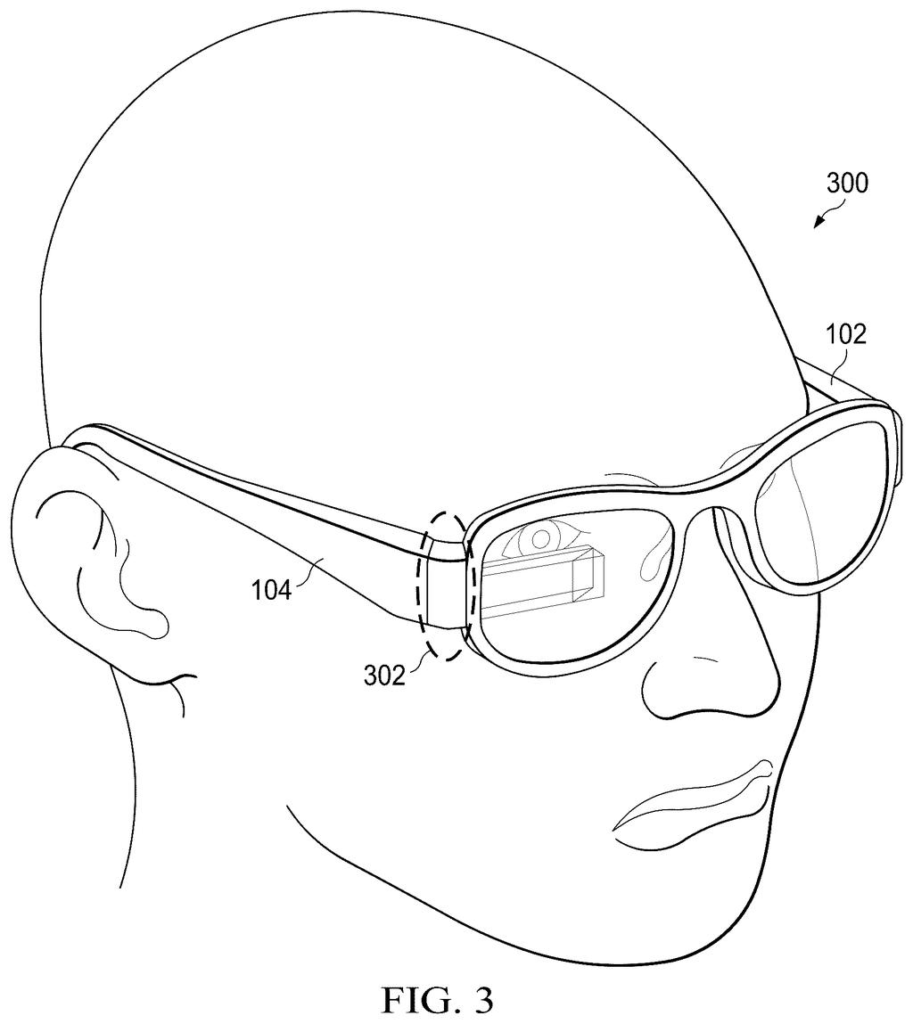
How Google's AR glasses would handle vision correction
Imagine you wear glasses to see clearly. Now imagine someone hands you a pair of AR smart glasses that overlay digital information onto your view of the real world. The problem: those AR lenses don't correct your vision, so everything is a blur unless you also wear contacts or carry special adapter lenses. It's a mess.
Google's patent describes a way to bake your prescription correction directly into the AR display lens itself. The lens is split into two layers with a small air gap between them. The front layer handles the job of guiding light from a digital display into your eye, while the back layer, the one closest to your eye, is shaped to match your individual vision prescription.
The clever part is that the two layers are designed to fit together precisely, so the whole assembly still looks and feels like a single lens. You get both the AR overlay and your corrected vision in one pair of glasses, without having to stack extra lenses or compromise on either function.
How the two-part lightguide bends light for each eye
The patent describes what Google calls a dual-component lightguide, which is a lens system made of two separate pieces of shaped optical material.
- The first (world-side) component faces outward toward the real world. Its inner surface is "freeform" (meaning it curves in a complex, non-standard shape) to control how digital image light bounces through the lens toward your eye.
- The second (eye-side) component sits closer to your eye. Its outer surface mirrors the freeform shape of the first component's inner surface, so the two fit together cleanly. Its inner surface (the one facing your eye) is shaped specifically to provide corrective optics, meaning it functions as a prescription lens.
- A deliberate air gap separates the two components. This gap is an optical tool: it allows the surfaces to reflect and redirect light in ways a solid single lens could not.
In traditional AR glasses, prescription correction is an afterthought, usually handled by clip-on adapters or separate insert frames. This design makes prescription correction a first-class part of the optics system. The freeform surfaces (think of them as sculpted rather than simply curved) give engineers extra control to balance both the AR display quality and the vision correction at the same time.
What this means for prescription wearers and AR adoption
For AR glasses to move beyond tech enthusiasts, they need to work for everyone, including the roughly half of adults in the US who use some form of vision correction. Right now, most AR headsets sidestep this by requiring contact lenses or awkward add-on lens inserts. A design that folds prescription correction into the core optics could make AR glasses a realistic daily-driver for a much larger audience.
For Google, which has tried and failed to get AR glasses into mainstream use before, solving the prescription problem is a practical prerequisite. This patent suggests the company is thinking carefully about how AR eyewear actually fits into real people's lives, not just what the display can do at its best-case lab performance.
This is a genuinely practical patent that addresses a real barrier to AR adoption, not a moonshot concept. The dual-layer prescription approach is a credible engineering path, and the fact that Google is filing this now suggests prescription integration is an active design priority, not a future wish list item. It's worth watching.
There are more where this came from
We read every patent application Big Tech publishes and send you the ones worth knowing. Plain English, free, every week.
The drawings
8 drawing sheets from US 2026/0211193 A1 · click any drawing to enlarge


Want this weekly breakdown for a company we don't cover? Patentlyze Pro →
Be the first to weigh in