
New Patent: AI Scores How Well Your Smart Glasses Fit on Your Face
Putting on a head-mounted display is easy; knowing whether it's sitting correctly is surprisingly hard. Google is patenting a system that reads sensor data in real time and tells you, in plain terms, how to adjust it.
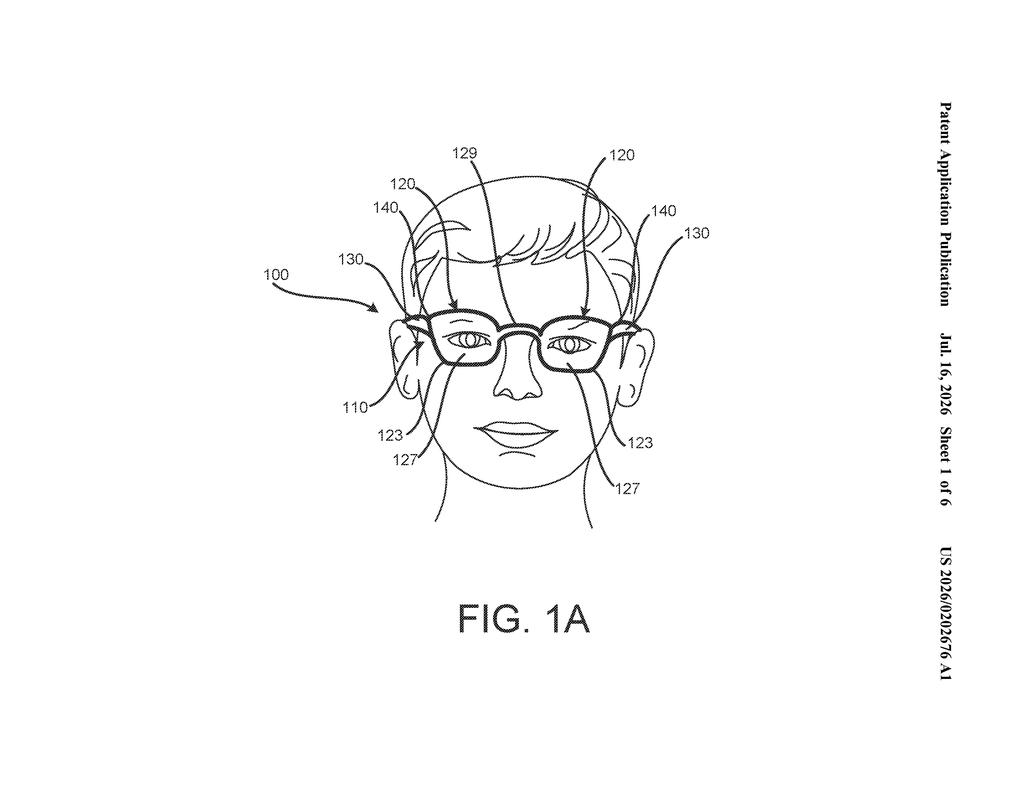
What Google's headset fit-scoring system actually does
Imagine putting on a pair of AR glasses, and instead of guessing whether they feel right, the device checks its own fit and pops up a message like 'tilt the left arm down slightly.' That's the core idea here.
Google's patent describes a headset that uses two types of sensors to judge its own positioning. One sensor measures how far each arm of the frame sits from your skin. Another tracks the angle each arm is resting at. Feed those two readings into a scoring model, and the headset can decide whether the fit is good or needs adjusting.
If the score falls below a comfortable threshold, the device shows you a step-by-step instruction to fix it. Think of it like a fitness tracker that tells you to sit up straight, but for your face.
How the sensors measure fit and generate a comfort score
The patent describes a method that kicks in as soon as the headset detects it's being worn. At that point, two separate measurements are collected simultaneously.
- Arm-to-skin distance: A sensor on each arm of the frame measures how far it is from the user's skin. A gap that's too large or too small can signal a poor fit.
- Arm orientation: An inertial measurement unit (IMU, the same kind of chip that tracks tilt and rotation in your phone) reads the angle each arm is resting at relative to the user's head.
Those two measurements go into a comfort prediction model, which is a trained algorithm that maps combinations of distance and angle to a numerical comfort score. The model was presumably trained on data from real users wearing headsets in various configurations.
If the score indicates a poor fit, the device triggers a display instruction, on-screen guidance telling the user how to reposition the headset. The patent doesn't specify what form those instructions take, but the implication is that they're specific and actionable rather than a generic 'adjust headset' prompt.
What this means for the future of AR headset wearability
Head-mounted displays are notoriously tricky to fit correctly. An off-center display causes eye strain; pressure in the wrong spots leads to headaches after even short sessions. Right now, most headsets rely entirely on the user's intuition. A sensor-driven system that can flag a bad fit before discomfort sets in would meaningfully lower the barrier to long sessions.
This patent matters most if Google is serious about bringing a consumer AR headset to market. Comfort is one of the top reasons people abandon wearables entirely. A device that coaches you into the right fit on day one, rather than leaving you to figure it out, addresses a real adoption problem. It also signals that Google is thinking about the full wearing experience, not just display quality or software features.
This is practical, unglamorous work that solves a real problem. Most AR headset patents focus on optics or compute power; this one focuses on whether the thing stays on your face comfortably. That's the kind of detail that separates a device people actually keep wearing from one that ends up in a drawer. Worth paying attention to if you follow Google's hardware ambitions.
There are more where this came from
We read every patent application Big Tech publishes and send you the ones worth knowing. Plain English, free, every week.
Want this weekly breakdown for a company we don't cover? Patentlyze Pro →
Be the first to weigh in