
Google Patents a Single Control Panel for Smart Home Devices From Any Brand
Google is patenting a way to control smart home devices from any manufacturer inside a single app — without forcing you to juggle five different company apps just to turn off your lights.
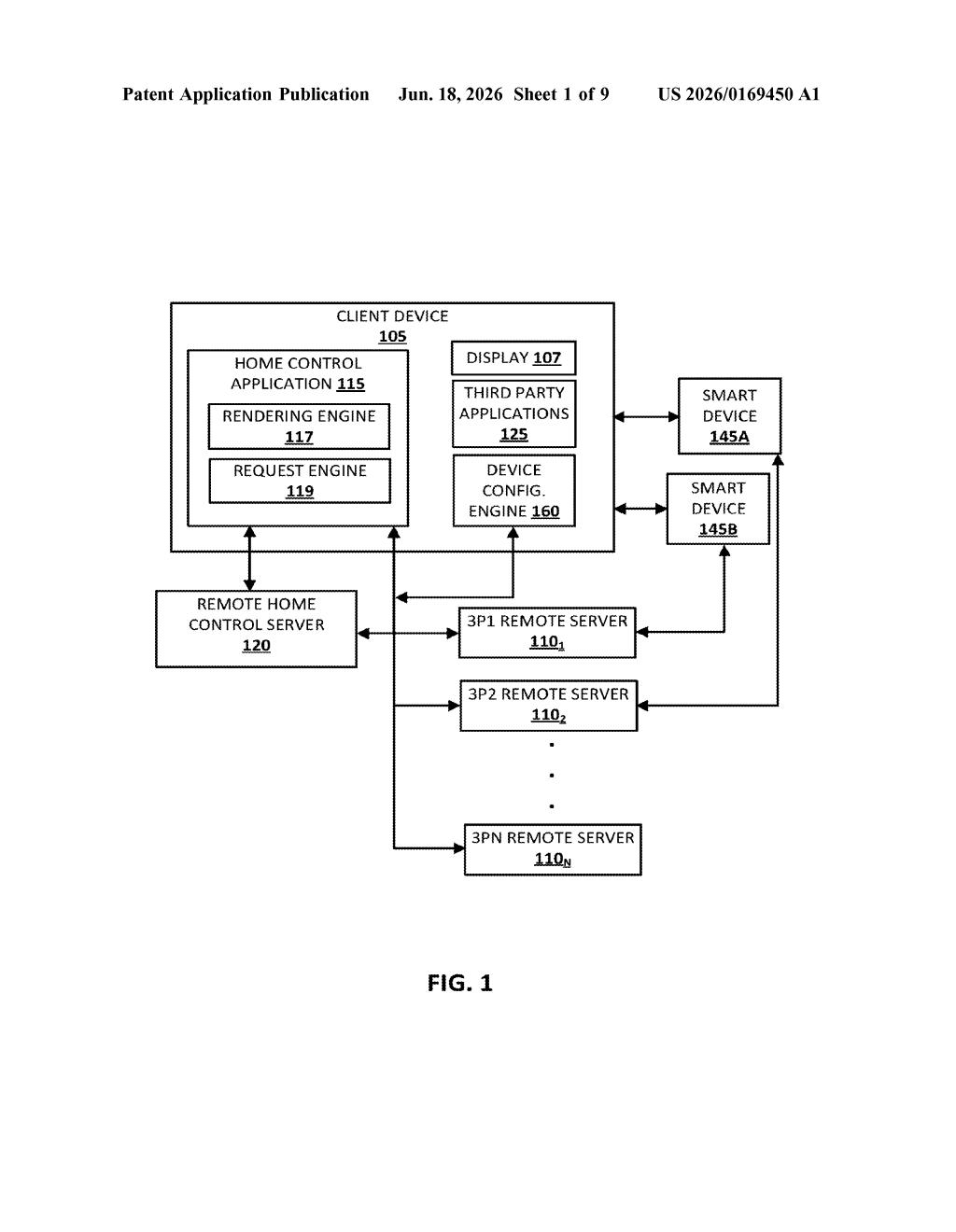
What Google's cross-brand smart home hub actually does
Imagine you have smart bulbs from one company, a thermostat from another, and a doorbell camera from a third. Right now, you probably need a separate app for each one. Google's patent describes a single interface that lets you control all of them in one place — regardless of who made them.
When you tap a button to adjust a third-party device, it just works. But if you want deeper settings — things only that manufacturer's app can show — the Google app can automatically open that third-party app for you, already on the right screen.
There's also a clever auto-discovery piece: if you already have a brand's app installed on your phone, Google's system can automatically detect that brand's devices and add them to your smart home setup without you having to do it manually.
How Google links third-party devices into one interface
The patent describes two related capabilities that work together to make a multi-brand smart home easier to manage.
First, within a Google-hosted control app (think Google Home), the system can display both: (1) interactive buttons or sliders that directly control a third-party smart device — a lamp, a lock, a sensor — without leaving the Google app, and (2) a separate "more info" link that fires off a deep link (a URL-like instruction that opens a specific screen inside another app) directly into the device manufacturer's own app, pre-loaded to the right page.
Second, the system watches whether a third-party manufacturer's app is already installed on your phone. If it is, but none of that brand's devices appear in your smart home device list (called the smart device topology — essentially a map of every connected gadget in your home), the system can automatically discover and add those devices. No manual setup required.
Together, these features let Google Home act as a front-end controller for devices it didn't make, while still respecting that the original manufacturer's app may have features Google can't replicate.
What this means for your smart home setup
For anyone building out a smart home, brand fragmentation is the biggest daily frustration. Having to remember which app controls which device — and context-switching between them constantly — is exactly the kind of friction that makes smart home tech feel less smart. This patent is Google's attempt to make Google Home the one app that handles basic control for everything, with an escape hatch to deeper settings when needed.
Strategically, this moves Google closer to a position Apple has been building with HomeKit and Amazon with Alexa — a platform that other device makers plug into rather than compete against. If Google can auto-detect third-party devices and onboard them silently, it reduces the number of reasons users ever open a competitor's app.
This is a real quality-of-life problem that Google is trying to solve, and the approach is practical rather than flashy. The deep-link trick is especially clever — it acknowledges Google can't replicate every manufacturer's feature set, so it just hands you off gracefully instead of pretending otherwise. Whether this actually ships cleanly depends on manufacturer buy-in, which is always the harder problem.
There are more where this came from
We read every patent application Big Tech publishes and send you the ones worth knowing. Plain English, free, every week.
Want this weekly breakdown for a company we don't cover? Patentlyze Pro →