
Sony Patent Explores Using Magnetic Force to Replace Springs in Controller Buttons
Every button on your controller has a tiny spring inside that pushes it back up after you press it. Sony is patenting a way to do that job with magnets instead, and the difference is more interesting than it sounds.
What Sony's magnetic button system actually does
When you press a button on a game controller, a small spring inside the housing pushes it back to its original position the moment you let go. It works fine, but springs wear out, they add mechanical complexity, and they make buttons harder to swap out or customize.
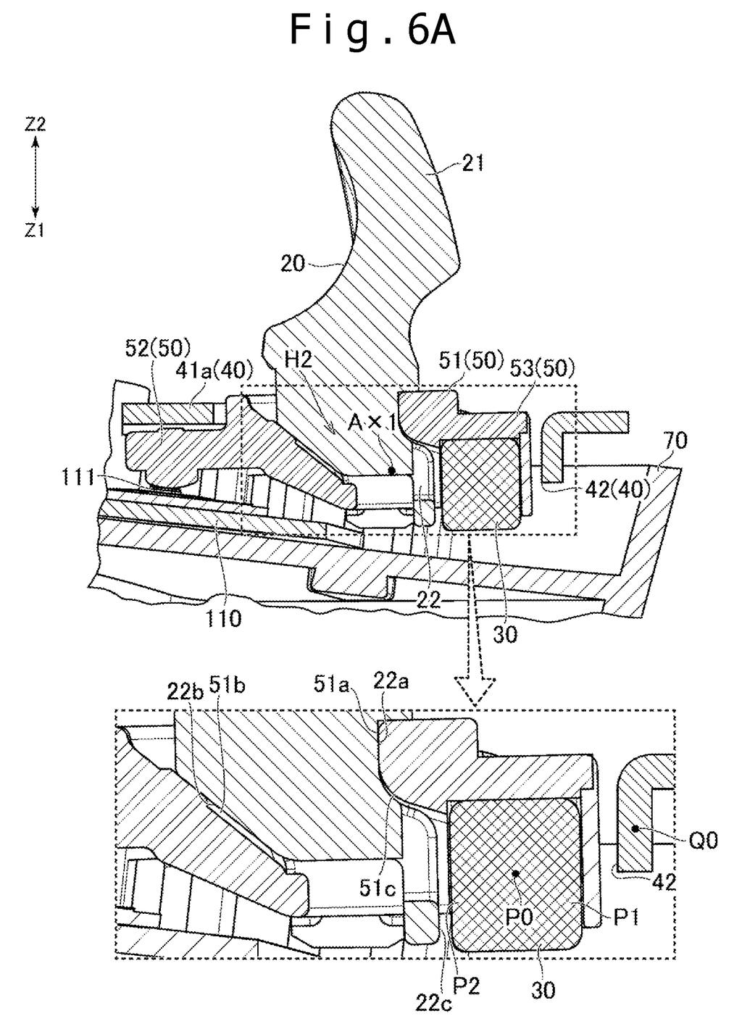
Sony's patent describes replacing that spring with a pair of magnets. One magnet is built into the button itself, and a second sits inside the controller's body. When you press the button down, that second magnet pulls the first one (and the whole button) back to its starting position, the same way a spring would but using magnetic attraction instead of physical tension.
The design also makes the button detachable. Because the button is held in place by magnetic force rather than being clipped or snapped in mechanically, you can pull it off from the outside and swap it for a different one. That's a potential win for accessibility and controller customization.
How two magnets replace a traditional spring mechanism
The patent describes an input device (almost certainly a game controller) with a button assembly built around two magnetic components housed inside the controller's body.
- The operated member (the button you press) includes a section made from a magnetic material, called the magnetic portion, that sits inside the housing when the button is attached.
- A first magnetic member inside the housing attaches to that magnetic portion, holding the button in place through magnetic attraction. This is what keeps the button seated without a mechanical clip.
- A second magnetic member, also inside the housing, attracts the first magnetic member. When the button is pressed and the first magnet moves inward, the second magnet pulls it back toward the starting position, acting as a return force in the same way a spring would.
The key design choice is that the first magnetic member moves together with the button when pressed, while the second stays fixed. The gap between them changes as you press, which varies the magnetic pull and creates the restoring force. Because the button is held magnetically rather than mechanically locked, it can be removed from outside the housing without any tools.
What this means for PlayStation controller design
Springs are reliable but not ideal: they fatigue over time, they resist precise tuning, and they make button modules harder to replace. A magnetic return system has no moving parts that wear against each other, and the return force can theoretically be tuned by adjusting magnet strength or placement rather than sourcing a different spring.
The detachability angle may be the bigger story for end users. PlayStation's DualSense Edge already lets players swap stick modules; extending that logic to face buttons or other controls would be a meaningful accessibility feature. Players with limited hand strength sometimes prefer softer actuation, and a swappable magnetic button could make that kind of personalization much easier than it is today.
This is a focused, well-scoped engineering patent, not a broad platform play. The magnet-as-spring idea is genuinely clever and solves a real problem (spring fatigue, limited customization) without adding obvious complexity. It fits neatly into the trajectory Sony has already shown with the Edge controller's modular design, and that makes it more credible as something that ships eventually.
There are more where this came from
We read every patent application Big Tech publishes and send you the ones worth knowing. Plain English, free, every week.
The drawings
10 drawing sheets from US 2026/0219739 A1 · click any drawing to enlarge


Want this weekly breakdown for a company we don't cover? Patentlyze Pro →